How To Put A Bmw In Neutral Without Starting Engine
Struggling with a BMW that won’t start but needs to be moved? Whether you’re facing a dead battery, need to tow your vehicle, or simply want to roll your car in your garage, knowing how to put a BMW in neutral without starting the engine is an essential skill every BMW owner should master.
This comprehensive guide covers all BMW models from the E-series through the latest G-series, providing exact step-by-step instructions for both electronic and mechanical shift lock release methods.
Summary and Key Takeaways
Putting a BMW in neutral without starting the engine is an essential skill that every BMW owner should know. The process differs significantly based on whether your battery has power remaining and which BMW series (E, F, or G) you own.
Understanding BMW Neutral Gear Systems
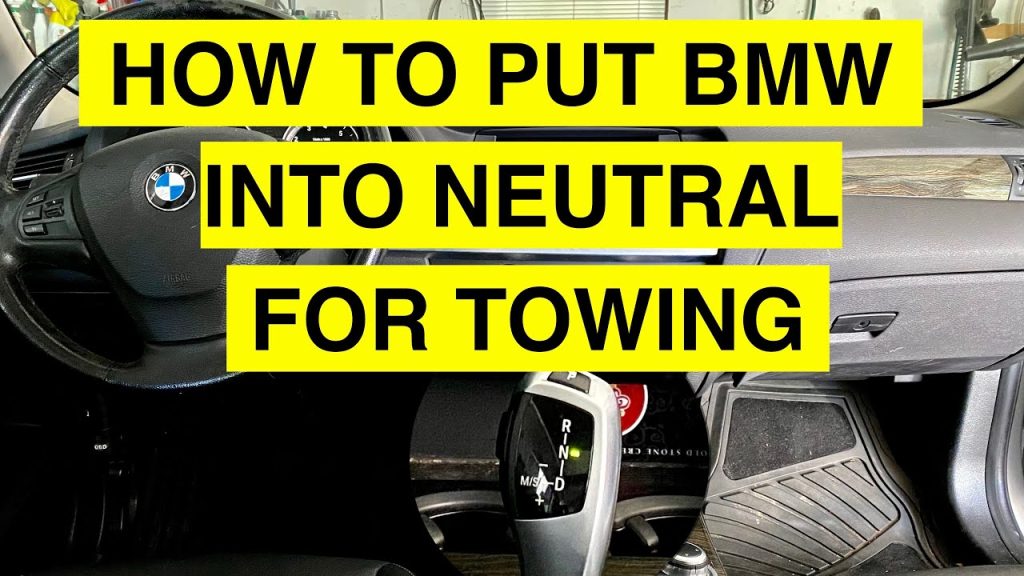
BMW vehicles use sophisticated transmission lock systems designed to prevent accidental shifting. The shift interlock system prevents you from moving the gear selector out of Park without the brake pedal pressed and the ignition in accessory mode or running.
Why You Need This Skill
Common scenarios where this knowledge proves invaluable:
- A dead battery is preventing normal operation
- Towing or flatbed loading requirements
- Car wash or service bay positioning
- Parking on steep inclines when the engine won’t start
- Moving a vehicle in a garage or tight spaces
- Emergencies requiring quick vehicle relocation
Important distinction: There are two completely different methods depending on whether your battery has any charge remaining.
Two Methods to Shift BMW to Neutral Without Starting
Method 1: Battery Has Power (Key in Accessory Mode)
This method works when your battery has enough charge to power accessories, but the engine won’t start due to other issues like fuel problems, starter failure, or security system lockout.
Requirements:
- The battery must have some charge
- Key fob or key must be available
- Ability to turn the key to accessory position (position 1)
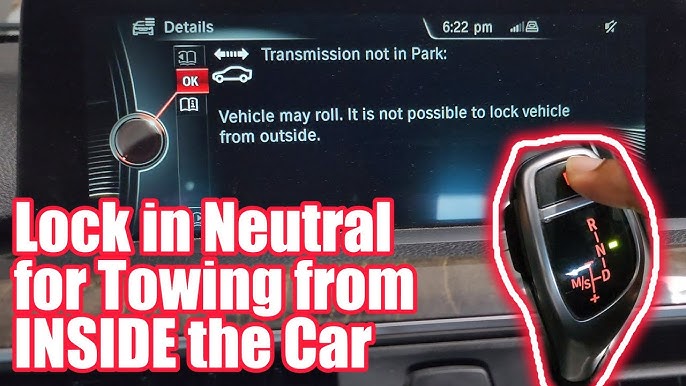
Method 2: Completely Dead Battery (Mechanical Override)
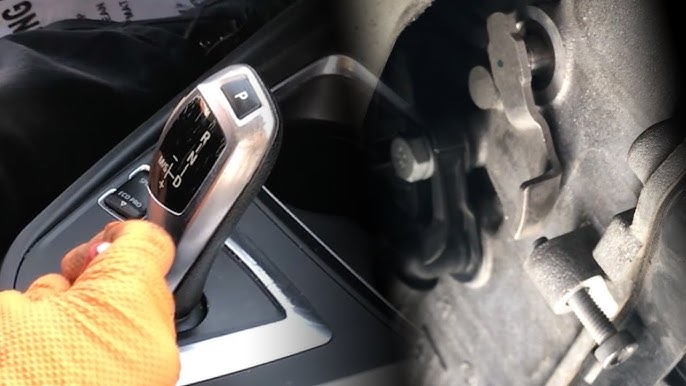
This emergency method uses the shift lock release mechanism, a small access panel near your gear selector that allows manual override of the electronic shift lock.
Requirements:
- Flathead screwdriver or BMW emergency key
- Owner’s manual (helpful for exact location)
- No battery power needed
Step-by-Step Instructions by BMW Series
E-Series Models (E46, E60, E90, E92: 1999-2013)
Method 1: With Battery Power
- Insert the key into the ignition
- Turn the key to position 1 (accessory mode, not full ignition) – Dashboard lights should illuminate
- Press and hold the brake pedal firmly
- Move the gear selector from P to N – You should feel a click as the shift lock releases.
- Release the brake pedal.
- Remove key if needed – Transmission will remain in neutral.
E-Series Shift Lock Override Location: Small rectangular cap approximately 1 inch by 0.5 inches, located directly in front of the gear selector on the center console.
Method 2: Dead Battery (E-Series)
- Apply the parking brake firmly
- Place wheel chocks behind the rear wheels if on any incline
- Locate shift lock release cover – Front side of gear selector base, small plastic cap
- Insert a flathead screwdriver into the cap and gently pry upward to remove the cover
- Press down on the yellow or white plastic tab inside the opening with a screwdriver
- While pressing tab, move the gear selector to the N position
- Release the tab and replace the cover
F-Series Models (F10, F30, F32: 2011-2019)
Method 1: With Battery Power
- Press the brake pedal
- Press the START/STOP button once (do not press the brake while pressing the button) – This activates accessory mode.
- Verify the dashboard illuminates, but the engine does not crank
- Keethe p brake pedal
- Move the gear selector to N
- Press the START/STOP button again to turn off accessory mode
F-Series Note: Electronic gear selectors in some F-series models (like F10 5-series with Steptronic) may automatically return to Park position when you turn off accessory mode. Keep the brake pressed throughout.
Method 2: Dead Battery (F-Series)
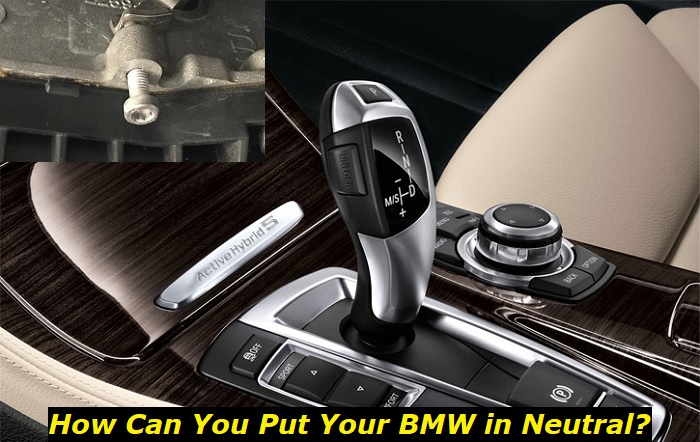
F-Series Shift Lock Override Location: Small circular or rectangular cover located on the right side of the gear selector base (driver’s perspective), approximately 15mm in diameter.
- Set the parking brake.
- Use wheel chocks on inclines.
- Locate small cover panel – Right side of gear selector, may have a small slot or notch.
- Remove the cover using a fingernail or a flathead screwdriver
- Insert screwdriver or key into the slot – You’ll feel a spring-loaded mechanism
- Press firmly downward on the release mechanism
- While pressing, shift the gear selector to N
- Hold in neutral and remove the tool
- Replacthe e cover when finished
G-Series Models (G20, G30, G80: 2018-Present)
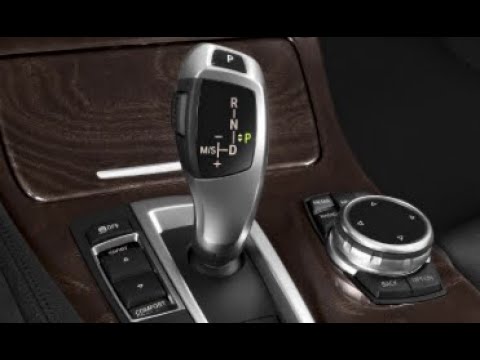
G-series BMWs feature electronic gear selectors that require special consideration.
Method 1: With Battery Power
- Press the brake pedal
- Press the START/STOP button without pressing the brake – Activates accessory mode.
- Wait for the iDrive screen to illuminate (may take 5-10 seconds)
- Continue holding the brake pedal
- Press the gear selector button (if electronic shifter) and move to N, or move the traditional selector to N.
- On electronic shifters, hold in N position for 2-3 seconds until the display confirms neutral.
G-Series Electronic Shifter Models (G30 540i, G80 M3, etc.): The electronic gear selector will spring back to center. Neutral is engaged when the dashboard display shows “N” clearly.
Method 2: Dead Battery (G-Series)
Critical G-Series Information: Models with fully electronic gear selectors (no mechanical linkage) cannot be shifted to neutral with a completely dead battery using traditional methods. These require either:
- Jump-starting the battery first
- Using BMW Roadside Assistance towing protocols
- Disconnecting the driveshaft for towing (professional service required)
G-Series with Traditional Shifter Override Location: Similar to F-series, right side of gear selector base, but access cover may be hidden under trim piece.
- Check your specific model – Consult the owner’s manual to confirm a mechanical override exists.
- Remove center console side trim if necessary (clips pull away gently)
- Locate override access – Usually marked with a small symbol
- Follow the F-series procedure for mechanical override
- Note: Force required may be higher than older models
X-Series SUV Models (X1, X3, X5, X7)
X-series models follow the same generation patterns (E, F, G) as sedan counterparts.
Additional X-Series Considerations:
- Heavier vehicles require extra caution on inclines – Use wheel chocks
- Ground clearance differences – Easier access to shift lock release
- Transfer case in xDrive models – Neutral position affects both front and rear driveshafts
- X5 and X7 models – Shift lock release may require more force due to heavier duty mechanism
Follow the corresponding E, F, or G series instructions based on your X-model year:
- X-series 2000-2013: Use E-series method
- X-series 2014-2018: Use F-series method
- X-series 2019-present: Use G-series method
Manual Transmission BMW Models
Manual transmission BMWs have a simpler process since there’s no park lock mechanism.
To Put the Manual BMW in Neutral Without Starting:
- Set the parking brake
- Press the clutch pedal fully to the floor
- Move the gear lever to the center position (neutral) – Should move freely without resistance
- Releasthe e clutch pedal
- No ignition or battery power required
Testing Neutral: With the parking brake released (on level ground only), the car should roll freely when pushed.
Troubleshooting Common Issues
Problem: Gear Selector Won’t Move Even with Brake Pressed
Possible Causes and Solutions:
Brake light switch failure – The shift interlock system relies on the brake light switch signal. If brake lights don’t illuminate when the pedal is pressed, the shift lock won’t release.
- Solution: Use the mechanical override method instead
Insufficient battery voltage – Battery may have enough power for lights, but not for the shift lock solenoid.
- Solution: Jump-start the battery or use the mechanical override
Blown fuse – Shift lock circuit fuse may be blown.
- Solution: Check fuse box (typically fuse 34 or 47, depending on model), replace if needed, or use mechanical override
Problem: Cannot Find Shift Lock Release Cover
Solutions:
Check the owner’s manual diagram for the exact location on your model year. The location varies significantly:
- E46 3-series: Front of shifter, small rectangular cap
- E60 5-series: Right side of shifter base
- F30 3-series: Right side, may be covered by rubber trim
- Search online: “BMW [your model] shift lock release location” with model year
Some models hide the release under removable trim panels. Gently pry the console side panels to access.
Problem: Shift Lock Release Tab Doesn’t Move
Causes and Solutions:
Corroded mechanism – Lack of use causes buildup.
- Solution: Apply a small amount of WD-40 or electrical contact cleaner, wait 2 minutes, and try again
Wrong tool angle – Must press straight down or in a specific direction.
- Solution: Try different angles, use appropriate size screwdriver (typically 5-6mm flathead)
Excessive force required – Some models have very stiff springs.
- Solution: Use a screwdriver with a good grip, apply firm, steady pressure (not sharp jabs)
Problem: Car Rolls in Neutral
This is normal behavior – neutral means the transmission is disengaged.
Safety Solutions:
Always engage the parking brake before shifting to neutral. On inclines, place wheel chocks behind wheels (downhill side). Never rely solely on neutral to keep the car stationary. If the parking brake is weak or non-functional, do not attempt to shift to neutral on any incline.
Problem: Electronic Shifter Returns to Park
This occurs in F and G-series models with electronic shifters when accessory mode is turned off.
Solution: Keep accessory mode active while the car needs to remain in neutral, or have someone inside maintaining brake pressure and accessory mode while the vehicle is being moved or loaded.
Safety Precautions and Best Practices
Before Attempting to Shift to Neutral
Essential safety steps:
- Ensure vehicle is on level ground whenever possible – Inclines significantly increase risk
- Apply the parking brake firmly – Test that it holds before proceeding
- Place wheel chocks – Behind wheels on the incline’s downhill side (front wheels on downhill inclines, rear wheels on uphill inclines)
- Clear surrounding area – Ensure no obstacles or people in the vehicle’s potential roll path
- Check transmission fluid level – Low fluid can cause shifting difficulties (if you can access and check)
- Have assistance available – The second person should monitor the vehicle for any movement
- Review your specific model’s manual – Some models have unique requirements
During the Process
Active safety measures:
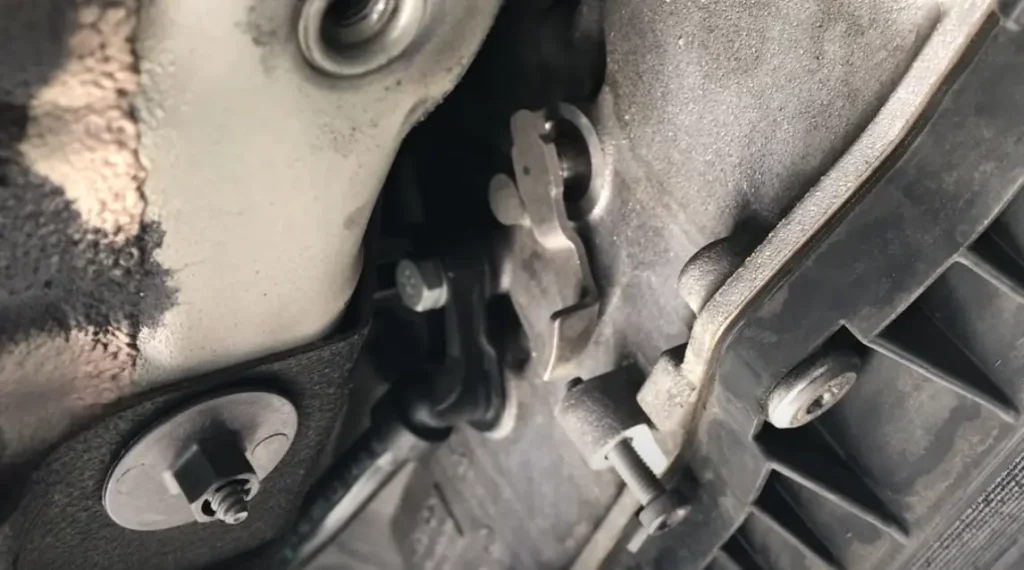
Stay outside the vehicle when possible – Don’t sit in the driver’s seat during towing or pushing. Maintain awareness of vehicle position – Be ready to apply the parking brake if the car starts rolling. Use proper tools – Don’t force wrong-size screwdrivers into the shift lock release. Don’t force anything – Excessive force indicates wrong procedure or a mechanical problem.
After Shifting to Neutral
Post-procedure safety:
Vehicle will roll freely – Even on slight inclines that seemed flat. Parking brake remains critical – Keep engaged until ready to move the vehicle deliberately. Return shift lock cover – Prevents debris from entering the mechanism. Test on level ground first – Before attempting on an incline, verify the procedure works safely in a controlled environment.
Towing-Specific Safety
When shifting to neutral for towing purposes:
Automatic transmission towing limits: Most BMW automatics should not be towed in neutral for more than 50 miles without disconnecting the driveshaft. Check the owner’s manual for your model’s specific towing restrictions. Flatbed towing is always safer than dolly or neutral towing.
xDrive all-wheel-drive models: Require special towing considerations. All four wheels should be off the ground (flatbed), or the driveshaft must be disconnected. Neutral position doesn’t disengage the all-wheel-drive system completely.
When to Seek Professional Help
Situations Requiring Professional Assistance
Call a BMW technician or roadside assistance if:
You cannot locate the shift lock release after a thorough search – May indicate model variation or a missing component. Excessive force required indicates mechanical failure – Don’t risk breaking the shift mechanism. The electronic shifter doesn’t engage neutral even in accessory mode – May indicate a transmission control module issue.
Grinding or unusual noises occur when attempting to shift – Possible transmission damage. Shift lock release cover is damaged or missing – Improper access could damage the mechanism. You’re uncomfortable performing the procedure – Professional peace of mind is worth the cost. Vehicle needs to be towed long distance – Transmission damage risk with improper neutral towing.
Choosing Qualified BMW Service
For shift mechanism repairs or towing:
Verify BMW certification or specialization – Generic mechanics may lack BMW-specific knowledge. Check reviews specifically mentioning BMW transmission work. Ask about experience with your specific model series (E, F, or G).
Confirm they have BMW diagnostic equipment – Essential for electronic shifter issues. Get a clear cost estimate before authorization – Shift mechanism repairs can range from $200-$800. Request OEM parts for any replacements – Aftermarket shift components often fail prematurely.
BMW Roadside Assistance: If your vehicle is under warranty or you have an active BMW Assist subscription, use this service first. They have flatbed towing protocols specifically designed for BMW transmission protection.
Frequently Asked Questions
Can I put my BMW in neutral without any battery power at all?
Yes, for most E-series and F-series models with mechanical shift lock release mechanisms. You’ll use the shift lock override method (Method 2 above), which requires no electrical power. However, newer G-series models with fully electronic gear selectors may not have mechanical override capability and require battery power or jump-starting to shift out of park. Always check your specific model’s owner’s manual to confirm mechanical override availability.
Will shifting to neutral without starting damage my transmission?
No, shifting to neutral without starting the engine will not damage your BMW transmission. The neutral position simply disengages the transmission from the drivetrain, which is mechanically safe regardless of whether the engine is running.
Why won’t my gear shifter move even though I’m pressing the brake?
The most common causes are: brake light switch failure (the shift interlock doesn’t receive a signal that the brake is pressed), insufficient battery voltage to activate the shift lock solenoid, blown shift lock fuse, or faulty shift lock solenoid itself. If brake lights illuminate when you press the pedal but the shifter won’t move, suspect an electrical issue with the shift lock circuit. Use the mechanical override method (shift lock release) to bypass the electronic system and shift to neutral.
Where exactly is the shift lock release on my BMW model?
The location varies by model series. E-series (1999-2013): Small rectangular cover directly in front of gear selector base, centered. F-series (2011-2019): Small circular cover on the right side of the gear selector base. G-series (2018-present):
Maybe the right side of the selector or under the removable console trim; some electronic shifter models lack a mechanical override. X-series: Follow the corresponding sedan series location for your year. Your owner’s manual contains a diagram showing the exact location for your specific model and year.
Can I shift my BMW to neutral while driving?
No, you should never shift to neutral while driving. Modern BMWs have safety mechanisms that make this difficult or impossible at speed, but even if possible, shifting to neutral while driving is dangerous because: you lose engine braking capability, electronic stability systems may not function properly, you cannot accelerate to avoid hazards, and returning to Drive at speed can damage the transmission.
Do all BMW models have the shift lock release mechanism?
No, not all models have a mechanical shift lock release. Most E-series and F-series models with traditional gear selectors include mechanical override. Many G-series models with fully electronic shifters (like those in G30 540i, G80 M3) lack mechanical linkage and cannot be manually overridden without battery power. Consult your owner’s manual or contact BMW to confirm if your specific model has mechanical shift lock release capability.
What’s the difference between accessory mode and starting the engine?
Accessory mode (ignition position 1 or single press of the START/STOP button without brake) powers electrical systems like radio, dashboard, and importantly, the shift lock solenoid, but does not engage the starter motor or run the engine.
This allows you to shift out of park without actually starting the engine, which is useful when: the engine won’t start due to fuel or mechanical issues, you need to conserve battery while moving the car, or you’re diagnosing starting problems and need to test other systems.
My parking brake warning light is on – can I still shift to neutral?
Yes, you can shift to neutral with the parking brake engaged. In fact, you should always engage the parking brake before shifting to neutral, especially on any incline. The parking brake warning light simply indicates the parking brake is engaged, which is the correct safety procedure. After shifting to neutral, only release the parking brake when you’re ready to move the vehicle and have proper control (pushing, pulling, or towing).
How do I know when my BMW is actually in neutral?
Visual confirmation methods: Dashboard gear indicator displays “N”, gear selector is in neutral position (center position for traditional shifters), on electronic shifters, the display clearly shows neutral status. Physical confirmation (use caution): With the parking brake released on level ground only, the vehicle will roll freely when pushed lightly. Never test on an incline. Gear selector moves freely between neutral and other positions (for traditional shifters).
Can I push my BMW in neutral, or does it need to be towed?
Yes, you can push a BMW in neutral on level ground or slight inclines. This is safe for short distances. For pushing safely: have at least two strong adults to control vehicle weight, push from designated push points (usually front or rear bumper reinforcements), maintain control – one person should be able to access the brake or parking brake, only push on level surfaces or very gentle inclines. For long distances or steep inclines, towing with proper equipment is safer than pushing.
What should I do if I’m stuck on a steep incline and need to shift to neutral?
This is a high-risk situation requiring extreme caution:
- Do not proceed if you’re uncomfortable – Call a professional towing service instead
- If you must proceed, use heavy-duty wheel chocks on the downhill side of the wheels
- Have multiple people available to control the vehicle
- Use the parking brake plus wheel chocks together, not just one
- Consider mechanical assistance – Attach a tow strap to the secure anchor point before shifting
- Shift to neutral using whichever method works for your model
- Control descent carefully – Use the parking brake as needed to prevent runaway rolling
- On very steep inclines (15+ degrees), do not attempt – Professional towing only
Safest approach: Have the vehicle winched or towed by professionals who have proper equipment for steep incline recovery.
Related posts:
 What Is Bmw LCI? What It Means and How It Effects.
 What Does Bmw Certified Mean? Discover The Benefits Now!
 What Does The Bmw Cpo Warranty Cover? Complete Guide
 What Do Bmw Numbers Mean? Hidden Meaning Behind Every Number
 Bmw Garage Door Opener: The Ultimate Guide
 What Bmw Have The B58 Engine
 Restraint System Malfunction In BMW: Causes & Solutions
 My Bmw App Not Working: Quick Solutions!
 Is Bmw ConnectedDrive Worth It? Pros & Cons Explained!
 How To Update Bmw Software: A Step-By-Step Guide
 How To Unlock A Bmw With Keys Locked Inside: Quick Guide
 Best F150 Jump Seat Console Organizer