What Do BMW Numbers Mean? Decode Any BMW Badge Fast
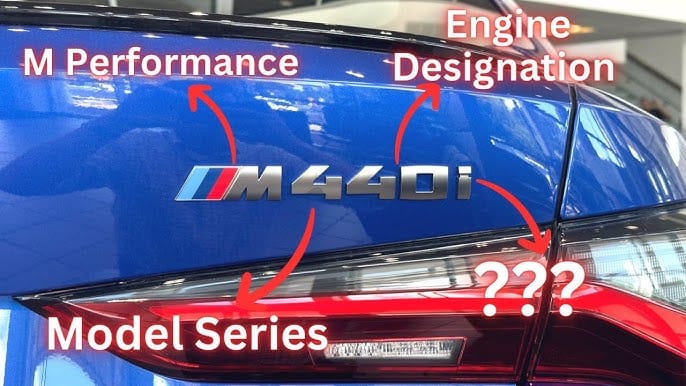
BMW model numbers generally indicate the series and the relative performance or engine size within that series. The first digit signifies the model series (e.g., 3 for the 3 Series), and the following digits (e.g., 30 in 330i) indicate the engine’s power output or position within that series. Letters at the end specify the engine type (e.g., ‘i’ for fuel-injected gasoline, ‘d’ for diesel, ‘e’ for plug-in hybrid) or drivetrain (xDrive for all-wheel drive, sDrive for rear-wheel drive).
Many people wonder, “What do BMW numbers mean?” It’s a question that sparks curiosity. Each number represents a unique aspect of the car’s design and features. For example, the first digit often shows the car’s series, while the next digits reveal the engine size and type.
Think about this: when you see a BMW 3 Series, you know it’s part of the 3-family. But what does that mean? Let’s examine how these numbers can help us better understand the car. Did you know that knowing these numbers can even help you choose the right BMW for you? It’s a fun and interesting adventure!
Join us as we dive deeper and discover the secrets behind BMW numbers!
What Do BMW Numbers Mean?
The One-Pass Formula for Decoding Any BMW Badge
To decode any BMW badge in one pass, read it left to right: series letter or number, then engine number, then suffix letters. For example, a 2024 X5 M60i xDrive breaks down as: X (SUV), 5 (mid-size series), M60i (high-performance engine with fuel injection), and xDrive (all-wheel drive). This formula works on nearly every BMW badge.

BMW numbers consist of a model series and an engine code. For example, the ‘3’ in 330i shows it belongs to the 3 Series. The ’30’ indicates the engine’s performance level within that series. Fun fact: the higher the number, often the more powerful the engine! Each number reveals details about the car’s capabilities and features. Understanding these numbers helps buyers make smarter choices. Isn’t it fascinating how a few digits can tell you so much?
Decoding BMW Model Numbers
Explanation of the alphanumeric system used in BMW model names.. How to differentiate between series, models, and variants..

BMW model names can seem like a secret code. They use a mix of numbers and letters to tell you what kind of car it is. The first number usually shows the series, which tells you about the car’s size and type. For example, a ‘3’ means it’s a compact car, while an ‘X’ indicates an SUV. The next number often shows the model and its engine power. So, a ‘320i’ means it’s a 3 Series with a smaller engine, while a ‘340i’ has a more powerful one.
| BMW Series | Model Example | Vehicle Type |
|---|---|---|
| 1 | 118i | Compact |
| 3 | 320d | Sedan |
| X | X5 | SUV |
Understanding these numbers can make you feel like a car detective. Plus, you’ll impress friends when discussing car specs over pizza!
The Significance of the BMW Series
Breakdown of the different BMW series (e.g., 1, 3, 5, 7 Series).. Characteristics and target demographics for each series..

The BMW series breaks down like a delightful puzzle, each piece showing off its unique charm. The 1 Series is compact and perfect for city folks who love parking in tight spaces. Meanwhile, the 3 Series serves as the sporty choice for those who like a dash of fun with their daily drive. For families, there’s the spacious 5 Series, combining comfort and luxury. Finally, the elite 7 Series is like the crown jewel, offering top-tier luxury and technology.
| Series | Characteristics | Target Audience |
|---|---|---|
| 1 Series | Compact and agile | City drivers |
| 3 Series | Sporty and fun | Young professionals |
| 5 Series | Spacious and luxurious | Families |
| 7 Series | Top-notch comfort | Luxury seekers |
With each series, BMW ensures there’s a match for everyone, so you can drive away with a smile. Remember, it’s not just a car; it’s an identity!
Understanding Additional Letters and Numbers
Explanation of suffixes (e.g., i, d, x, M) and their meanings.. Importance of these letters in indicating type (e.g., diesel, hybrid, all-wheel drive)..
What the Last Two Numbers Mean (and Why They Lie)
BMW’s last two digits used to match engine displacement, but today they indicate relative power output. A 328i from the E46 era had a 2.8-liter engine, while a modern 330i uses a 2.0-liter turbo. The numbers now serve as a performance tier, not a literal engine size.
| Model | Engine | Power Tier |
|---|---|---|
| 328i | 2.0L turbo (older: 2.8L) | Entry |
| 330i | 2.0L turbo | Mid |
| 340i | 3.0L turbo | High |
| M340i | 3.0L turbo (M Performance) | Top |
BMW uses letters and numbers to help us understand its cars better. These letters at the end of the model name tell us what features the car has. For example:

- i stands for fuel-injected gasoline engines in most BMWs, though it also appears on electric models like the i4 and iX.
- e indicates a plug-in hybrid, such as the 330e or X5 45e.
- d indicates diesel engines.
- x means all-wheel drive (xDrive), which is better for slippery roads.
- M shows a sportier, high-performance version.
Knowing these letters helps buyers choose the right car for their needs. This makes shopping for a BMW easier and more fun!
What does the “i” mean in BMW models?
The ‘i’ in BMW names originally stood for fuel injection, but today it can mean different things. On gasoline models like the 330i, it still indicates a fuel-injected engine. On electric models like the i4 or iX, the ‘i’ is a prefix that stands for BMW’s electric sub-brand.
What does the “d” mean in BMW models?
The “d” in BMW names indicates that the car runs on diesel. Diesel engines often get better fuel efficiency than regular gasoline engines.
What is the significance of “x” in BMW vehicles?
The “x” tells us the car has all-wheel drive. This feature is helpful in rainy or snowy weather, giving better control on the road.
Electric and Hybrid BMW Names Today
BMW’s electric models use an ‘i’ prefix, like i4, i5, and iX. Plug-in hybrids use an ‘e’ suffix, such as 330e or X5 45e. In 2024–2026, BMW has continued this split: ‘i’ for fully electric, ‘e’ for plug-in hybrid. Some older models like the i3 and i8 used ‘i’ differently, but current naming is consistent.
What does “M” stand for in BMW models?
The ‘M’ in BMW names shows the car is a high-performance model. These cars are made for speed and agility. There are three levels: full M models (like the M3), M Performance models (like the M340i), and M Sport packages, which are appearance and handling upgrades on regular models.

How to Use BMW Numbers for Vehicle Comparison
Guidelines for comparing different BMW models using their numbers.. Tools and resources for prospective buyers seeking models that meet specific needs..
When comparing different BMW models, use their numbers as a guide. Each number gives clues about size and power. To find the right model for your needs, consider these steps:
- Look at the engine size or power output. Higher numbers often mean more power.
- Check the type, like sedan or SUV, for space requirements.
- Research features, such as safety ratings and tech options.
- Use online tools like BMW’s official website or car comparison apps.
These strategies help you find the perfect BMW that fits your style and needs.
What are the main factors to consider when comparing BMW models?
Key factors include engine size, model type, safety features, and technology options. Each element helps buyers see which model suits their preferences best.
The Evolution of BMW’s Numbering System

Historical perspective on how the BMW naming convention has changed over time.. Future trends and potential changes in BMW model designations..
BMW has a rich history of changing its model numbers. In the past, the company often used simple series numbers, like 3, 5, and 7. Today, the numbers represent different styles and features. For example, the E46 328i had a 2.8-liter engine, while the G20 330i uses a 2.0-liter turbo. As time goes on, BMW may update its system again to match new technology or trends. This means we might see even more exciting names and numbers soon!
What does BMW’s current numbering system look like?
The current system includes various series, such as:
- 3 Series: Sporty sedans
- 5 Series: Luxurious family cars
- 7 Series: Premium vehicles
Each new change brings unique features that cater to drivers’ needs.
Quick Reference Cheat Sheet
- First digit/letter: Series (1–8) or X (SUV), Z (roadster), i (electric), M (performance)
- Last two digits: Power tier within series (higher = more powerful)
- i suffix: Fuel-injected gasoline (or electric prefix)
- e suffix: Plug-in hybrid
- d suffix: Diesel
- xDrive: All-wheel drive
- sDrive: Rear-wheel drive
- M: Full M, M Performance, or M Sport
Conclusion
BMW numbers indicate the model and engine size of the car. For example, a BMW 320i has a 3 Series body and a smaller engine. Understanding these numbers helps you choose the right car for you. So, next time you see a BMW number, you’ll know what it means! Explore more BMW details online to learn even more.
FAQs
u003cstrongu003eWhat Do The Numbers In BMW Model Names Signify About Their Engine Size And Performance Characteristics? u003c/strongu003e
BMW model names have numbers that tell us about how big and powerful the engine is. The first number usually shows the series of the car, which helps us know its type. The next two numbers often give an idea of the engine size. For example, a 330i has a bigger engine than a 320i. So, larger numbers usually mean more power and speed!
u003cstrongu003eHow Has The BMW numbering System Evolved Over The Years, And What Does This Mean For Current Models?u003c/strongu003e
BMW’s numbering system has changed a lot over time. In the past, cars had simple numbers like 3 or 5. Now, models have extra letters and numbers, like the X series for SUVs. This helps us know what type of car we’re looking at. Today, each model shows us what features it might have, like size and style.
u003cstrongu003eWhat Is The Significance Of The ‘M’ Designation In BMW model Numbers, And How Does It Differ From Standard Models?u003c/strongu003e
The ‘M’ in BMW stands for u0022Motorsport.u0022 It means these cars are built for speed and performance. M models have stronger engines and sportier designs than regular BMWs. They are made to be faster and more fun to drive. So, when you see an M, you know it’s something special!
u003cstrongu003eHow Do The Various Series Numbers (E.G., 1 Series, 3 Series, 5 Series) Relate To The Size And Purpose Of The Vehicles In The BMW lineup?u003c/strongu003e
BMW has different series numbers for its cars, like 1 Series, 3 Series, and 5 Series. The smaller the number, the smaller and simpler the car. For example, the 1 Series is a compact car, great for city driving. The 3 Series is larger and offers more space, making it good for families. The 5 Series is even bigger and is often more luxurious, perfect for those who want extra comfort and features.
u003cstrongu003eAre There Any Special Editions Or Unique Models Within The BMW Numbering System That Have Different Designations, And What Do Those Numbers Represent?u003c/strongu003e
Yes, BMW has special editions and unique models with different names. For example, the BMW M series means they are sportier and faster. The X series is SUVs, which are bigger cars for more passengers. Each number helps you know what kind of car it is and what it can do!
Related posts:
 ZF 8HP Transmission Problems: Variants, Costs & Fixes
 Which BMW Has 3 Rows? X7, iX, and X5 Explained
 BMW Stalls When Stopping: Causes, Codes, Costs & Fixes
 What BMW Has the B58 Engine? Full Model List, Years, and Outputs
 BMW Restraint System Malfunction: Causes, Codes & Fixes
 My BMW App Not Working? Symptom Checker & Quick Fixes
 How To Decode BMW VIN: Step-by-Step Guide With Examples
 How To Check BMW Transmission Fluid Level (Dipstick & Sealed)
 How To Connect To BMW WiFi: Step-By-Step Guide (2025)
 Bmw Leaking Coolant But Not Overheating: Causes & Fixes
 BMW Limp Mode: Causes, OBD-II Codes & Fixes Explained
 F150 Jump Seat Console Organizer: Fitment Chart & Top Picks