
BMW Stalls When Stopping: Causes, Codes, Costs & Fixes
A BMW stalling when stopping can be attributed to various issues, including problems with the fuel system, ignition system, or even the automatic start-stop system. Specifically, issues like a clogged fuel filter, a faulty fuel pump, or a malfunctioning idle control valve can cause the engine to cut out when slowing down or at a complete stop.
Have you ever been driving your BMW, feeling proud of its sleek design and powerful engine, only to feel a jolt when it stalls as you stop? It’s frustrating, isn’t it? Imagine pulling up to a traffic light, and your car suddenly dies. What could cause this problem? Understanding why your BMW stalls can save you a trip to the mechanic.
Many BMW owners face this issue. It can happen unexpectedly, leaving you confused. You might wonder, is it normal? Or does it mean something is wrong with your car? These questions flood your mind when your vehicle stalls.
Here’s a fun fact: some common reasons for stalling happen to be pretty simple. A small issue can lead to big problems. Let’s dive into the reasons behind why your BMW stalls when you stop. You’ll learn what to check and how to fix these problems easily!

Why Your BMW Stalls When You Stop
Have you ever noticed your BMW stalling when you come to a stop? This can be frustrating! There are a few reasons this might happen. A faulty fuel pump can prevent gas from getting to the engine. A dirty air filter may restrict airflow, causing the engine to sputter. Even a weak battery can lead to stalling. But before you assume the worst, it helps to know whether your BMW actually stalled or whether its auto start-stop system simply shut the engine off at idle. The two feel similar from the driver’s seat, but they mean very different things. By diagnosing these issues early, you can keep your BMW running smoothly.
Common Causes of Stalling in BMW Vehicles
Stalling in BMW vehicles usually comes down to a handful of systems: fuel delivery, ignition, air metering, and electrical supply. Fuel delivery issues include a weak fuel pump, a clogged filter, or low fuel pressure at the rail. Ignition problems show up as worn spark plugs or a failing ignition coil. Air metering faults involve the mass air flow sensor, throttle body, or a vacuum leak. Electrical causes include low battery voltage, a tired alternator, or a failing crankshaft or camshaft sensor.
Stalling in BMW vehicles can happen for a couple of main reasons. First, let’s chat about fuel delivery issues. If your car isn’t getting enough fuel, it can chug and stall, leaving you a bit stranded. You might even feel like you’re trying to drink a milkshake through a tiny straw! Next, we have ignition system problems. If your spark plugs are tired or the ignition coil isn’t firing, your car may act like it’s confused about what to do. Imagine a toddler trying to decide between ice cream and broccoli!
| Common Causes | Effects |
|---|---|
| Fuel Delivery Issues | Insufficient fuel reaching the engine. |
| Ignition System Problems | Failure to ignite the fuel mixture properly. |

Understanding Engine Performance Mechanics
The idle control valve and throttle body regulate airflow when your BMW is idling. If either gets carboned up or sticks, idle speed can drop below its target and the engine dies at stops. Fuel injectors and the fuel pressure regulator handle the fuel side. If pressure at the rail falls below spec, the engine leans out and stalls.
Have you ever wondered what keeps your BMW running smoothly? Think of the idle air control valve as a traffic cop for your engine. It helps manage air flow when your car is idling. If it gets dirty or stuck, you might feel like your car is doing the cha-cha at red lights.
Fuel injectors, on the other hand, are like tiny but powerful chefs. They squirt the right amount of fuel into the engine for a tasty performance. If they go on strike, your engine’s meal might go cold, causing your BMW to stall like it just ate a big meal!
| Component | Function |
|---|---|
| Idle Air Control Valve | Regulates air flow while idling |
| Fuel Injectors | Delivers fuel to the engine |
In summary, both parts are crucial. Without them, your car might just sit there, pretending to be a fancy paperweight!
Diagnostic Tools for Stalling Issues
Recommended OBDII scanners. Interpreting error codes related to stalling.

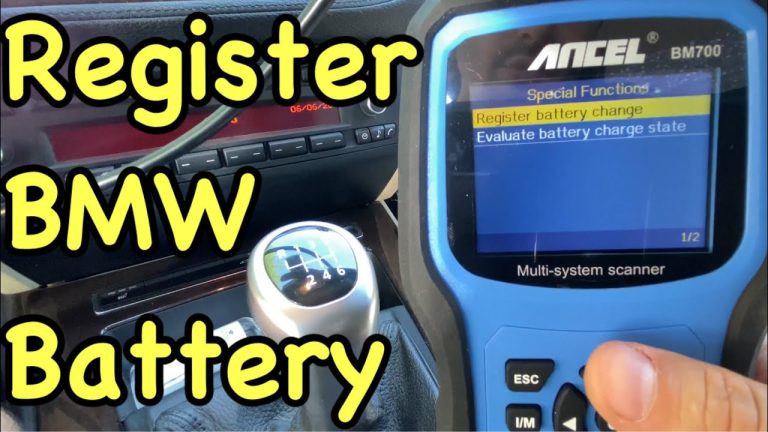
When your BMW stalls, using diagnostic tools can help. Recommended OBDII scanners can quickly find what is wrong. These tools read error codes and live data so you can see what the engine was doing at the moment it died. For example, a code P0101 might mean issues with the mass airflow sensor, P0171 or P0174 point to a lean condition, and P0335 or P0340 point to a crankshaft or camshaft sensor fault.
- LAUNCH CR619: Affordable and user-friendly.
- BlueDriver OBDII: Bluetooth connection for smartphones.
- Autel MaxiCOM: Advanced features for diagnostics.
Understanding error codes is important. Codes point you to specific issues. Fixing these problems can help your BMW run smoothly.
What does an OBDII scanner do?
An OBDII scanner reads information from your car. It checks for problems and shows error codes. These codes tell you what needs fixing. Beyond codes, live data is where the real answers hide. Watch short-term and long-term fuel trims: if they climb well past plus or minus 10 percent at idle, you likely have a vacuum leak or a fuel delivery problem. Compare commanded idle RPM against actual idle RPM. If the engine is commanding around 650 to 750 RPM and actual RPM dips toward 500 or lower right before it dies, the idle control circuit is the place to look.
Real-Life Scenarios of BMW Stalling
Experiences from BMW owners. Case studies of common stalling events.
Many BMW owners have faced stalling while stopping. This can be puzzling and frustrating. Here are some stories from drivers who experienced this issue:

- A driver reported that their BMW stalled at red lights, making waiting annoying.
- Another owner noticed stalling during slow turns in busy areas. This felt unsafe.
- A third scenario involved the car stalling after sudden stops. The engine would shut off momentarily.
Model-Specific Patterns and Known BMW Bulletins
Different BMW engines have different weak spots. The N20 and N55 engines are known for issues with the Valvetronic system and high-pressure fuel pump, which can cause stalling at idle. The B48 and B58 engines are generally more robust but can still suffer from a failing mass air flow sensor or a software glitch in the DME that affects idle quality. BMW has issued service bulletins for some of these, so it is worth checking whether your VIN is covered before paying for a repair out of pocket.
These common experiences show that stalling can happen in different ways. Owners agree it can be worrying. Understanding why this happens can help alleviate fears and improve driver confidence.
Why does my BMW stall when I stop?
There may be several reasons, including fuel issues, faulty sensors, or vacuum leaks. Checking these can help solve the problem. The fastest way to tell a real stall from normal start-stop is to watch the tachometer. In a real stall, RPM drops to zero and the car will not restart on its own when you release the brake. With start-stop, the tach settles to a rest position and the engine fires back up the moment you lift off the brake or touch the throttle.
Preventive Maintenance to Avoid Stalling
Regular inspection of essential components. Importance of fuel quality and maintenance.
To keep your car running smoothly, regular check-ups are key! These inspections focus on parts like the battery, brakes, and spark plugs. Think of it like a doctor’s visit, but for your BMW! Fuel quality also matters; bad fuel can make your engine feel cranky, like a toddler missing their nap! Always fuel up with good-quality gas to avoid problems. Here’s a quick comparison of essential components:
| Component | Inspection Frequency | Impact on Performance |
|---|---|---|
| Battery | Every 6 months | Starts smoothly |
| Brakes | Every 10,000 miles | Smooth stops |
| Fuel System | Monthly | Prevents stalling |
Don’t wait for your BMW to throw a tantrum! Keep it healthy with preventive maintenance, and it will reward you with smooth rides.
When to Seek Professional Help
Identifying severe symptoms indicating deeper issues. Cost considerations for repairs and diagnostics. If your BMW stalls repeatedly, loses power at speed, or throws a check engine light alongside the stall, that is a sign to stop driving and get it looked at. A one-time stall at a light with a clean restart is usually safe to drive home carefully. Repeated stalls in traffic are not.

Noticing strange symptoms in your BMW? It might be time to call in the pros. If your car sputters, shakes, or makes weird noises, pay attention. These could mean deeper problems lurking under the hood. Ignoring them is like avoiding the dentist after eating a ton of sweets, no one wins. Also, consider repair costs. Diagnostic checks can save you from larger bills later. As a rough guide, an independent shop typically charges less than a dealer for the same job, and common fixes like a fuel pump, ignition coils, or a mass air flow sensor usually run a few hundred dollars in parts and labor depending on the model.
| Symptom | Description |
|---|---|
| Sputtering | Your car feels like it’s hiccuping, not a good sign. |
| Check Engine Light | This little light knows when things go wrong. Trust it! |
| Loss of Power | If your BMW struggles to speed up, it’s waving a red flag. |
Don’t wait too long. Catching problems early can save money and keep you safe on the road. A healthy BMW equals a happy driver!
Is It Safe to Drive? When to Tow
If your BMW stalls once at a stop and restarts normally, you can usually drive it to a shop. But if it stalls repeatedly, stalls at speed, or will not restart, do not drive it. Pull over safely and call for a tow. Repeated stalling in traffic is a safety hazard and can also point to a failing fuel pump or sensor that could leave you stranded. In rare cases, a stalling defect can trigger an NHTSA recall, so check your VIN against open recalls if the problem seems widespread.
DIY Tips for Troubleshooting Stalling Problems
Step-by-step guide for simple checks. Tools needed for basic diagnostics.
If your BMW has decided to play hide and seek at stoplights, don’t worry. Start with a few simple checks. First, look at the engine oil level, low oil can be a sneaky culprit. Next, check the fuel system, clogged filters can be a total party pooper. Finally, the battery connections should be tight and clean. No one likes a lazy battery. If you want to go deeper, a fuel pressure gauge, a smoke machine for vacuum leaks, and a multimeter for battery and sensor voltage will cover most at-home diagnosis.
| Tools Needed | Purpose |
|---|---|
| Wrench | To tighten loose connections |
| Oil Dipstick | To check oil level |
| Fuel Pressure Gauge | To check fuel system pressure |
With these easy steps, you’re one step closer to solving that stalling problem. Remember, even cars need a little TLC now and then!
Step-by-Step Diagnostic Process
Start by scanning for codes and recording live data at idle. Note fuel trims, idle RPM, and battery voltage. Then move to physical tests. Check fuel pressure at the rail with a gauge and compare it to spec. Use a smoke machine to find vacuum leaks. Test battery voltage with a multimeter, it should read around 12.6 volts engine off and 13.5 to 14.5 volts running. If all those pass, inspect the idle control valve and throttle body for carbon buildup and clean them if needed.

Conclusion
Your BMW may stall when you stop due to issues like fuel supply, battery problems, or engine faults. Understanding these causes can help you troubleshoot effectively. Regular maintenance is key to preventing stalls. If your car continues to stall, consider seeking professional help. You can also read more about car care to keep your BMW running smoothly.
FAQs
What are the common causes of BMW stalling when stopping?
BMW can stall when stopping due to faulty sensors, dirty fuel injectors, vacuum leaks, bad spark plugs, or issues with the idle control valve. In some cases, low fuel pressure or a failing fuel pump can also be the culprit.
How do I diagnose BMW stalling issues?
Start by scanning the car for fault codes with an OBD-II scanner. Check fuel delivery, ignition components, air intake, and vacuum lines for any damage or buildup.
What are the symptoms of a faulty fuel injector in my BMW?
Common signs include rough idling, poor acceleration, misfires, and reduced fuel efficiency. You might also notice a strong smell of fuel.
How do I replace the fuel filter in my BMW?
First, disconnect the battery and relieve fuel system pressure. Remove the old filter, install the new one in the correct direction, and reconnect everything securely.
What are the signs of bad spark plugs in my BMW?
You may experience hard starting, poor acceleration, misfires, and lower fuel economy. A rough idle is also a common symptom.
How do I clean the Mass Air Flow (MAF) sensor in my BMW?
Unplug the MAF sensor, remove it carefully, and spray it with MAF sensor cleaner. Let it dry completely before reinstalling.
What is the VANOS system, and how can it cause stalling?
The VANOS system controls valve timing for better performance and efficiency. If it fails or gets clogged, it can disrupt airflow and cause stalling.
How do I update the ECU software in my BMW?
You can update the ECU using BMW’s ISTA software or have a dealer perform the update. This can u003ca href=u0022https://lawngreen-eland-979917.hostingersite.com/bmw-4×4-warning-light/u0022u003efix stalling issues causedu003c/au003e by outdated programming.
What are the recommended service intervals for my BMW to prevent stalling?
Generally, service your BMW every 10,000 miles or once a year. Replace spark plugs, filters, and fluids as recommended to avoid stalling issues.
Can I perform DIY repairs on my BMW to fix stalling issues?
Yes, simple tasks like replacing spark plugs, cleaning sensors, or changing filters can be done at home. However, complex engine or electrical issues should be handled by a professional.
Why does my BMW idle roughly before stalling?
A rough idle before stalling can be caused by vacuum leaks, dirty throttle bodies, or failing ignition coils. These issues disrupt the air-fuel balance.
Can a dead battery cause my BMW to stall when I stop?
Yes, a weak or dying battery can cause voltage drops, leading to stalling at low speeds or idle.
Does a clogged catalytic converter cause stalling in BMWs?
Yes, a clogged catalytic converter restricts exhaust flow, which can lead to poor performance and stalling.
How can dirty fuel cause my BMW to stall?
Contaminated fuel can clog injectors, reduce fuel pressure, and cause the engine to stall.
Related posts:
 ZF 8HP Transmission Problems: Variants, Costs & Fixes
 Which BMW Has 3 Rows? X7, iX, and X5 Explained
 Where To Buy BMW Coolant: Best Sources, Prices & Fitment
 What BMW Has the B58 Engine? Full Model List, Years, and Outputs
 BMW Restraint System Malfunction: Causes, Codes & Fixes
 My BMW App Not Working? Symptom Checker & Quick Fixes
 How To Decode BMW VIN: Step-by-Step Guide With Examples
 How To Check BMW Transmission Fluid Level (Dipstick & Sealed)
 How To Connect To BMW WiFi: Step-By-Step Guide (2025)
 Bmw Leaking Coolant But Not Overheating: Causes & Fixes
 BMW Limp Mode: Causes, OBD-II Codes & Fixes Explained
 F150 Jump Seat Console Organizer: Fitment Chart & Top Picks