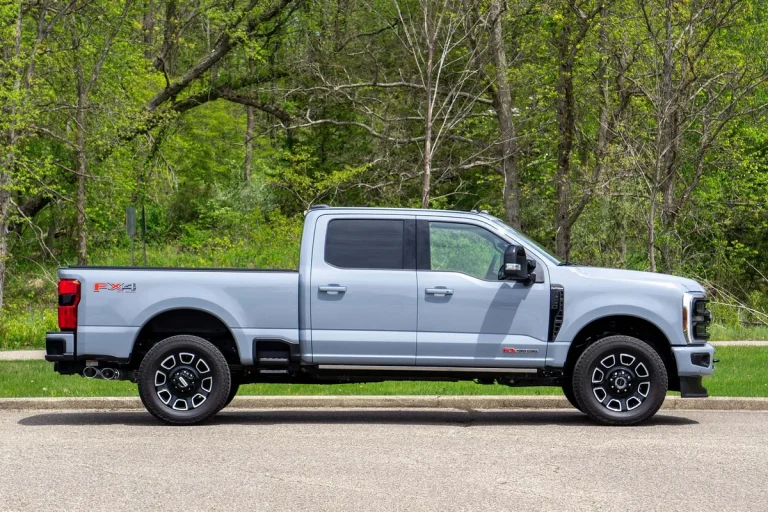
How Much Does a 2005 Ford F250 Weigh
If you're asking how much does a 2005 Ford F-250 weigh, you’re probably trying to figure out payload limits, towing capacity, or whether your driveway can handle it. The short answer? It depends, a lot. This isn’t one of those trucks where all models weigh the same.
Depending on cab size, bed length, drivetrain, and engine, the curb weight can swing by more than 1,500 pounds.
Manufacturer specifications indicate the 2005 F-250 Super Duty ranges from about 6,200 to nearly 7,800 pounds unloaded. That spread matters for real-world use, especially if you're loading tools, towing a trailer, or comparing it to other heavy-duty pickups. Let’s break down exactly what changes that number, and how you can find the right figure for your specific truck.
Why the Weight of a 2005 Ford F-250 Isn’t a Simple Number
You can’t just Google “2005 F-250 weight” and trust the first result. Unlike lighter trucks, the F-250 was built in dozens of configurations, and each one affects how much the truck tips the scales. Ford designed it as a workhorse, not a one-size-fits-all vehicle. So if you’re hauling concrete, pulling a fifth-wheel, or just curious about fuel economy, you need the right number, not an average.
Think of it like this: a base-model regular cab with a short bed and gas engine will feel (and weigh) very different from a loaded-up crew cab dually with the diesel V8. Even two trucks that look similar might have different axle ratios, suspension packages, or optional equipment that add pounds. That’s why we always start with configuration, not guesswork.
The Key Variables That Change Everything
Cab Style: Regular, SuperCab, or Crew Cab
The cab is the biggest weight differentiator. A Regular Cab (two doors, one row) is the lightest setup, typically saving 300, 400 pounds over a Crew Cab (four full doors, two rows). SuperCab (extended rear access) sits in the middle. More metal, glass, and interior trim mean more mass, especially when you add rear seats and reinforced structures.
Bed Length: Short (6.75 ft) vs. Long (8 ft)
Long beds add steel, crossmembers, and flooring. While the difference isn’t huge, usually 50, 100 pounds, it stacks with other choices. Most contractors prefer the 8-foot bed for lumber or equipment, but if you’re tight on garage space, the short bed shaves a bit of weight and length.
Drivetrain: 4×2 vs. 4×4
Four-wheel drive adds transfer case, front differential, and extra driveshaft components. Expect 150, 200 pounds more than a comparable 4×2. If you don’t need off-road capability or winter traction, RWD keeps things lighter, and slightly more fuel-efficient.
Engine: 5.4L Gas V8 vs. 6.0L Power Stroke Diesel
This is where the scale really moves. The 5.4L Triton V8 weighs around 600 pounds. The 6.0L Power Stroke diesel? Closer to 1,000 pounds, nearly double.
Diesels bring iron blocks, turbochargers, and reinforced internals. They also deliver massive torque, but at the cost of added curb weight and complexity.
Trim Level and Added Options
XLT and Lariat trims include more sound insulation, upgraded suspensions, and heavier bumpers. King Ranch models add leather, chrome, and additional bracing. Even things like power running boards or a heavy-duty alternator can add 20, 50 pounds. Always check the build sheet if you’re buying used.
How to Find the Exact Weight for Your Truck
Don’t rely on online forums or vague estimates. There are two reliable ways to get your truck’s actual weight.
Check the Door Jamb Sticker (GVWR and Curb Weight)
Open the driver’s door and look for the white or yellow certification label. It lists the Gross Vehicle Weight Rating (GVWR), the maximum safe weight including passengers, cargo, and fuel, and often includes the curb weight (unloaded weight as built). This sticker is required by NHTSA and reflects your exact configuration.
If the sticker is missing or faded, you can cross-reference your VIN with Ford’s OEM database or a dealership service department. As of 2026, many classic truck specs are still accessible through Ford’s archival parts system.
Use a Certified Scale (Truck Stop or Weigh Station)
For the most accurate reading, drive onto a certified scale. Truck stops like those operated by CAT Scale charge a few dollars and give you a printed ticket showing front/rear axle weights and total weight. This is especially useful if you’ve added aftermarket bumpers, winches, or suspension lifts that alter the factory weight.
Weigh your truck both unloaded and fully loaded (with typical gear, fuel tank full, and passengers). That lets you calculate real-world payload and avoid overloading.
Calculate Payload: GVWR Minus Curb Weight
Payload is what you can safely carry, not what the truck weighs. Subtract the curb weight from the GVWR. For example, a Crew Cab 4×4 diesel with a 10,000-lb GVWR and 7,400-lb curb weight has about 2,600 pounds of payload. That includes people, tools, bed cargo, and tongue weight from a trailer.
Never exceed GVWR. It’s not just a suggestion, it affects braking, handling, and tire integrity.
Real Weight Ranges by Configuration
Here’s what our research shows for common 2005 F-250 setups:
| Configuration | Approx. Curb Weight |
|---|---|
| Regular Cab, 6.75' bed, 4×2, 5.4L gas | 6,200–6,400 lbs |
| SuperCab, 8' bed, 4×4, 5.4L gas | 6,800–7,000 lbs |
| Crew Cab, 6.75' bed, 4×4, 6.0L diesel | 7,300–7,500 lbs |
| Crew Cab, 8' bed, 4×4, 6.0L diesel dually | 7,600–7,800 lbs |
These numbers align with Ford’s original specs and verified owner reports. Note that dually (dual rear wheels) models use heavier axles, frames, and suspension components, hence the jump.
Why Weight Matters: Towing, Payload, and Real-World Use
Knowing your truck’s weight isn’t just academic. It directly impacts performance, safety, and legality.
Towing Capacity vs. Actual Load Weight
Towing capacity assumes optimal conditions: light payload, flat terrain, and proper hitch setup. But if your truck already weighs 7,500 pounds, adding 12,000 pounds of trailer shifts the center of gravity and strains brakes. Always subtract your actual curb weight and payload from the rated towing capacity to see what’s realistic.
Fuel Economy Impact (Heavier = Worse MPG)
Every extra 100 pounds reduces fuel efficiency by 1, 2%. A diesel Crew Cab might get 14, 16 mpg highway when empty, but drop to 10, 12 mpg when fully loaded. Gas models suffer even more under load due to lower torque.
Tire and Brake Wear Considerations
Heavier trucks wear out tires faster, especially if you run highway-pressure tires while hauling. Brake pads and rotors also degrade quicker. If you frequently tow or carry heavy loads, consider upgrading to severe-duty brake kits and load-range E tires rated for higher weights.
Weight distribution matters too. Too much weight over the rear axle can cause fishtailing; too little tongue weight reduces trailer stability. Aim for 10, 15% of trailer weight on the hitch.
Common Mistakes When Guessing F-250 Weight
Assuming all F-250s weigh the same is the fastest way to overload your truck or underestimate its capability. We’ve seen owners load 3,000 pounds into a bed rated for 2,200 because they read “F-250s can haul anything” online. That’s not just risky, it’s how axles break and brakes fail.
Another frequent error is confusing GVWR with payload. GVWR includes everything: truck, people, fuel, and cargo. Payload is just what you can add. If your door jamb says 10,000 lbs GVWR and your curb weight is 7,400 lbs, your payload is 2,600 lbs, not 10,000.
Overloading by even 200 pounds can compromise steering and suspension.
Also, don’t ignore added weight from modifications. Winches, steel bumpers, and auxiliary fuel tanks can add 100, 300 pounds. If you’ve upgraded, re-weigh your truck. Factory specs won’t reflect those changes.
How It Compares to Similar Trucks
2005 Ford F-250 vs. Chevy Silverado 2500HD
The Silverado 2500HD with the 6.0L gas V8 weighs slightly less, about 6,500, 7,200 lbs depending on config, but offers lower towing capacity than the Ford diesel. Chevy’s Duramax diesel option (6.6L) matches the F-250’s torque but uses a different cooling system that some owners find less prone to overheating under heavy load.
If you prioritize ride comfort, the Silverado’s suspension feels softer. But for raw frame strength and aftermarket support, the F-250 wins. Both trucks share similar GVWR ranges, but Ford’s higher standard payload gives it an edge for work use.
2005 Ford F-250 vs. Ram 2500
The Ram 2500 with the 5.7L Hemi gas engine is lighter (6,300, 6,900 lbs) and more fuel-efficient, but lacks the low-end grunt of the Power Stroke diesel. Ram’s 5.9L Cummins diesel is legendary for longevity, though early 2000s models require more maintenance than Ford’s 6.0L.
Ram’s interior was more refined in 2005, with better materials and quieter cabins. But if you’re towing over 12,000 pounds regularly, the F-250’s heavier frame and stronger rear axle make it the safer bet.
F-250 vs. F-350: When You Need the Extra Weight Rating
The F-350 isn’t just a “bigger F-250.” It has a reinforced frame, heavier-duty rear suspension, and often dual rear wheels (dually). Curb weight jumps to 7,800, 8,500 lbs, but GVWR climbs to 10,000, 13,000 lbs.
You only need an F-350 if you’re consistently towing gooseneck trailers over 15,000 lbs or carrying payloads above 3,500 lbs. For most fifth-wheel RVers or contractors, the F-250’s balance of capability and drivability is plenty.
Who This Truck Is Really For
Best For: Heavy Towing, Work Use, Diesel Torque Needs
If you’re pulling a horse trailer, hauling skid steers, or running a mobile repair business, the 2005 F-250 diesel is built for you. Its 6.0L Power Stroke delivers 325 lb-ft of torque, enough to move mountains, or at least fully loaded flatbeds.
Commercial users appreciate the rugged Dana 60 front axle and Sterling 10.25” rear axle. These components handle abuse that would bend lighter trucks. Plus, the crew cab offers space for crews or tools without sacrificing bed utility.
Not Ideal For: Daily Driving, Fuel Efficiency, Light-Duty Tasks
Don’t buy this truck if you’re commuting 50 miles daily on pavement. The stiff suspension, loud diesel engine, and poor fuel economy (10, 14 mpg combined) make it miserable for city use.
Similarly, if you only tow a small camper once a year, a half-ton truck like an F-150 or Silverado 1500 will save you money on fuel, insurance, and maintenance. The F-250’s strengths shine under load, not in stop-and-go traffic.
Safety and Legal Limits You Can’t Ignore
Bridge and Road Weight Laws by State
Every state enforces bridge laws that limit axle weights. For example, California caps single axles at 20,000 lbs and tandem axles at 34,000 lbs. Your F-250’s rear axle alone can legally carry up to 6,000 lbs, but only if properly distributed.
Check your state’s DOT website before long hauls. Overweight fines start at $200 and climb fast. Some states require permits for loads over 80,000 lbs gross, though your F-250 won’t reach that, trailer combinations might.
When You Might Need a CDL (Spoiler: Not for Stock F-250)
A Commercial Driver’s License is required if your vehicle has a GVWR of 26,001 lbs or more, or if you’re towing a trailer over 10,000 lbs with a combined GVWR exceeding 26,001 lbs.
Your stock F-250 tops out at 10,000 lbs GVWR, so no CDL needed, even with a heavy trailer. But if you modify it (e.g., add a second axle), that changes. Always verify with your state’s DMV.
Brake and Suspension Upgrades for Heavy Loads
Factory brakes on 2005 F-250s are adequate but not exceptional. If you tow often, upgrade to slotted rotors, ceramic pads, and stainless brake lines. This improves stopping distance by 15, 20% when loaded.
For suspension, consider airbags (like Firestone Ride-Rite) or heavy-duty shocks. They level the truck when towing and reduce sway. Avoid cheap add-a-leaf kits, they stiffen ride without improving control.
Pro Tips for Owners and Shoppers
How to Estimate Weight Without a Scale
If you’re shopping used and can’t weigh the truck, look for clues. Diesel engines sit lower in the frame, check for oil pan clearance. Dually models have wider rear fenders and two tires per side. Crew cabs have B-pillars behind the front doors; regular cabs don’t.
These visual cues help narrow the range before you drive it.
Also, ask for the VIN and run it through a service like Carfax or the NHTSA VIN decoder. You’ll often find original specs, including engine and drivetrain codes that hint at weight.
Why Diesel Models Age Differently (6.0L Issues)
The 6.0L Power Stroke gets a bad rap, but it’s not inherently flawed, it’s often mistreated. Early models suffered from weak EGR coolers and high-pressure oil system leaks, but many were fixed under warranty or through aftermarket upgrades.
If maintained properly (regular oil changes, coolant flushes, and using OEM filters), these engines last 250,000+ miles. The key is avoiding extended idling and using quality fuel. Gas 5.4L models are simpler but lack the longevity under heavy load.
Rust Prevention in Snowy Climates
The 2005 F-250’s frame is prone to corrosion in salt-heavy regions. Focus on the rear axle housing, leaf spring mounts, and cab corners. Wash the undercarriage monthly in winter and apply fluid film or undercoating annually.
Check for bubbling paint or soft spots, especially near the wheel wells. Once rust starts, it spreads fast. If you’re buying in Minnesota, Michigan, or upstate New York, inspect thoroughly or avoid high-mileage examples.
Final Decision Guide: What to Do Next
If You Own One: Weigh It, Check the Sticker, Plan Loads Carefully
Don’t assume you know your truck’s limits. Get it weighed empty and loaded. Compare those numbers to the door jamb sticker. If you’re consistently near GVWR, consider upgrading tires or suspension.
Keep a log of payloads for common tasks, like hauling gravel or towing your trailer. This helps you spot trends and avoid surprises.
If You’re Buying: Match Config to Your Towing/Payload Needs
Need max towing? Go crew cab, diesel, 4×4, and long bed, but expect 7,500+ lbs curb weight. Prefer fuel economy and lighter handling? A regular cab gas model saves 1,000+ pounds and costs less upfront.
Avoid over-buying. An F-350 is overkill unless you’re regularly exceeding 3,500 lbs payload. And skip the diesel if you drive under 15,000 miles yearly, it won’t pay off.
If You’re Towing: Never Guess—Weigh the Load
Use a tongue weight scale or bathroom scale under the jack stand to measure hitch weight. Aim for 10, 15% of trailer weight. Too little causes sway; too much overloads the rear axle.
For fifth wheels, ensure your bed pin box matches the trailer’s rating. And always do a slow test pull before committing to a long trip, check mirrors, brakes, and stability at highway speeds.
Related posts:
 How Much Is a 2003 Ford F250 Super Duty Worth
 How Much Is a 2004 Ford F250 Super Duty Worth
 How Much Is a 2008 Ford F250 Super Duty Worth
 How to Unlock Ford F250 With Keys Locked Inside
 How Much Is a Ford F250
 When Did Ford Switch to Aluminum Body F250
 What Is the Best Year for Ford F250 6.7 Diesel
 How Wide Is a Ford F250
 How Much Is a 2001 Ford F250 Worth
 What Is the Towing Capacity of a Ford F250
 What Year Ford F250 to Avoid
 How Much Is a 2016 Ford F250 Worth