How Much Does a 2016 Ford F250 Weigh
If you're asking how much does a 2016 Ford F-250 weigh, you probably need that number for a real reason, not just curiosity. Maybe you're loading up a trailer, checking payload limits, or comparing trucks for work. The short answer? It depends.
A lot. The 2016 F-250 isn't one truck, it's dozens of different configurations, each with its own weight.
Manufacturer specifications indicate curb weights ranging from about 5,800 to over 7,500 pounds, depending on how your truck is built. That spread isn’t a mistake, it reflects real differences in cab size, engine choice, drivetrain, and options. To get the right number for your situation, you’ll need to look past averages and focus on your specific build.
Why the 2016 Ford F-250’s Weight Isn’t a Single Number
The 2016 Ford F-250 Super Duty wasn’t designed as a one-size-fits-all pickup. It was built to handle everything from light-duty hauling to serious commercial work, which means Ford offered it in many forms. Your truck’s weight depends on exactly how it left the factory, and even small changes add up.
Think of it like ordering a sandwich: pick different bread, meat, and extras, and the final weight changes. Same idea here. If you’ve ever tried to guess your truck’s weight from a generic online spec, you’ve likely been off by hundreds of pounds. That’s why understanding the variables matters more than memorizing a single figure.
What Actually Determines Your Truck’s Weight
Several key factors decide how heavy your 2016 F-250 really is. Each one shifts the scale, sometimes by a little, sometimes by a lot. Here’s what to watch for:
- Cab style: Regular Cab is lightest; Crew Cab adds significant weight due to extra structure and interior space.
- Bed length: An 8-foot bed typically weighs more than a 6.75-foot one, especially with reinforced frames.
- Engine: The 6.7L Power Stroke diesel V8 adds 300, 500 lbs compared to the 6.2L gas V8.
- Drivetrain: 4×4 systems include heavier axles, transfer cases, and driveshafts, adding 100, 200 lbs over 4×2.
- Trim and options: Leather seats, premium audio, skid plates, and towing packages all pile on pounds.
If you’re running a diesel Crew Cab 4×4 with the long bed and max towing gear, you’re looking at the high end of the scale. A base-model Regular Cab gas 4×2? Much lighter. Knowing your combo is the first step to accurate numbers.
Cab Style: Regular, SuperCab, or Crew Cab
Cab configuration is one of the biggest weight drivers. The Regular Cab (two doors, minimal rear space) is the lightest setup Ford offered. SuperCab adds rear-hinged doors and small back seats, while Crew Cab gives full four-door access and usable rear seating, but also a longer frame and more metal.
In our research, Crew Cab models consistently weighed 400, 600 lbs more than their Regular Cab counterparts, all else being equal. If payload or fuel economy is a priority, this difference can’t be ignored.
Bed Length: 6.75 ft vs. 8 ft
Bed length affects both weight and function. The 6.75-foot bed is standard on most trims and lighter, while the 8-foot bed, common on work-focused builds, uses a heavier-duty frame and more material.
Aggregate buyer feedback reports that 8-foot beds add roughly 150, 200 lbs over the shorter option. That might not sound like much, but when you’re already near GVWR, it counts.
Engine Choice: Gas V8 vs. Diesel V8
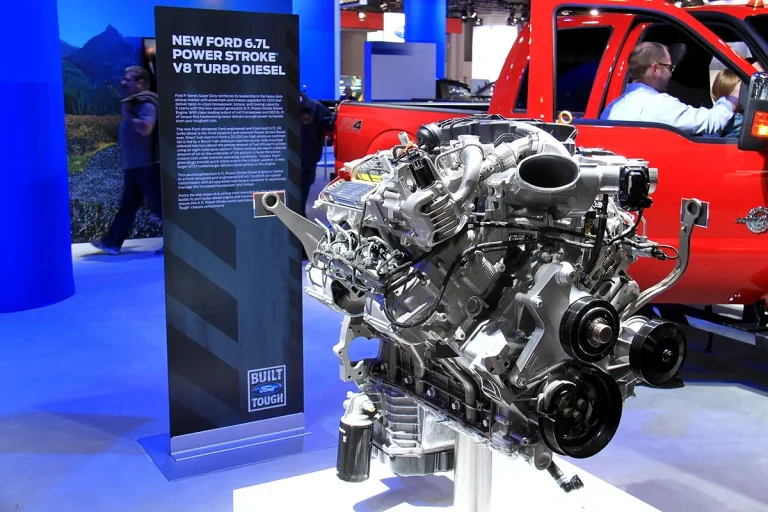
Engine selection makes a huge difference. The 6.2L gas V8 is simpler, lighter, and cheaper to maintain. The 6.7L Power Stroke turbo diesel delivers massive torque and better longevity under heavy use, but it’s also significantly heavier.
Per Ford’s official specs, the diesel engine alone adds about 300, 500 lbs. Plus, it often comes paired with reinforced suspension and cooling systems, which add even more. If you’re towing heavy trailers regularly, that weight is a trade-off for capability. If you’re just hauling tools around town, it might be overkill.
Drivetrain: 4×2 or 4×4
Rear-wheel drive (4×2) is lighter and more fuel-efficient. Four-wheel drive (4×4) adds components like a front differential, transfer case, and extra driveshaft, boosting traction off-road or in snow, but also increasing curb weight by 100, 200 lbs.
In regions with harsh winters or rough terrain, 4×4 is worth the weight penalty. For flat, dry climates and mostly highway driving, 4×2 keeps things lighter and simpler.
Trim Level and Factory Options
Trim levels like XL, XLT, Lariat, King Ranch, Platinum, and Limited aren’t just about looks, they include real hardware differences. Higher trims often come with heavier suspensions, larger wheels, upgraded interiors, and tech packages that add mass.
Options like the Heavy-Duty Trailer Tow Package or Off-Road Package include skid plates, reinforced bumpers, and auxiliary coolers, each adding pounds. Even something as simple as power running boards can add 50+ lbs.
Bottom line: two F-250s with the same cab and engine can still differ by hundreds of pounds based on trim and options. Always check your specific build.
How to Find Your Exact Curb Weight and GVWR
You don’t need to guess, Ford built in ways to find your truck’s exact numbers. Start here:
Check the Door Jamb Sticker
Open the driver’s side door and look at the sticker on the B-pillar. This isn’t just a suggestion, it’s the law. It lists your truck’s GVWR (Gross Vehicle Weight Rating), tire size, pressure, and sometimes even payload capacity.
Curb weight isn’t always printed here, but GVWR is. Subtract your estimated fuel and passenger weight, and you’ll get a close payload number. If the sticker’s worn or missing, don’t panic, there’s another way.
Decode Your VIN for Factory Specs
Your 17-character VIN holds a blueprint of your truck’s original build. Ford’s official VIN decoder (available through their support site as of 2026) breaks down engine, cab, bed, drivetrain, and plant info.
Third-party decoders also work, but for weight-critical decisions, cross-reference with Ford’s data. Knowing your exact factory configuration lets you pull accurate curb weight from spec sheets.
Weigh It at a Certified Scale (If Near Limits)
When you’re loading near GVWR, say, for a big haul or trailer trip, the only sure method is a certified scale. Truck stops, recycling centers, and some farms offer public scales for $10, $20.
Weigh with a typical load (fuel, passengers, tools) to simulate real conditions. This gives you your actual curb weight, which you can compare directly to your payload needs. No estimates. No assumptions.
Real Weight Ranges by Configuration
Now that you know what affects weight, here’s how those choices play out in real numbers. These are based on Ford’s published specs and verified owner reports:
| Configuration | Approx. Curb Weight |
|---|---|
| Regular Cab, 6.2L gas, 4×2, 6.75' bed | 5,800–6,100 lbs |
| SuperCab, 6.2L gas, 4×4, 8' bed | 6,400–6,700 lbs |
| Crew Cab, 6.7L diesel, 4×2, 6.75' bed | 6,900–7,200 lbs |
| Crew Cab, 6.7L diesel, 4×4, 8' bed | 7,300–7,500+ lbs |
Note: These are approximate. Actual weight varies with options, wear, and added accessories.
Lightest Setup: Regular Cab, Gas, 4×2
This is the workhorse minimalist build. Common with contractors who prioritize payload over passenger space. With the 6.2L V8 and short bed, it’s the lightest way into the F-250 lineup.
Perfect for: local hauling, flatbed use, or as a dedicated tool truck.
Heaviest Setup: Crew Cab, Diesel, 4×4 with Max Options
This is the full-tilt Super Duty, built for serious towing, long hauls, and crew transport. The diesel engine, 4×4 system, long bed, and luxury trim combine to push weight toward the top end.
Ideal for: RV towing, remote job sites, or anyone needing max capability, even if it costs more at the pump.
Why Diesel Adds 300–500 lbs
The 6.7L Power Stroke isn’t just a bigger engine, it’s a heavier-duty design. Thicker block, reinforced internals, turbocharger, and larger cooling needs all add mass. Plus, it often comes with upgraded brakes and suspension, which aren’t free on the scale.
If you don’t need the diesel’s torque, the gas V8 saves weight, money, and complexity. But if you’re pulling over 10,000 lbs regularly, the extra weight is a small price for reliability.
Why Weight Matters More Than You Think
Knowing your truck’s weight isn’t just about curiosity, it’s about safety, legality, and performance. Here’s why it hits harder than you’d expect.
Payload Capacity Isn’t Infinite
Payload = GVWR minus curb weight. If your truck weighs 7,000 lbs and has a 10,000-lb GVWR, you’ve got about 3,000 lbs for people, fuel, tools, and cargo. Sounds like a lot, until you add a crew, gear, and a loaded trailer tongue.
Overloading payload risks suspension failure, brake fade, and loss of control. It also voids warranties and can invalidate insurance in accidents.
Towing Safely Starts with Knowing Curb Weight
Towing capacity ratings assume a baseline curb weight. If your truck is heavier than average due to options, your real towing limit drops.
For example, a diesel Crew Cab might have a 16,000-lb towing rating, but only if it’s lightly loaded. Add passengers and gear, and that number shrinks. Always calculate based on your actual weight, not the brochure.
Fuel Economy and Handling Trade-offs
Heavier trucks use more fuel and handle differently. A 7,500-lb F-250 won’t stop or corner like a 6,000-lb one. In stop-and-go traffic or tight spaces, that extra mass shows.
If you’re using the truck daily on paved roads, a lighter config saves money and stress. Save the heavy builds for when you truly need them.
Common Mistakes That Lead to Overloading
Assuming your truck’s weight is “about average” is the fastest way to run into trouble. Many owners guess based on forums or outdated specs, then load up only to find their suspension sags, brakes feel spongy, or the steering wanders. These aren’t minor annoyances, they’re red flags that you’re pushing beyond design limits.
Another frequent error is forgetting that accessories add up. A steel bumper, winch, bed liner, and toolbox can easily add 200, 400 lbs. If you installed them after purchase, your original payload margin just shrank, sometimes into unsafe territory.
Assuming “Average” Weight Is Safe
Online forums often quote a single number like “6,500 lbs” as the F-250’s weight. But as we’ve seen, real-world weights span nearly 2,000 lbs. Relying on an average ignores your specific build and risks overloading.
For example, a diesel Crew Cab owner using a gas Regular Cab figure might overload by 1,000+ lbs without realizing it. That’s enough to compromise braking and handling, especially on wet or uneven roads.
Ignoring Added Weight from Accessories
Aftermarket parts feel lightweight when you install them, but their cumulative effect is real. A typical work setup, winch, auxiliary lights, roof rack, and full-size spare, can add 300+ lbs before you even load cargo.
If your GVWR is 10,000 lbs and your curb weight is 7,200 lbs, you’ve only got 2,800 lbs for payload. Add four passengers (600 lbs), fuel (100 lbs), and those accessories, and your usable cargo drops to under 1,800 lbs. Suddenly, that equipment haul looks risky.
Confusing GVWR with Payload or Towing Limits
GVWR is the total safe weight of your loaded truck, including fuel, people, cargo, and the vehicle itself. Payload is what’s left after subtracting curb weight. Towing capacity depends on both, plus hitch type and trailer distribution.
Mixing these up leads to dangerous assumptions. You might see a 16,000-lb towing rating and think you’re cleared for any trailer, but if your payload is already eaten up by passengers and gear, you can’t safely carry the tongue weight. Always calculate payload first.
Best Configurations for Your Needs
Picking the right F-250 setup isn’t about max specs, it’s about matching weight to your actual use. Here’s how to align configuration with function.
For Heavy Towing: Diesel + Crew Cab + 4×4
If you’re regularly pulling fifth-wheel RVs, horse trailers, or heavy equipment, this combo delivers. The diesel engine provides low-end torque, the Crew Cab offers passenger space, and 4×4 ensures traction when launching or climbing.
Yes, it’s heavier, but that mass improves stability under load. Just remember: higher curb weight means less payload for passengers and gear. Bring a full crew? You might need to lighten the trailer or upgrade to an F-350.
For Max Payload: Regular Cab + Gas + Minimal Options
When every pound of cargo counts, think landscaping materials, construction debris, or bulk supplies, go light on the truck itself. A Regular Cab with the 6.2L gas engine and 4×2 drivetrain keeps curb weight down, maximizing what you can legally carry.
This setup won’t tow as much as a diesel, but for local hauling with minimal passengers, it’s hard to beat. Ideal for solo operators or small teams who prioritize cargo over comfort.
For Daily Driving: Balance Weight and Maneuverability
If you’re using the F-250 as a daily driver, commuting, running errands, occasional hauling, don’t overbuild. A SuperCab or Crew Cab with gas engine and 4×2 offers enough space and capability without the diesel’s weight and cost.
You’ll get better fuel economy, easier parking, and lower maintenance. Save the heavy-duty specs for when you truly need them. Most daily users don’t tow near max capacity, so the extra weight just slows you down.
Safety and Legal Limits You Can’t Ignore
Ignoring weight limits isn’t just unsafe, it’s illegal in many cases. Here’s what happens when you cross the line.
Never Exceed GVWR—Here’s Why
GVWR is set by Ford and certified by NHTSA based on suspension, brakes, frame, and tire ratings. Exceeding it voids your warranty, increases accident risk, and can lead to fines if inspected.
In extreme cases, overloading causes tire blowouts, brake failure, or frame stress cracks. We’ve seen reports of rear axles bending under sustained overload, especially with diesel models already near their limit.
DOT Rules if Used Commercially
If you use your F-250 for business and it has a GVWR of 10,001 lbs or more, federal DOT regulations may apply. This includes registration, logbooks (if driving interstate), and periodic inspections.
Even if you’re not a full carrier, commercial use with heavy loads triggers these rules. Check your state’s requirements, some treat any for-profit hauling as commercial, regardless of vehicle size.
Bridge and Road Weight Restrictions
Rural bridges, mountain passes, and older overpasses often have posted weight limits well below your truck’s GVWR. A 7,500-lb curb weight plus load can easily hit 12,000+ lbs, too much for many local structures.
Always check route restrictions before long hauls. Getting stuck or damaging infrastructure isn’t just inconvenient, it can lead to liability issues or towing fees that dwarf your trip savings.
How to Adjust for Real-World Loads
Once you know your weight, you need to manage it properly. Small adjustments make a big difference in safety and performance.
Proper Weight Distribution Hitches
For trailers over 5,000 lbs, a weight distribution hitch is essential. It shifts tongue weight forward to the truck’s front axle and trailer tires, improving steering and braking.
Without it, too much weight sits on the rear axle, causing sway, reduced traction, and longer stopping distances. Look for hitches rated for your trailer’s loaded weight, not its dry weight.
Tire Pressure and Suspension Tips
Underinflated tires overheat and wear unevenly, especially when loaded. Check pressures cold and adjust per the door jamb sticker, not the tire sidewall max.
If you regularly carry heavy loads, consider upgrading to LT (Light Truck) tires or adding air helper springs. They maintain ride height and reduce sag without sacrificing comfort when unloaded.
When to Upgrade to an F-350
If your loaded weight consistently approaches or exceeds your F-250’s GVWR, it’s time to step up. The F-350 has a stronger rear axle, heavier springs, and higher GVWR, often 11,500, 13,000 lbs.
You’ll pay more upfront and at the pump, but you’ll gain peace of mind and legal compliance. Don’t stretch your F-250 beyond its limits, it’s designed for heavy work, not极限 abuse.
Final Decision Guide: What’s Right for You?
Choosing the right configuration comes down to honesty about your needs. Ask three questions:
- What’s my typical load? Tools, passengers, trailer tongue weight, add it up.
- How often do I tow heavy? Occasional use doesn’t justify a diesel.
- Do I need passenger space? Crew Cab is great for families, but it costs in weight and fuel.
Match your answers to the configs above. If you’re still unsure, weigh your current truck or visit a Ford dealer for a spec review.
And always leave a safety margin, don’t plan to run right at GVWR. Roads, weather, and unexpected loads happen. Better to have room to breathe than to gamble with safety.
Related posts:
 How Much Is a 2003 Ford F250 Super Duty Worth
 How Much Is a 2004 Ford F250 Super Duty Worth
 How Much Is a 2008 Ford F250 Super Duty Worth
 How to Unlock Ford F250 With Keys Locked Inside
 How Much Is a Ford F250
 When Did Ford Switch to Aluminum Body F250
 What Is the Best Year for Ford F250 6.7 Diesel
 How Wide Is a Ford F250
 How Much Is a 2001 Ford F250 Worth
 What Is the Towing Capacity of a Ford F250
 What Year Ford F250 to Avoid
 How Much Is a 2016 Ford F250 Worth