Ford F-150 Lightning Neutral Dead Battery
There's nothing quite as frustrating as stepping into your Ford F-150 Lightning, ready to hit the road, only to find it's completely unresponsive. Even worse, sometimes a dead 12V auxiliary battery can leave your truck stuck in neutral, a truly bewildering situation if you're not familiar with EV specifics. This isn't just an inconvenience, it can become a significant safety concern.
Unlike gas-powered trucks, electric vehicles like the F-150 Lightning have a complex high-voltage architecture that depends on a smaller, conventional 12V battery for critical control systems. Manufacturer specifications for most modern EVs, including the Lightning, indicate that if this 12V battery drops below approximately 10.5 volts, the vehicle's electronic systems can't function. This leads to a lockout, often in neutral. We'll walk you through exactly what's happening and how to get your F-150 Lightning moving safely again.
Ford F-150 Lightning Dead 12V Battery: Stuck in Neutral?
If you've got a Ford F-150 Lightning and it's stuck in neutral because of a dead 12V auxiliary battery, you're experiencing a fairly common, albeit alarming, EV issue. It's not just about starting the engine. For an electric vehicle, the 12V battery powers the "brain" that controls everything from opening doors to engaging the main high-voltage battery contactors. Without that power, your truck is essentially a very heavy, very smart brick.

The frustration is understandable. You might wonder why a vehicle with a massive main battery pack needs a small 12V battery at all. That huge lithium-ion battery powers the electric motors, but the critical low-voltage electronics (like your infotainment, lights, power steering, and especially the shift-by-wire system) rely on the familiar 12V power supply.
Why Your F-150 Lightning Gets Stuck in Neutral with a Dead Battery
This might seem counterintuitive. How can a small, dead 12V battery immobilize a powerful electric truck? The answer lies in how modern electric vehicles, particularly the F-150 Lightning, are designed. They use electronic controls for nearly everything.
The Role of the 12V Battery in Your EV
Your F-150 Lightning has two primary battery systems: the large, high-voltage battery (which powers the motors) and a smaller, conventional 12V auxiliary battery (similar to what you'd find in a gas car). The 12V battery is the unsung hero, waking up all the electronic control units (ECUs). It powers the infotainment system, lights, wipers, and crucially, the contactors that connect the high-voltage battery to the rest of the drivetrain. Without the 12V battery, these high-voltage contactors can't close.
This means no power flows to the motors, and the entire vehicle stays in a low-power state.
How the Shift-by-Wire System Works (and Fails)
The F-150 Lightning uses a "shift-by-wire" system. This means there's no mechanical linkage between your gear selector and the transmission. Instead, it's all electronic. When your 12V battery dies, the system loses power.
The vehicle's Battery Management System (BMS) intelligently defaults to a safe state, which often involves locking the transmission in Park or Neutral to prevent unintended movement. Aggregate reviews and manufacturer data consistently confirm this behavior for safety as of 2026. If it was already in neutral when the 12V battery died, it'll likely stay there, unable to respond to commands from the shifter.
The Dangers of a Dead EV Battery: Why This Isn't Just "Any Car"
Dealing with a dead 12V battery in an electric vehicle like the F-150 Lightning is different from a gas car. It carries specific risks you need to be aware of. We aren't just talking about inconvenience here, we're talking about potential harm to yourself or damage to your very expensive truck. It’s important to treat this situation with caution and respect for the vehicle's unique electrical architecture.
High-Voltage Systems: A Critical Warning
Underneath the hood and throughout the chassis of your F-150 Lightning are high-voltage cables and components, typically identified by their bright orange sheathing. While the 12V battery system is low voltage and generally safe to work with for simple tasks like jump-starting, the high-voltage system can be extremely dangerous if mishandled. If you're not absolutely sure what you're doing, or if you suspect damage to the high-voltage system, do not attempt repairs or extensive troubleshooting yourself. Electrical shock from an EV's main battery can be fatal.
Risks of Improper Towing or Jump-Starting
Improperly towing an F-150 Lightning can cause significant damage to its electric motors and drivetrain. Unlike some traditional vehicles, flat towing (where all four wheels are on the ground) is generally discouraged or outright forbidden for EVs. We'll get into the correct towing procedures later, but suffice it to say, knowing how to put your truck in "Tow Prep Mode" or ensuring a flatbed tow is critical. Similarly, incorrect jump-starting procedures, while unlikely to damage the high-voltage system, can still harm your 12V battery, fuses, or other sensitive electronics.
Always follow the manufacturer's specific instructions.
Quick Fix: How to Jump Start Your F-150 Lightning's 12V Battery
If your F-150 Lightning is stuck with a dead 12V battery, a jump start is often the quickest way to restore power and get it out of neutral. This process is very similar to jump-starting a conventional car, but you need to know exactly where to connect. Don't worry, Ford designed this with accessibility in mind.
Locating the 12V Battery Terminals in the Frunk
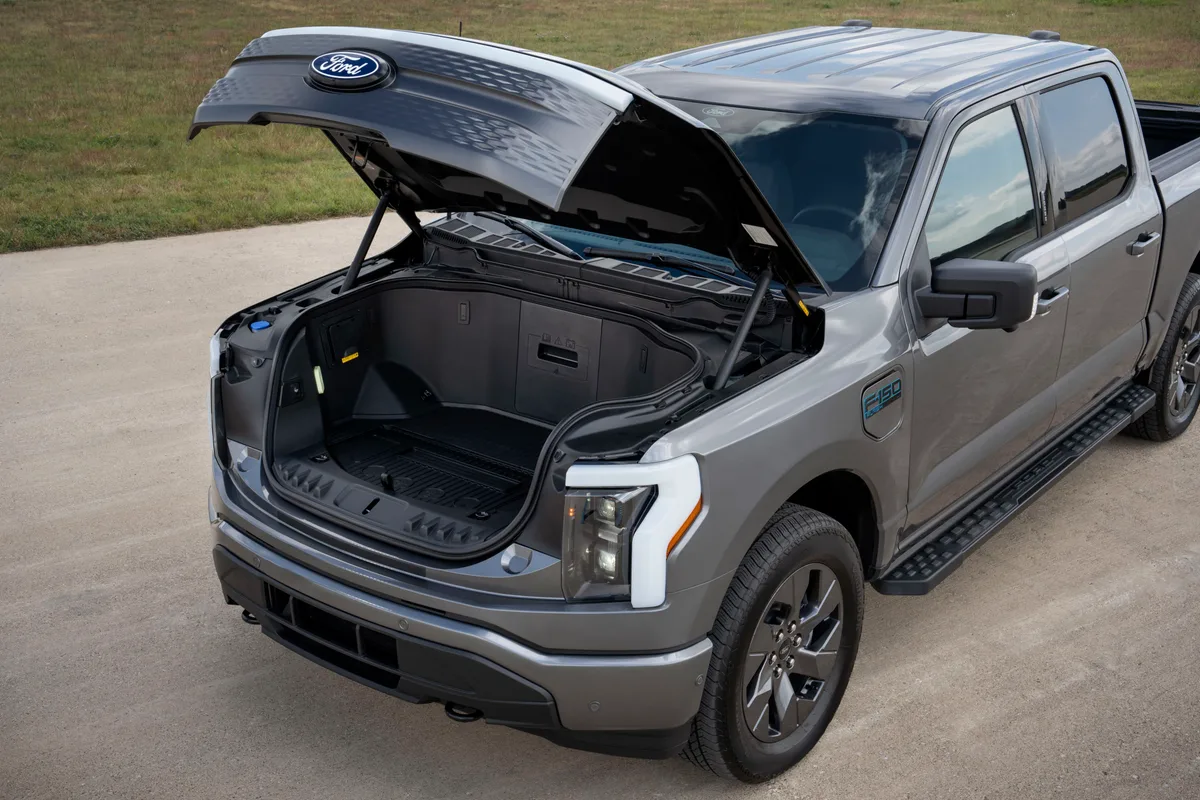
The 12V auxiliary battery itself is located under the hood, within the "frunk" (front trunk) of your F-150 Lightning. However, for jump-starting, you won't connect directly to the battery posts. Instead, Ford provides dedicated jump-start terminals for convenience and safety.
- Open the Frunk: Pop the hood as you normally would.
- Locate the Jump Points: You'll find clearly marked positive (+) and negative (-) terminals, typically near the front or side of the frunk. The positive terminal usually has a red cover.
Step-by-Step 12V Jump-Start Procedure
This process is straightforward, but precision is key to avoid issues. Have a set of jumper cables and a working 12V vehicle or a portable jump starter ready.
- Safety First: Ensure both vehicles are off, headlights are off, and parking brakes are engaged. Wear gloves and eye protection if you have them.
- Connect Positive: Connect the red (positive) clamp from the jumper cables to the positive (+) terminal of the dead F-150 Lightning.
- Connect Other Positive: Connect the other red (positive) clamp to the positive (+) terminal of the donor vehicle's 12V battery (or the positive terminal on your portable jump starter).
- Connect Negative (Donor): Connect the black (negative) clamp to the negative (-) terminal of the donor vehicle's 12V battery (or the negative terminal on your portable jump starter).
- Connect Negative (Lightning Frame): Connect the final black (negative) clamp to a heavy, unpainted metal part of the F-150 Lightning's chassis or engine block. Do NOT connect it directly to the Lightning's 12V battery negative post. This helps prevent sparks near the battery.
- Start Donor Vehicle: Start the donor vehicle and let it run for a few minutes to charge the Lightning's 12V battery. If using a portable jump starter, follow its instructions to activate.
- Attempt to Start F-150 Lightning: Try to "start" your F-150 Lightning (press the brake pedal and power button). You should hear the vehicle's systems come alive.
- Disconnect Safely: Once the Lightning powers on, disconnect the cables in reverse order: negative from the Lightning's chassis, negative from the donor, positive from the donor, and finally, positive from the F-150 Lightning.

After a successful jump, your F-150 Lightning should allow you to shift out of neutral. Keep in mind, this jump-start only gives the 12V battery enough juice to get things going. You'll need to drive it or keep it powered on for a while to let the vehicle's onboard charging system fully recharge the 12V battery, or consider using a dedicated battery charger.
Getting Out of Neutral: Manual Park Release for the F-150 Lightning

Sometimes, even after jump-starting the 12V battery, your F-150 Lightning might remain stubbornly stuck in neutral or park. This is where the manual park release (also known as the emergency gear release) comes into play. It's a mechanical override designed for situations exactly like this, allowing you to manually disengage the parking pawl.
Finding the Emergency Gear Release Mechanism
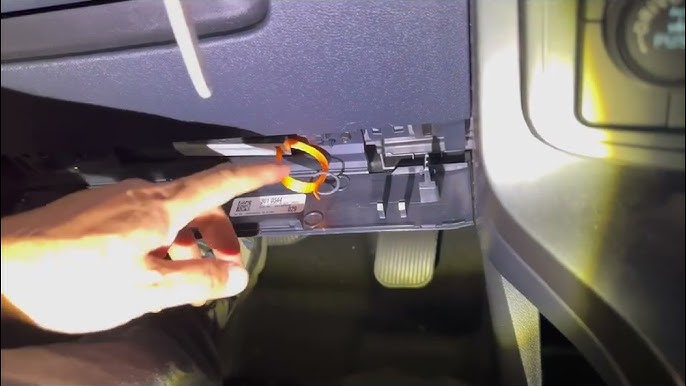
The manual park release lever is a crucial safety feature. Its exact location can vary slightly depending on the F-150 Lightning's trim and model year, but it's generally found in an accessible spot near the shifter or under the steering column.
- Check Your Owner's Manual: This is always your first and most reliable source for the precise location. Ford's official documentation provides diagrams and instructions specific to your vehicle.
- Common Locations: Many F-150 Lightning models have this lever either under the steering column (requiring a panel to be removed) or within the center console, often beneath a removable trim piece or coin tray. You might need a small screwdriver or pry tool to access it.
Activating the Manual Park Release
Once you've located the lever, activating it is straightforward, but make sure the vehicle is on level ground and the 12V battery has at least enough charge to power basic systems, even if it's not enough to shift normally. You'll also want to make sure the parking brake is engaged, if possible.
- Access the Lever: Carefully remove any trim panels or covers obstructing the manual park release lever.
- Engage the Parking Brake: If the 12V system has enough power, apply the electronic parking brake to prevent the vehicle from rolling unexpectedly once you release the park pawl.
- Pull/Push the Lever: The lever typically needs to be pulled or pushed to mechanically disengage the parking pawl. Hold it in the activated position.
- Shift into Neutral: While holding the release lever, attempt to shift the vehicle into Neutral using the standard gear selector. You should feel less resistance and the vehicle should now move into Neutral.
- Secure Vehicle: Once in Neutral, you can release the manual park release lever. Immediately ensure the vehicle is secured, either by chocking the wheels or, if the 12V system is functional, re-engaging the electronic parking brake.
This manual override is primarily for moving the vehicle for towing or repair, not for regular operation. After using it, you should address the underlying 12V battery issue as soon as possible. Your vehicle will likely display warnings until the system resets and the 12V battery is fully restored.
After the Jump: Next Steps and Recharging the 12V Battery
After successfully jump-starting your F-150 Lightning and getting it out of neutral, your immediate problem is solved, but the underlying issue of the weak 12V battery still needs attention. Think of a jump start as resuscitation, not a cure. The vehicle's systems might be active, but the 12V battery itself is likely still depleted or failing.
Ensuring the 12V Battery Fully Recovers
To ensure the 12V battery fully recharges, you have a couple of options. The simplest method is to drive the vehicle for at least 30 minutes, or longer for a very deeply discharged battery. The F-150 Lightning's onboard charging system will draw power from the high-voltage battery to replenish the 12V auxiliary battery. Alternatively, you can connect a dedicated 12V battery charger or maintainer.
This method is often more thorough, especially if the battery was deeply discharged, and helps prevent future issues.
When to Consider a Replacement 12V Battery
While jump-starting can get you going, it doesn't solve a failing 12V battery. If your 12V battery died due to age, extreme cold, or repeated deep discharges, it might be time for a replacement. A simple voltage test can indicate its health. A fully charged 12V battery should read around 12.6 to 12.8 volts.
If it struggles to hold a charge or repeatedly goes flat, a new battery is a smart investment to avoid being stranded again. Ford service centers can perform a more comprehensive battery health check.
Towing Your Dead F-150 Lightning: What Roadside Assistance Needs to Know
If you can't get your F-150 Lightning jump-started or shifted into neutral, professional towing becomes necessary. It's crucial to understand that towing an electric vehicle is different from towing a traditional gas truck. You can't just hook it up and go, at least not without potentially causing serious damage.
Why Flatbed Towing is Essential for EVs
For electric vehicles like the Ford F-150 Lightning, flatbed towing is almost always the recommended method. This means the entire vehicle is lifted onto the bed of a tow truck, ensuring all four wheels are off the ground. When an EV's drive wheels are allowed to spin during towing, the electric motors can generate electricity (regenerative braking), potentially causing damage to the motor or other drivetrain components. This is especially true if the high-voltage system isn't fully operational or in a safe mode.

If a flatbed isn't available, or only for very short distances and at very low speeds (check your owner's manual for specific limitations), a wheel-lift or dolly tow might be acceptable for the non-driven wheels. For instance, if you have a 4×4 Lightning and only the rear wheels are on dollies, the front motors are still at risk if they engage. Always confirm with the tow operator that they understand EV towing requirements.
Preparing Your Lightning for Towing: "Tow Prep Mode"
Your F-150 Lightning has a "Tow Prep Mode" designed specifically for these situations. If your 12V battery is functional enough to access vehicle menus, engaging this mode is vital. It electronically disengages the drivetrain and prepares the vehicle for transport, minimizing risks during towing. Consult your owner's manual for the precise steps to activate it, as this varies by model year.
If the 12V battery is completely dead, and you can't access "Tow Prep Mode," then getting the vehicle into neutral via the manual park release (as we discussed earlier) is the absolute minimum requirement before any towing commences.
Preventing a Dead 12V Battery in Your F-150 Lightning
An ounce of prevention is worth a pound of cure, especially with an EV's 12V battery. Proactively managing your battery health can save you a lot of hassle and potential costs down the road. Understanding common causes of drain and implementing simple preventative measures makes a huge difference.
Understanding Parasitic Drains
Even when your F-150 Lightning is "off," certain systems continue to draw a small amount of power from the 12V battery. This is known as parasitic drain. Things like remote access features (FordPass app), security systems, onboard telematics, and even residual power to certain modules can slowly deplete the 12V battery over time. While normal, excessive parasitic drain can be a sign of a malfunctioning component or aftermarket accessories.
Long periods of inactivity, especially in very cold weather, exacerbate this issue.
Tips for Long-Term Storage and Infrequent Use
If you plan to leave your F-150 Lightning parked for an extended period, say more than a week or two, taking preventative steps for the 12V battery is crucial.
- Keep Main Battery Charged: The 12V battery relies on the high-voltage battery for recharging. Keeping your main battery at a healthy state of charge (e.g., above 50%) ensures it can top up the 12V as needed.
- Disable Unnecessary Features: Turn off features like "always-on" remote climate control or constant FordPass updates if you don't need them during storage.
- Park in a Garage: Extreme temperatures, hot or cold, can shorten battery life. Parking in a climate-controlled garage helps.
The Benefits of a 12V Battery Maintainer
For true long-term storage, or if you only drive your F-150 Lightning infrequently, a dedicated 12V battery maintainer (often called a trickle charger) is your best friend. These devices connect to the 12V jump-start terminals and provide a low, steady charge, keeping the battery fully topped up without overcharging it. This significantly extends the life of your 12V battery and prevents those frustrating "dead in neutral" surprises.
When to Call for Expert Help (and What to Tell Them)
While many 12V battery issues can be resolved with a simple jump start or manual park release, there are times when calling for expert help is the safest and smartest option. Don't hesitate to reach out to professionals if you're unsure, uncomfortable, or if your attempts aren't working.
Contacting Ford Roadside Assistance
Ford Roadside Assistance is specifically equipped to handle situations involving electric vehicles like the F-150 Lightning. Their technicians are trained in EV-specific procedures, including safe towing and high-voltage system awareness. If your vehicle is under warranty, this service is often included. Have your VIN (Vehicle Identification Number) ready when you call.
Explaining Your Specific F-150 Lightning Issue
When you call for help, clearly explain that you have a Ford F-150 Lightning and that its 12V auxiliary battery is dead, potentially leaving the truck stuck in neutral. Mention any steps you've already taken, like attempting a jump start or trying the manual park release. This precise information helps the dispatcher send the right kind of assistance, ideally a tow truck equipped for flatbed EV transport. It also helps them understand the unique challenges of your situation.
FAQs About Your F-150 Lightning's 12V Battery and Neutral Lock
We know you've got questions about your F-150 Lightning and its quirks, especially when the 12V battery acts up. Here are some common ones we've encountered, along with clear answers to help you understand your truck better.
Can I charge the 12V battery from the main charge port?
No, you cannot directly charge the 12V auxiliary battery by plugging your F-150 Lightning into its main EV charging port (J1772 or CCS). The main charge port is designed exclusively for the high-voltage traction battery. The vehicle's internal systems convert power from the high-voltage battery to charge the 12V battery when the vehicle is "on" or in certain states. If your 12V battery is completely dead, this internal charging system won't activate without an initial jump start.
Will Pro Power Onboard drain my 12V battery?
No, Pro Power Onboard directly draws power from the main high-voltage traction battery, not the 12V auxiliary battery, to supply external AC power. However, running Pro Power Onboard for extended periods can indirectly affect the 12V battery. While the main high-voltage battery is powering appliances, the vehicle's systems that monitor and maintain the 12V battery might not operate optimally, especially if the 12V battery itself is already weak or aging. It won't directly drain it, but it's part of the overall vehicle's power management.
What if my F-150 Lightning won't shift into Park?
If your F-150 Lightning won't shift into Park, even after a jump start or if the 12V battery seems okay, it points to a more complex issue than just a dead 12V. This could indicate a problem with the shift-by-wire mechanism itself, a fault in the Battery Management System (BMS), or an electrical fault in another control module. In this scenario, you should avoid forcing the shifter and contact Ford Roadside Assistance or a qualified Ford service center immediately. Driving a vehicle that can't reliably engage Park is a serious safety hazard.
Expert Tips for EV Battery Health and Safety
Beyond just dealing with a dead 12V battery, understanding general electric vehicle battery health and safety practices is crucial for all F-150 Lightning owners. These aren't just suggestions, they're smart habits that can prolong the life of your vehicle's components and keep you safe. We've compiled some key insights from our research and manufacturer recommendations.
- Regular Software Updates: Keep your F-150 Lightning's software up to date. Manufacturer updates often include improvements to Battery Management System (BMS) logic, optimizing how the 12V battery is charged and maintained, and addressing potential parasitic drain issues.
- Monitor 12V Battery Voltage: If you have access to a multimeter, occasionally checking the 12V battery's voltage can give you an early warning if it's starting to weaken. A healthy 12V battery should consistently read above 12.4V when the vehicle is off and rested.
- Understand EV Maintenance: Don't neglect scheduled maintenance for your EV. While they require less routine service than gas cars, there are still crucial checks, especially for electrical systems and battery health, that a qualified technician should perform.
- Be Aware of Orange Cables: Always remember that orange-colored cables and components indicate high-voltage systems. Never cut, puncture, or attempt to tamper with these unless you are a certified EV high-voltage technician. They carry life-threatening currents.
- Extreme Temperature Management: Both extreme heat and cold can degrade battery performance and life. If possible, park your Lightning in a garage during severe weather. Ford's battery thermal management system works to protect the main battery, but the 12V battery can still be susceptible.
Your Action Plan: Getting Your Lightning Moving Again Safely
We've covered a lot of ground, but the goal here is a clear, actionable plan for when your Ford F-150 Lightning's 12V battery dies and leaves you stuck in neutral. Staying calm and following a structured approach can quickly resolve the situation. Think of these as your go-to steps for regaining control.
- Assess the Situation:
- Is the vehicle completely unresponsive, or are some lights flickering? This indicates a dead 12V battery.
- Is it physically stuck in Neutral, or simply not responding to shifter commands?
- Attempt a 12V Jump Start:
- Locate the dedicated jump points in the frunk.
- Use a donor vehicle or portable jump starter following the precise steps outlined earlier. This is often enough to restore basic functions.
- If Still Stuck in Neutral, Use Manual Park Release:
- Consult your owner's manual or our guide to find the emergency gear release lever.
- Activate it to mechanically disengage the parking pawl, allowing you to shift into Neutral if the 12V battery now has enough power.
- Recharge or Replace the 12V Battery:
- Drive the vehicle for at least 30 minutes, or connect a dedicated 12V battery charger/maintainer.
- If the battery repeatedly dies, plan for a replacement.
- If All Else Fails, Call for Professional Help:
- Contact Ford Roadside Assistance or a trusted EV-certified tow service.
- Clearly explain you have a dead 12V battery in an F-150 Lightning and that it's stuck in neutral. Request a flatbed tow if needed.
Remember, safety is paramount. High-voltage systems in EVs require respect. Don't take unnecessary risks, and always defer to professional assistance if you're ever unsure about a step. You've got this, and knowing these steps means you're prepared for whatever your Lightning throws at you.
Related posts:
 How Do Ball Joints Work: A Comprehensive Guide
 How Do I Know If My Clutch Cable Has Gone
 Can Spark Plugs Really Break Glass
 How Big of Tires Can I Fit on My F150? A Comprehensive Guide
 How Can I Protect My Windshield From Rock
 How Do Spark Plugs Break Windows
 How Far Can I Drive With A Bad Alternator
 How Far Can I Drive With A Blown Water Pump
 How Far Can I Drive With A Broken Serpentine Belt
 How Far Can You Drive With A Dead Battery
 How Far Can You Drive Without An Alternator
 How To Put Down Nissan Altima Back Seats