F150 Shift Interlock Override
Finding your Ford F-150 suddenly stuck in Park can be incredibly frustrating, especially when you're in a hurry or in an awkward spot. This usually points to an issue with your vehicle's shift interlock system, a safety feature designed to prevent accidental shifts out of Park. Knowing how to use the F-150 Shift Interlock Override can be a real lifesaver, helping you move your truck temporarily.
While it's a useful emergency measure, bypassing the interlock doesn't fix the underlying problem; it's a band-aid. Manufacturer specifications indicate the shift interlock system ensures the brake pedal is pressed before shifting out of Park. We'll walk you through diagnosing the common culprits, understanding when to use the override, and exactly how to do it safely.
What Exactly is the Shift Interlock and Why Does My F-150 Have It?
You're behind the wheel, engine running, foot on the brake, but the gear shifter just won't budge from "P." This common headache often comes down to the Brake Shift Interlock (BSI) system, a vital safety mechanism built into your Ford F-150. It’s designed to keep the transmission locked in Park until certain conditions are met, primarily that your foot is firmly on the brake pedal.
This system relies on a few key components working together. When you press the brake, a signal goes to the BSI solenoid, which then unlocks the shifter. If any part of this chain breaks down, you're stuck. Ford built in a manual override, allowing you to temporarily bypass the electronic lockout and move your truck in a pinch.
However, it's crucial to remember this isn't a permanent fix.
The shift interlock system in your F-150 is a non-negotiable safety feature, mandated in many regions. It prevents the vehicle from being shifted out of Park unintentionally, which could be extremely dangerous, especially if you're on a slope. The primary goal is to ensure the driver has control, specifically by applying the brake, before engaging a drive gear.
This system isn't just about shifting out of Park. It often works with an ignition interlock, which can prevent you from removing the key unless the vehicle is in Park. Our research indicates these systems dramatically reduce roll-away incidents and improve overall vehicle safety. It’s a standard feature across all modern automatic transmissions, including every F-150 model as of 2026.
Your First Move: Is Your F-150 Really Stuck? (Quick Checks)
Before you reach for the override, let's take a deep breath and run through some quick, simple checks. Sometimes, the problem isn't the interlock system itself, but something far easier to diagnose and fix. These steps can save you time, hassle, and potentially a repair bill. Don't skip these, as they're the easiest ways to rule out common, non-interlock issues.
Check Your Brake Lights
This is a big one. The shift interlock directly ties into your brake light circuit. If your brake lights aren't coming on when you press the pedal, that's a huge clue. Have someone stand behind your truck while you press the brake, or back up to a reflective surface at night.
No brake lights usually means the Brake Pedal Position (BPP) switch isn't working, or you have a blown fuse.
Listen for the Click
With your foot firmly on the brake and the ignition in the "ON" position (the engine doesn't have to be running), try to shift the gear selector. As you press the brake, you should hear a faint "click" sound coming from around the shifter assembly. That click is the shift interlock solenoid engaging, indicating it's trying to unlock. If you don't hear anything, the solenoid might not be getting power, or it could be faulty.
Jiggle the Shifter and Wheel
Sometimes, the shifter just needs a little nudge. Gently try jiggling the shifter lever while firmly pressing the brake pedal. Don't force it, but a gentle wiggle can sometimes free a temporarily stuck mechanism. Similarly, if your steering wheel is locked and putting pressure on the ignition, it can also prevent shifting.
Try gently turning the steering wheel left and right while trying to shift.
When and Why to Use the Shift Interlock Override (Decision Tree)
The F-150 shift interlock override isn't a magical fix; it's a diagnostic tool and a temporary workaround. You shouldn't just jump to it without understanding what's likely causing the problem. Think of this as a decision tree, helping you figure out the root cause before you decide to bypass the system. We'll look at different scenarios and tell you if the override is appropriate, and what to do next.

Scenario 1: Dead Battery or Electrical Glitch
- Problem: If your battery is completely dead or critically low, the shift interlock system won't get the power it needs. You might also notice other electrical issues, like dim lights or a slow crank.
- Decision: Use the override. If you can get the ignition to the "ON" or "ACCESSORY" position (even with a jump start), you can usually use the override.
- Next Steps: Jump start the vehicle and get the battery tested. A weak battery can cause all sorts of phantom electrical issues.
Scenario 2: Suspect a Blown Fuse
- Problem: The brake lights and the shift interlock often share a fuse. If your brake lights aren't working, a blown fuse is a strong possibility.
- Decision: Use the override, but check the fuses first. If you find a blown fuse (consult your owner's manual for the specific fuse, often a 10A or 15A fuse in the interior fuse box), replace it. If it blows again immediately, you have a deeper electrical short, and the override is just for moving the vehicle to safety.
- Next Steps: Inspect the fuse box. If replacing the fuse solves it, great! If not, a professional diagnostic is needed.
Scenario 3: Failed Brake Pedal Position Switch
- Problem: This switch tells the vehicle when your foot is on the brake. If it fails, the shift interlock thinks you're not pressing the brake, even if you are. This will also cause your brake lights not to illuminate.
- Decision: Use the override. Since the signal isn't getting through, the override will bypass this switch's input.
- Next Steps: Replace the Brake Pedal Position (BPP) switch. It's usually located near the top of the brake pedal arm.
Scenario 4: Suspect a Faulty Shift Interlock Solenoid
- Problem: The solenoid is the actual mechanical part that locks and unlocks the shifter. If it fails internally, it won't move even if it's getting power. You might hear the "click" but still can't shift.
- Decision: Use the override. This is a mechanical failure that the override is designed to bypass.
- Next Steps: The solenoid will need to be replaced. This often involves disassembling part of the center console.
Scenario 5: Shifter Assembly Mechanical Issue
- Problem: Sometimes, the problem isn't electrical at all. A bent shift cable, a broken component within the shifter assembly itself, or debris could physically block the shifter.
- Decision: Use the override, but proceed with caution. If you suspect a physical blockage, forcing the override could potentially cause more damage to the mechanical components. Only use it to move the vehicle to a safe spot.
- Next Steps: This definitely requires professional inspection and repair.
How to Safely Use Your F-150's Shift Interlock Override (Step-by-Step)
Okay, you've diagnosed the likely problem and determined that using the override is your best temporary solution. Now, let's walk through the exact steps to safely use this feature in your F-150. Remember, safety first, and always assume it's a temporary fix to get you to a repair shop.
What You'll Need
- A small, blunt tool: A screwdriver, your car key, or even a sturdy pen will usually do the trick. You'll need something that can fit into a small opening and press a button or lever.
- Your owner's manual (optional, but always helpful for exact locations).
Locating the Override Access
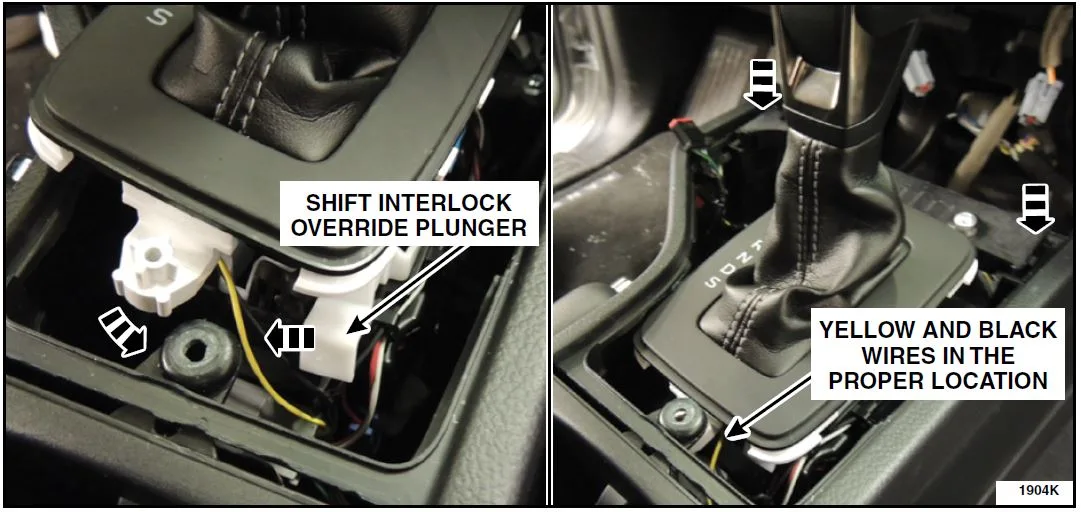
First things first, you need to find the access point for the override mechanism. This location can vary slightly depending on your F-150's model year and trim, but it’s almost always found near the gear shifter.
- Console Shifter: For F-150s with a center console shifter, look for a small, usually rectangular or square, plastic cap or slot very close to the shifter itself. It might be on the front, side, or top of the shifter base. Sometimes, it's disguised as part of the trim.
- Column Shifter: If you have a column shifter, the access point is less common, but some models may have a small button or access hole directly on the steering column shroud, or a hidden lever. Consult your Ford F-150 owner's manual if you can't find it immediately.
Engaging the Override
Once you've found the access point, here's how to engage the override:
- Ensure the vehicle is safe: Apply the parking brake. If you're on a hill, use wheel chocks if available.
- Ignition to ON or ACCESSORY: Turn your ignition key to the "ON" or "ACCESSORY" position. The engine doesn't necessarily need to be running, but the vehicle's electrical system needs to be active.
- Remove the cover (if applicable): Carefully pry off the small plastic cap or cover to expose the button or lever underneath.
- Insert your tool: Gently insert your chosen tool into the access hole or slot.
- Depress the mechanism: You'll feel a button or lever inside. Press and hold it down. You might hear a soft click as you do.
- Simultaneously press the brake: Keep your foot firmly on the brake pedal while holding the override button.
- Shift the gear selector: While holding the override and the brake, move the gear selector out of Park. It should now move freely.
- Release and test: Once shifted, you can release the override button and your foot from the brake (if on level ground and secured by the parking brake).
Shifting to Neutral or Drive
After you've successfully engaged the override, you can move the shifter into Neutral (N) to push the truck, or into Drive (D) if the engine is running and you need to drive it to a repair shop. Just remember, the underlying problem still exists. You've simply bypassed the safety mechanism.
Crucial Safety Warnings Before and After Using the Override
Using the shift interlock override is an emergency measure, not a permanent solution. It's vital to prioritize safety every step of the way. Ignoring these warnings could lead to serious accidents or further damage to your F-150. We can't stress this enough: always be careful when bypassing safety features.
Always Use the Parking Brake
Before you even think about engaging the override, fully engage your parking brake. If your F-150 is on any kind of incline, or if you plan to get out of the vehicle after shifting, the parking brake is your primary defense against unintended movement. Relying solely on the transmission to hold the vehicle can be risky, especially since you're already dealing with a potentially faulty system.
Operate on Level Ground
Whenever possible, try to perform the override on a flat, level surface. This minimizes the risk of your truck rolling unexpectedly once it's out of Park. If you must do it on an incline, ensure the parking brake is fully engaged and consider using wheel chocks for added security. Your personal safety and the safety of those around you are paramount.
Understand It's a Temporary Fix
This is a critical point. The override allows you to move your F-150, but it does not fix why it was stuck in the first place. Driving your truck with a faulty shift interlock system means you're operating without a key safety feature. Your vehicle could potentially shift out of Park unexpectedly in the future, or you might find yourself stuck again.
The override is a bridge to a repair shop, not a destination.

Common F-150 Shift Interlock Problems and How to Diagnose Them
When your F-150's shifter gets stuck, it's usually one of a few common culprits within the shift interlock system. Knowing these typical failure points helps you or your mechanic zero in on the repair. We've compiled the most frequent issues, giving you a clearer picture of what might be going on under the surface.
The Role of Your Brake Pedal Position (BPP) Switch
The Brake Pedal Position (BPP) switch is absolutely essential, acting as the primary sensor for your shift interlock. This small but mighty switch, often located near the pivot point of your brake pedal, detects when the pedal is pressed. If the BPP switch fails, it can't send that crucial "brake applied" signal to the shift interlock solenoid.
Without that signal, the system thinks your foot isn't on the brake, keeping the shifter locked in Park. A key diagnostic symptom of a failing BPP switch is your brake lights not illuminating when you press the pedal, even though other lights work fine. You might also notice issues with cruise control if this switch is failing.

How a Blown Fuse Affects Your Shifter
Your F-150's electrical system is protected by a network of fuses, and the shift interlock system is no exception. Often, the circuit for your brake lights and the shift interlock mechanism share a common fuse. If this fuse blows, power won't reach the shift interlock solenoid, preventing it from releasing the shifter.
Checking your fuse box for a blown fuse is an easy and inexpensive first step in troubleshooting. Consult your owner's manual for the exact location of the fuse box and the specific fuse number for your brake lights or shift interlock. Visually inspect the fuse; if the wire inside is broken, it's blown.
When the Shift Interlock Solenoid Fails
The shift interlock solenoid is the electromechanical component directly responsible for locking and unlocking the gear shifter. When everything is working correctly, this solenoid gets a signal from the BPP switch (via the fuse) and retracts, allowing you to move the shifter. If you hear a click when pressing the brake but the shifter still won't move, the solenoid itself might be faulty or physically jammed.
A common failure mode for solenoids is an internal electrical fault or mechanical wear. It's a component that sees repeated action every time you shift out of Park. If the solenoid isn't receiving power or has failed internally, it just won't do its job, leaving you stuck.

What a Dead Battery Means for Shifting
Modern vehicles, including your F-150, rely heavily on electrical power for almost every function, and the shift interlock is no different. A dead or severely weakened battery means there isn't enough voltage to energize the shift interlock solenoid. You might find the engine won't crank, or electrical accessories behave erratically.
Even if you get a jump start, the voltage might not be stable enough to reliably operate the interlock until the battery charges a bit. Always ensure your battery is fully charged and in good health when troubleshooting electrical issues. A multimeter can confirm your battery's voltage, ideally around 12.6 volts when fully charged.
What to Do After You've Used the Override (Next Steps)
Successfully using the F-150 shift interlock override gets you moving again, but it's only the first step. The goal is to identify and fix the underlying issue to restore your vehicle's full safety and functionality. Don't treat the override as a permanent solution; that's a recipe for future headaches.
Get a Professional Diagnostic Scan
Once your F-150 is safely moved, your next priority should be a professional diagnostic scan. Modern Ford trucks have complex onboard computer systems that store Diagnostic Trouble Codes (DTCs) related to various faults, including those in the shift interlock system. A professional scanner can retrieve these codes, pointing directly to the faulty component, whether it's the BPP switch, the shift interlock solenoid, or an electrical wiring issue. This saves time and guesswork.
Schedule Necessary Repairs
Based on the diagnostic findings, schedule the necessary repairs promptly. Ignoring the problem means you're driving without a crucial safety feature, which puts you and others at risk. Repairs for shift interlock issues can range from a simple fuse replacement, which you might do yourself, to replacing a switch or solenoid, which a qualified technician can handle efficiently. Remember, restoring the shift interlock system ensures your F-150 operates as safely as intended.
Expert Tips for Dealing with a Stuck F-150 Shifter
Dealing with a stuck shifter is never ideal, but a little expert knowledge can make the situation much less stressful. Beyond the basic override, there are a few additional tips and tricks we've gathered that can help you diagnose or manage the situation more effectively. These insights come from experienced technicians and long-time F-150 owners.
- Always Check for Recalls: Before investing in repairs, check if there are any active recalls for your specific F-150 model year related to the shift interlock system. Ford occasionally issues recalls for known defects, and you might get a free repair. You can do this on the National Highway Traffic Safety Administration (NHTSA) website with your VIN.
- Wiggle and Rotate Key: If your ignition key is also stuck, it often points to the same interlock issue. Sometimes, gently wiggling the key in the ignition while trying to shift, or turning the steering wheel side-to-side, can release a minor bind.
- Don't Force It: While the override is designed to bypass the lockout, don't use excessive force on the shifter itself. If it still won't move even with the override engaged, you could have a more severe mechanical blockage or a damaged shifter cable, which forcing will only worsen.
- Consider a Portable Jump Starter: If dead batteries are a recurring issue for you, keeping a portable jump starter in your F-150 is a smart move. It can provide enough power to operate the interlock system and get you started, potentially avoiding the need for the override.
F-150 Shift Interlock Override FAQs
We get a lot of questions about the F-150 shift interlock override, and that's understandable. It's a critical emergency feature, and confusion can lead to missteps. We've compiled the most common questions here, giving you straightforward answers to help you feel more confident in a stressful situation.
Is it safe to drive my F-150 after using the override?
No, it's not truly safe to drive your F-150 for extended periods after using the override; it's designed only for temporary, emergency movement. You're effectively bypassing a crucial safety mechanism that prevents accidental shifting and ensures you have proper brake control. This significantly increases the risk of a roll-away accident. Only drive it the shortest distance necessary to a repair facility.
Can I permanently bypass the shift interlock?
No, permanently bypassing the shift interlock system is strongly discouraged and could even be illegal depending on local regulations. Doing so compromises a fundamental safety feature of your vehicle, making it prone to accidental shifting out of Park. It also voids warranties and could lead to significant liability in an accident. Always repair the underlying issue rather than disabling the system.
How much does it cost to fix a shift interlock problem?
The cost to fix a shift interlock problem in your F-150 can vary widely depending on the root cause and labor rates in your area. Replacing a blown fuse might cost less than $20, including a pack of spare fuses. A new Brake Pedal Position (BPP) switch typically ranges from $50 to $150 for parts and labor. If the shift interlock solenoid needs replacement, that can be anywhere from $150 to $400, as it often involves more labor to access the component.
A complex mechanical issue within the shifter assembly could be even more.
Your Decision Guide: Override or Call for Help?
When your F-150 is stuck in Park, the immediate decision often boils down to attempting the override yourself or calling for professional assistance. We've laid out the conditions to help you make the right choice, prioritizing both safety and efficiency. This isn't a one-size-fits-all answer, so consider your situation carefully.
Here’s a quick decision-making framework:
Choose Override If:
- You understand the procedure and feel confident executing it safely.
- You've identified a likely electrical cause (blown fuse, dead battery) that the override will temporarily bypass.
- You only need to move the vehicle a very short distance (e.g., out of a driveway, into a garage).
- You have the time and a safe environment to troubleshoot and perform the override.
- You plan to immediately take the vehicle for professional repair.
Call for Help (Roadside Assistance/Tow) If:
- You're uncomfortable performing the override or can't locate the access point.
- You suspect a major mechanical failure (like a broken shifter cable) that could worsen with forced movement.
- You're on a busy road, an unsafe incline, or in a precarious situation where attempting the override could be dangerous.
- You don't have the necessary tools or adequate lighting.
- You've tried the override and it still won't budge, indicating a more severe issue.
- You're not able to get the vehicle into the "ON" or "ACCESSORY" position.
Ultimately, the shift interlock override is a helpful tool in a specific emergency, but it's not a substitute for proper vehicle maintenance and repair. Knowing when and how to use it can prevent a minor inconvenience from becoming a major headache. Stay safe, troubleshoot smartly, and get that F-150 back in top shape!
Related posts:
 How Do Ball Joints Work: A Comprehensive Guide
 How Do I Know If My Clutch Cable Has Gone
 Can Spark Plugs Really Break Glass
 How Big of Tires Can I Fit on My F150? A Comprehensive Guide
 How Can I Protect My Windshield From Rock
 How Do Spark Plugs Break Windows
 How Far Can I Drive With A Bad Alternator
 How Far Can I Drive With A Blown Water Pump
 How Far Can I Drive With A Broken Serpentine Belt
 How Far Can You Drive With A Dead Battery
 How Far Can You Drive Without An Alternator
 How To Put Down Nissan Altima Back Seats