What Year F150 Has a 6×135 Bolt Pattern? Full Year Chart
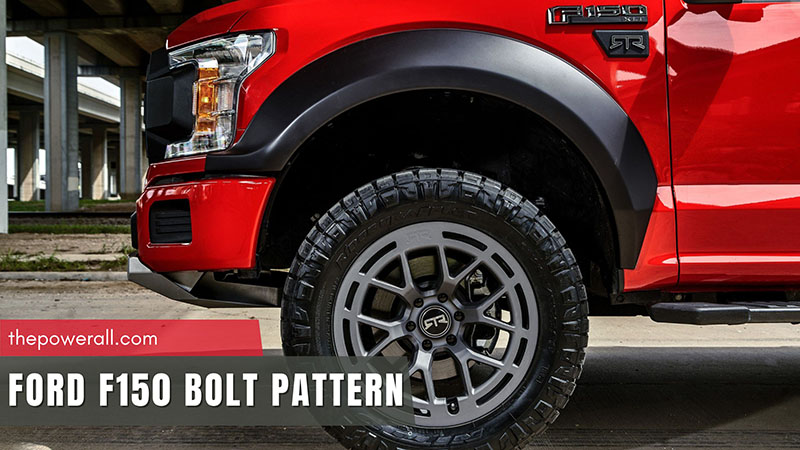
The Ford F-150 has used a 6x135mm (6×5.31″) bolt pattern from the 2004 model year through the present 2025 model year. That covers every 11th-generation truck built after the 2004 redesign, plus the 2004 Heritage edition — which was a leftover 2003-style truck sold alongside the new body and kept the old 5×135 pattern.
The bolt pattern refers to the number of bolts and the spacing between them on the wheel hub. It is an important factor to consider when choosing aftermarket wheels or wheel accessories for your vehicle. This information is particularly useful if you are looking to replace or upgrade the wheels on your F150 truck.
By knowing the specific bolt pattern of your vehicle, you can ensure that the new wheels you choose will fit properly and securely. In the case of the F150 with a 6X135 bolt pattern, you would need to find wheels that match this configuration for a proper fit.
Complete Ford F-150 Bolt Pattern History & Year-by-Year Breakdown

The F-150 has evolved through 14 generations since 1948, with several bolt pattern changes tied to major redesigns for improved strength, braking, and payload capacity.
Here’s an expanded, fully verified chart covering every generation and key model years:
| Generation | Model Years | Bolt Pattern | Number of Lugs | Center Bore (Hub Bore) | Common Notes & Changes |
|---|---|---|---|---|---|
| 1st–8th | 1948–1986 | 5×5.5″ (5×139.7mm) | 5 | Varies (often larger) | Classic era; shared with many older trucks |
| 9th Gen | 1987–1996 | 5×5.5″ (5×139.7mm) | 5 | 87.1mm+ | Last of the true 5×5.5″ patterns |
| 10th Gen | 1997–2003 | 5x135mm | 5 | 87.1mm | Metric transition; lighter-duty focus |
| 11th Gen | 2004–2008 | 6x135mm | 6 | 87.1mm | Major switch to 6-lug for better load/braking |
| 12th Gen | 2009–2014 | 6x135mm (standard) / 7-lug rare | 6 (most) | 87.1mm | Consistent 6×135; Heavy Duty Payload used 7×150 |
| 13th Gen | 2015–2020 | 6x135mm | 6 | 87.1mm | Aluminum body revolution; no changes |
| 14th Gen | 2021–2025+ | 6x135mm | 6 | 87.1mm | Current gen (including 2024 facelift & 2025 models); Lightning EV also 6×135 |
Data Sources: Wheel-Size.com (November 2025 updates), Hulk Offsets, Hardrock Offroad, F150Forum verified threads, and OEM Ford parts catalogs.
Why Did Ford Switch to 6×135 in 2004?
The 2004 redesign (11th generation) was a game-changer. Ford moved from a 5-lug to a 6-lug setup to:

- Better distribute towing and payload forces (up to 13,500+ lbs in later models)
- Accommodate larger brake rotors for improved stopping power
- Enhance overall wheel strength and durability under heavy use
- Align with growing demand for bigger aftermarket wheels (18″–22″+)
This pattern has remained unchanged for over two decades because it simply works perfectly—no need to fix what isn’t broken.
Rare Exceptions & Special Cases
While the vast majority of 2004+ F-150s are 6×135, here are the documented exceptions worth knowing before you buy wheels:
- 2004 Heritage edition: Built on the previous-generation body, this truck kept the 5×135 five-lug pattern. If you own a 2004 Heritage, you do not have 6×135.
- Heavy Duty Payload Package (2008–2014): Some commercial and fleet XL variants with the max payload/tow package used a 7x150mm pattern for extra durability. These are rare on the used market.
- F-150 SVT Raptor (2010–2014) and Raptor (2017–2025, including Raptor R): Always 6x135mm — no exceptions, even with beadlock-capable wheels.
- F-150 Lightning Electric (2022–2025+): Identical 6x135mm to gas models, so wheels swap directly.
Lug Nut Thread Size and Torque by Generation
Bolt pattern is only half the fitment story. The lug nut thread size and torque spec also changed over the years, and using the wrong hardware can damage studs or leave a wheel loose.
- 1997–2003 F-150 (5×135): 12mm x 1.75 thread, torqued to roughly 100 ft-lbs.
- 2004–2014 F-150 (6×135): 14mm x 1.5 thread, torqued to roughly 150 ft-lbs.
- 2015–2025 F-150 (6×135): 14mm x 1.5 thread, torqued to roughly 150 ft-lbs.
Always verify against your owner’s manual for the exact figure, and re-torque after the first 100 miles on any new wheel.
If buying a used 2004–2014 truck, always double-check the window sticker or measure yourself—better safe than stuck with incompatible wheels!
Deep Dive: Understanding the 6×135 Bolt Pattern
The term “bolt pattern” or PCD (Pitch Circle Diameter) refers to:
- 6 = Six lug studs/nuts
- 135 = The diameter (in millimeters) of the imaginary circle passing through the center of each lug hole
In inches: 6×5.31″ (135mm ÷ 25.4 ≈ 5.31″).
Why 6×135 is Often Confused with 6×139.7 (6×5.5″)
This is the #1 mistake F-150 owners make:
- 6×139.7mm (6×5.5″) is used on Toyota Tundra, newer Tacoma, Chevy/GMC 1500, and Nissan Titan.
- The difference is just 4.7mm (~0.18″), which looks close enough to fool a tape measure — but the wheels will not seat safely without wobble-plate adapters.
- Adapters (1″–2″ thick) exist, but they add weight, stress the hubs, cause vibrations, and may void warranties or fail inspections.
- The same logic applies to 5×135: a 5×135 wheel will not bolt to a 6×135 hub because the lug count is different, and a 6×135 wheel will not bolt to a 5×135 hub for the same reason.
Pro Measurement Tip: Use digital calipers. On a 6-lug wheel, measure from the center of one lug hole to the center of the lug hole directly opposite (skip two lugs). It must read exactly 135mm for a Ford F-150. If it reads closer to 139.7mm, you are looking at a 6×5.5″ wheel.
Hub Bore, Offset, and Backspacing
A matching bolt pattern alone does not guarantee a wheel will fit. The F-150’s hub bore is 87.1mm, and aftermarket wheels with a larger center bore need hub-centric rings to avoid vibration. Offset and backspacing determine how far the wheel sits in or out of the fender, so a wheel with the right bolt pattern can still rub suspension or poke past the body if the offset is wrong.
Full Wheel Specifications for 2004–2025 F-150

Bolt pattern is just the start. Match these for vibration-free, safe performance:
| Specification | 2004–2025 Standard Value | Common Variations & Notes |
|---|---|---|
| Bolt Pattern (PCD) | 6x135mm (6×5.31″) | Universal across gas/diesel/EV |
| Center Bore (Hub Bore) | 87.1mm | Must be hub-centric or use rings |
| Lug Thread Size | M14 x 1.5 (most 2015+) / M14 x 2.0 (earlier) | Check your studs! |
| Lug Nut Torque Spec | 150–165 ft-lbs (204–224 Nm) | Re-torque after 50–100 miles |
| Factory Offset | +34mm to +44mm | Aftermarket: +18mm to -12mm common |
| Wheel Sizes (Factory) | 17″, 18″, 20″, 22″ | 20″ most popular |
| Recommended Tire Sizes | 265/70R17 to 275/55R22 | 33″–35″ popular with leveling kits |
Why the 6×135 Pattern Makes F-150 Customization So Easy
With over 20 million 2004+ F-150s on the road, the aftermarket is enormous:
- Direct bolt-on compatibility from 2004 to 2025—no adapters needed
- Endless options: Fuel Off-Road, Method Race Wheels, Black Rhino, American Racing, XD Series, TIS, Vision Wheel, and more
- Budget sets start ~$800–$1,200 for four wheels; premium forged ~$2,000–$4,000+
- Popular setups: 20×9 with +18 offset and 35×12.50R20 tires on a 2–3″ level kit
How to Measure Your F-150 Bolt Pattern at Home (Step-by-Step)

- Park on level ground and chock the wheels.
- Remove one wheel, or measure carefully through the wheel if you have clear access to the lug holes.
- Pick any lug stud as your starting point.
- Measure from the center of that stud to the center of the stud directly across (the 3rd stud over on a 6-lug hub).
- The result should be 135mm exactly.
- Bonus: Check center bore with an 87.1mm gauge or socket to confirm the wheel will sit hub-centric.
FAQ
What Year F-150 Has 6×135?
The Ford F-150 has a 6×135 bolt pattern from the 2004 model year onward, including the 2025 model year. The only 2004 exception is the Heritage edition, which carried over the older 5×135 five-lug setup.
What Trucks Have A 6×135 Bolt Pattern?
The 6×135 pattern is shared by the 2004–2025 Ford F-150, the 2019+ Ford Ranger, and the Ford Expedition and Lincoln Navigator from 2003 onward. It is also common on the Ford F-150 Raptor and F-150 Lightning.
Which Other Trucks Share the 6×135 Pattern
The 6×135 pattern is not exclusive to the F-150. It is also used on the Ford Expedition and Lincoln Navigator from 2003 onward, the 2019+ Ford Ranger, and the Ford F-150 Raptor and Lightning. That means wheels from those vehicles can often be swapped onto a 2004+ F-150, and vice versa, as long as hub bore, offset, and load rating also match.
When Did Ford Switch To 6×135?
Ford switched to a 6×135 bolt pattern in 2004.
Are All F-150 6 Lug Patterns The Same?
No. All 6-lug F-150s use the same 6×135 bolt circle, but the 2004 Heritage edition is a 5-lug truck, and some 2008–2014 Heavy Duty Payload Package trucks used a 7×150 pattern. Lug nut thread size and torque also vary by generation, so always confirm before buying hardware.
Conclusion
To find out which year F-150 models have a 6×135 bolt pattern, the short answer is 2004 and newer — with the 2004 Heritage edition as the one five-lug exception. The pattern has stayed 6×135 through the 2025 model year, including the Raptor and Lightning.
Fitment Checklist Before Buying Wheels
- Confirm bolt pattern is 6×135 (not 6×139.7 or 5×135).
- Check hub bore is 87.1mm or use hub-centric rings.
- Verify offset and backspacing clear your suspension and fenders.
- Match lug nut thread size (14×1.5 on most 2004+ trucks) and torque to spec.
- Confirm the wheel’s load rating meets or exceeds your truck’s GVWR.
- Test-fit one wheel and re-torque after 100 miles.
It is always recommended to consult with a professional or refer to reliable resources for accurate information on bolt patterns for your specific F150 model.
Related posts:
 How Far Can You Drive Without an Alternator? Real Distances
 What Color Is Avalanche for Ford? The Definitive 2026 Guide
 How to Disengage 4WD in Ford F150: Easy Steps to 2H
 Ford F150 Power Steering Assist Fault: Fix by Year, Codes & Cost
 What Lug Pattern is a Ford F150: Unveiling the Perfect Fit for Your Ride
 What Are Cam Phasers F150
How Much is a Windshield for a Ford F150: Find the Best Price Now!
 Best Aftermarket Radio For 2013 Ford F150: Expert Picks
 Best Floor Jack for F150
 How to Get a Spare Tire off a Ford F150
 5 Best Ford F150 Bed Covers: Expert Picks & Quality Tested
 Best Tuners for Ford F150 EcoBoost to Boost Performance