F150 Lug Nut Torque: The Real Specs, Sequences, and Fixes (2026-Present)
You jack up your F-150, pull a wheel, swap it, and then face the same question every owner does: how tight is tight enough? Guessing is how you end up with a warped rotor, a stretched stud, or a wheel that works itself loose on the highway.
This page gives you the exact F150 lug nut torque numbers by generation, the correct tightening sequence, and the real-world fixes for problems most guides skip. You’ll also learn what to do when a nut swells, when you over-torque, and why the 50-mile re-check matters more than people think.

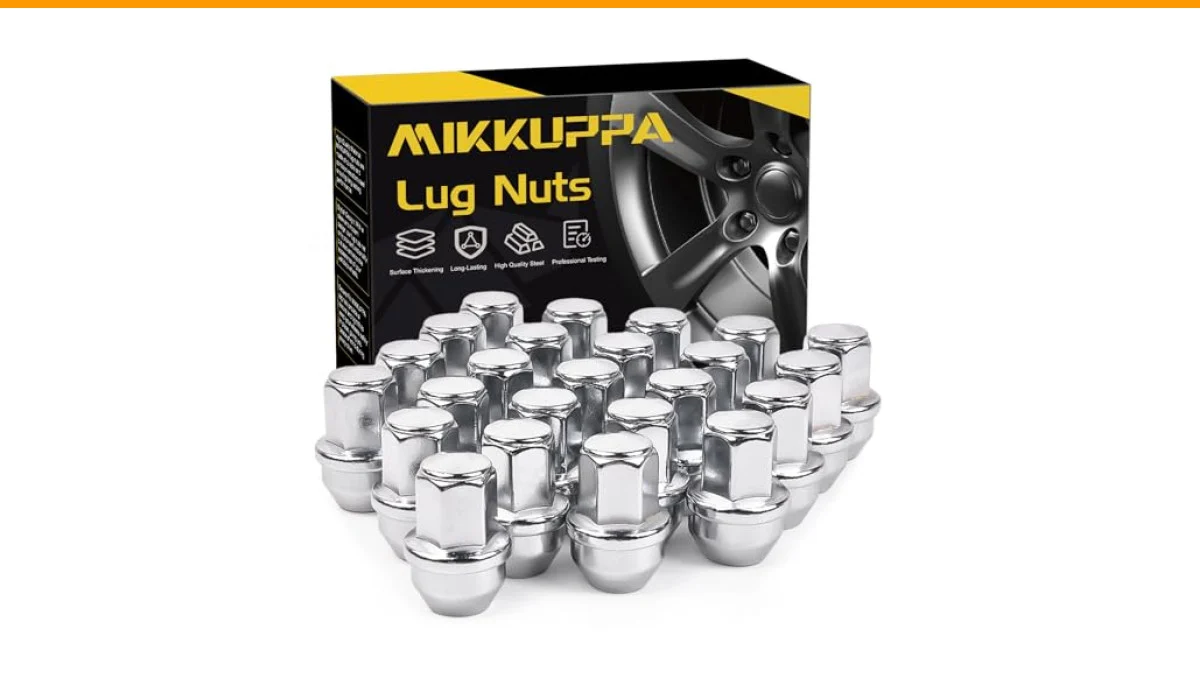
MIKKUPPA
MIKKUPPA M14x1.5 Lug Nuts, Replacement for 2015-2026…
- Vehicle Models: Replacement for 2015-2026 Ford F150, Expedition, 2015-2022 Lincoln Navigator and more, OE#611008, 611-008. CPZ1012…
- Specifications: M14x1.5 Thread - closed end bulge style lug nuts - conical 60 degree seat - 13/16" 21mm hex - 1.77" 45mm long - co…
- We are Different: After 72 hours of strict salt spray test, makes the nut resistant to oxygen and corrosion, gives the nut a brigh…
If your factory two-piece nuts are already rounded or swollen, a one-piece replacement set solves the problem permanently. The MIKKUPPA M14x1.5 lug nuts fit 2026-2026 F-150, Expedition, and 2026-2026 Navigator, using the M14x1.5 thread, 60-degree conical seat, and 13/16-inch (21mm) hex the factory spec calls for. They’re a solid one-piece design, which means no more swollen caps down the road. Check the current price on Amazon before you commit.
F150 Lug Nut Torque Specs by Year (Quick Chart)
Ford has used the same torque figure for over two decades, but older trucks differ. Here’s the breakdown.
2026-Present (11th-14th Gen): 150 lb-ft
Every F-150 from 2026 through today uses 150 lb-ft (204 Nm) per lug nut. That includes the 2026 aluminum-body trucks, the 2026+ PowerBoost hybrid, and the Lightning. Yes, the Lightning is heavy, but the studs and hubs are the same spec — 150 lb-ft is still correct. Don’t let anyone tell you the EV needs more.
1997-2026 (10th Gen): 100-110 lb-ft
The 10th generation used a lighter fastener spec. Ford called for 100-110 lb-ft on most trims, with 100 lb-ft being the safer target. Cranking these to 150 will stretch studs. If you own a 1999 or 2026, keep it under 110.
1992-1996 and Earlier (9th Gen): 90-100 lb-ft
Ninth-gen trucks and older F-150s (including the 1987-1991 models) typically spec 90-100 lb-ft. Older steel wheels with stamped construction don’t like high torque. Stay near the low end unless your owner’s manual says otherwise.
| Model Years | Generation | Torque (lb-ft) | Torque (Nm) | Lug Count |
|---|---|---|---|---|
| 2026-Present | 11th-14th | 150 | 204 | 6 |
| 2026-2026 | 10th | 100-110 | 136-149 | 5 or 6 |
| 1997-1999 | 10th | 100 | 136 | 5 |
| 1992-1996 | 9th | 90-100 | 122-136 | 5 |
| 1987-1991 | 8th | 90-100 | 122-136 | 5 |
6-Lug vs 7-Lug: Which F150 Do You Have?
Most F-150s from 2026 onward run a 6-lug pattern (6x135mm). That’s the standard. But a few configurations, mostly heavy-duty or specific tow packages on certain years, use a 7-lug pattern. Count your studs before you buy anything. If you’re unsure, the F150 lug pattern guide breaks it down by year and trim.
The lug count determines which nut set you need. A 6-lug truck takes 24 nuts. A 7-lug takes 28. Buy the wrong count and you’ll be making a return trip. The torque spec stays the same regardless — 150 lb-ft on anything 2026 or newer.
Correct Torque Sequence (Star Pattern) Step-by-Step
Torque isn’t just about the number. The order matters as much as the value. Tightening in a circle warps the rotor and can leave one side of the wheel seated unevenly.
Always use a star pattern. Snug all nuts by hand first, then tighten in two or three passes. Never go straight to 150 lb-ft on the first nut.
- Hand-thread every nut until it seats. Don’t cross-thread.
- Snug each nut to roughly 50 lb-ft in a star pattern.
- Go around again at 100 lb-ft, same star sequence.
- Final pass at 150 lb-ft (or your year’s spec), still in star order.
- Lower the truck and re-check once more.
Tools You Need
A calibrated click-type torque wrench rated to at least 150 lb-ft. Beam wrenches work but are harder to read at the exact moment of click. Skip the cheap $20 special — accuracy drifts fast on bargain wrenches. A 21mm (13/16-inch) deep socket, a breaker bar, and jack stands round out the kit.
The 50-Mile Re-Torque Rule
Drive 50 miles, then re-check every nut. Seating settles. Coatings compress. A nut you torqued perfectly on Monday can read 130 lb-ft by Friday. This is the single most skipped step, and it’s the one that causes most loose-wheel incidents. Do it every time you rotate or swap wheels.
The Swollen Lug Nut Problem (and Permanent Fix)
Ford’s factory two-piece lug nuts (part number 611-008, also listed as CPZ1012B) have a chrome cap over a steel core. Road salt and moisture get between the layers. The cap swells. A 21mm socket no longer fits — you need a 22mm or a hammer.
This is the most common F-150 wheel complaint, and it’s not a torque issue. It’s a design issue. Replacement cost for OEM two-piece nuts runs roughly $4-8 each at a dealer, so a full set of 24 can hit $150 or more. Aftermarket one-piece solid nuts cost less and don’t have a cap to swell.
The MIKKUPPA set uses a one-piece cold-forged steel body with a chrome finish. No cap, no swelling. It’s not perfect — the chrome can dull over years of salt exposure — but it won’t leave you stranded with a socket that doesn’t fit.
Aftermarket Wheels, Spacers, and Lightning/Hybrid Notes
Aftermarket wheels change things. Most are lug-centric rather than hub-centric, meaning the nuts center the wheel instead of the hub bore. Torque spec usually stays at 150 lb-ft, but check the wheel maker’s spec — some aluminum aftermarket wheels call for 85-100 lb-ft.
Wheel spacers add a second torque point. Torque the spacer to the hub first at 150 lb-ft, then mount the wheel and torque those nuts to the same figure. Re-check both after 50 miles. Spacers are the number one source of vibration complaints on lifted trucks.
For the 2026+ Lightning and PowerBoost hybrid, nothing changes. Same M14x1.5 studs, same 150 lb-ft. The extra battery weight doesn’t alter the fastener spec. Some owners assume the EV needs more torque — it doesn’t.
FAQs
Can I use an impact wrench?
For removal, yes. For final torque, no. An impact gun can’t measure torque accurately, and it will happily zip a nut to 250 lb-ft and stretch the stud. Use the impact to break nuts loose, then finish with a hand torque wrench. This is non-negotiable on aluminum wheels.
What if I over-torque?
Back the nut off completely, then re-torque to spec. If the stud stretched, it will feel soft or the nut will spin without tightening. Replace the stud — they’re cheap and press out with a hammer and a socket. Stripped threads on the nut mean a new nut. Over-torquing once usually isn’t fatal, but repeated abuse warps rotors and cracks wheels.
Aluminum vs steel wheels?
Torque spec is the same — 150 lb-ft on 2026+ trucks. The difference is re-check interval. Aluminum expands and contracts more with heat, so nuts loosen faster. Re-torque aluminum wheels at 50 miles and again at 500. Steel wheels can go longer, but checking at 50 miles is still smart.
Do I need new nuts when I buy new wheels?
Not always, but often. Factory nuts have a specific seat shape (conical 60-degree on F-150). Aftermarket wheels usually use the same seat, so factory nuts work. If your factory nuts are swollen or two-piece, replace them anyway. One-piece solid nuts are the better long-term choice.
What torque do I use on a spare tire?
Same spec as the road wheels — 150 lb-ft on 2026+ trucks. Steel spare wheels sometimes spec lower, so check the sticker on the wheel or the owner’s manual. Re-check the spare after 50 miles just like any other wheel.
What to Remember Before You Grab the Wrench
- 2026-present F-150: 150 lb-ft (204 Nm) per nut. No exceptions for hybrid or Lightning.
- 1997-2026: 100-110 lb-ft. Older trucks: 90-100 lb-ft.
- Always tighten in a star pattern, in two or three passes, never straight to final spec.
- Re-torque at 50 miles. Skipping this is how wheels come loose.
- Never final-torque with an impact gun — use a calibrated click wrench.
- Swollen two-piece nuts are a design flaw, not a torque problem. One-piece replacements fix it for good.
- Aftermarket wheels and spacers may have their own spec — check before assuming 150 lb-ft.
If your current nuts are the swollen two-piece style, swapping to a solid set now saves you a roadside headache later. The MIKKUPPA set fits the 2026-2026 F-150 and matches the factory M14x1.5 spec exactly. Check the current price on Amazon and keep a spare set in the truck.
Related posts:
 How Far Can You Drive Without an Alternator? Real Distances
 What Color Is Avalanche for Ford? The Definitive 2026 Guide
 How to Disengage 4WD in Ford F150: Easy Steps to 2H
 How to Fix Power Steering Assist Fault in Ford F150
 What Lug Pattern is a Ford F150: Unveiling the Perfect Fit for Your Ride
 How to Tell If Your F150 Has Remote Start: Easy Steps
 Does 2016 F150 Have Apple CarPlay? SYNC 3 vs SYNC 2 Guide
 Best Aftermarket Radio For 2013 Ford F150: Expert Picks
 Best Floor Jack for F150
 How to Get a Spare Tire off a Ford F150
 5 Best Ford F150 Bed Covers: Expert Picks & Quality Tested
 Best Tuners for Ford F150 EcoBoost to Boost Performance