Trail Control F-150
Navigating tricky off-road situations in your F-150 can feel like a high-wire act, especially when you're trying to manage the throttle, brakes, and steering all at once. That's where Trail Control F-150 comes into play, a system designed to take some of that pressure off. It's not just a fancy button, it's a critical tool for boosting confidence and control on challenging terrain.
This clever Ford technology, first introduced on models like the 2019 F-150 Raptor and later expanding to other trims as of 2021, lets you focus more on steering and spotting obstacles. Our research indicates that it can significantly smooth out your ride, making technical trails feel much more approachable. Let's dive into exactly what it does and how it helps you master the path less traveled.
Quick Answer: What is Trail Control in Your F-150?
Trail Control in your Ford F-150 is essentially an off-road cruise control system. It works by automatically managing your vehicle's speed, throttle, and braking on challenging terrain. This system allows you to select a specific low speed, letting the truck handle acceleration and deceleration while you concentrate on steering and navigating around obstacles.
Think of it as having a co-pilot who's expertly modulating the pedals for you. It's designed to maintain a consistent speed, whether you're climbing a steep hill, descending a rocky slope, or traversing muddy tracks. This helps prevent sudden jolts and wheel spin, which can be crucial for maintaining traction and preventing vehicle damage.
Why Trail Control Isn't Just "Off-Road Cruise Control"
While often described as "off-road cruise control," Trail Control is much more sophisticated than just holding a set speed. It's an integrated system that coordinates multiple vehicle functions to optimize performance in technical situations. It goes beyond simply maintaining speed, it actively adjusts to terrain changes.
It's a testament to Ford's commitment to off-road capability, blending driver assistance with rugged performance. This intelligent system helps mitigate common off-road challenges, making your F-150 even more capable when the pavement ends.
Automatic Throttle and Braking Explained
The real magic of Trail Control lies in its ability to automatically apply both throttle and individual wheel braking as needed. When activated, the system constantly monitors wheel speed and traction. If a wheel starts to slip, it will automatically apply the brake to that wheel, sending power to the wheels with grip.
Simultaneously, it modulates the engine's power output to maintain your desired speed without excessive wheel spin or bogging down. This precise control is something most drivers would find incredibly difficult to replicate manually, especially on uneven or slippery surfaces. It's a fine balance that keeps your F-150 moving smoothly and deliberately.
How it Manages Traction
Trail Control is a master at managing traction, which is vital for off-road success. It integrates with your F-150's powertrain and braking systems, almost thinking for itself to find the best grip. When one wheel loses traction, the system quickly intervenes by applying the brake to that specific wheel.
This action forces power to the wheels that still have traction, effectively acting like an advanced limited-slip differential. This intelligent power distribution minimizes slippage and maximizes forward momentum, helping you crawl over obstacles or pull through soft terrain without getting stuck. It's all about ensuring the right amount of power goes to the right wheel at the right time.
The F-150 Models and Packages with Trail Control
Trail Control isn't standard on every F-150, but it's widely available on models geared towards off-road enthusiasts. You'll typically find it on specific trim levels and with particular off-road packages. Understanding which F-150 comes equipped can save you some guesswork if you're in the market or checking your current truck's capabilities.
Here’s a quick overview of where you'll generally find this useful feature:
- Ford F-150 Raptor: This high-performance off-roader was one of the first to feature Trail Control, specifically starting with the 2019 model year. It’s built for aggressive off-roading, and Trail Control is a natural fit.
- F-150 Tremor: Introduced for the 2021 model year, the Tremor package is another strong off-road contender that includes Trail Control. It's designed for serious off-road work without going full-Raptor.
- F-150 with FX4 Off-Road Package: For other F-150 trims, the FX4 Off-Road Package often includes Trail Control as part of its comprehensive suite of off-road enhancements. This package typically adds skid plates, off-road tuned shocks, and an electronic locking rear differential.
Always double-check your specific vehicle's owner's manual or the build sheet, as features can vary by model year and regional offerings.
When to Use Trail Control: Best Scenarios
Knowing when to engage Trail Control is just as important as knowing how. It's a powerful tool, but it's not a magic bullet for every single off-road situation. We've found that it really shines in specific scenarios where precise, consistent speed and traction management are critical.

Consider it for situations where you need to focus intently on your line and steering, rather than juggling the pedals. Here are some of the prime opportunities to let Trail Control do its thing:
Steep Ascents and Descents
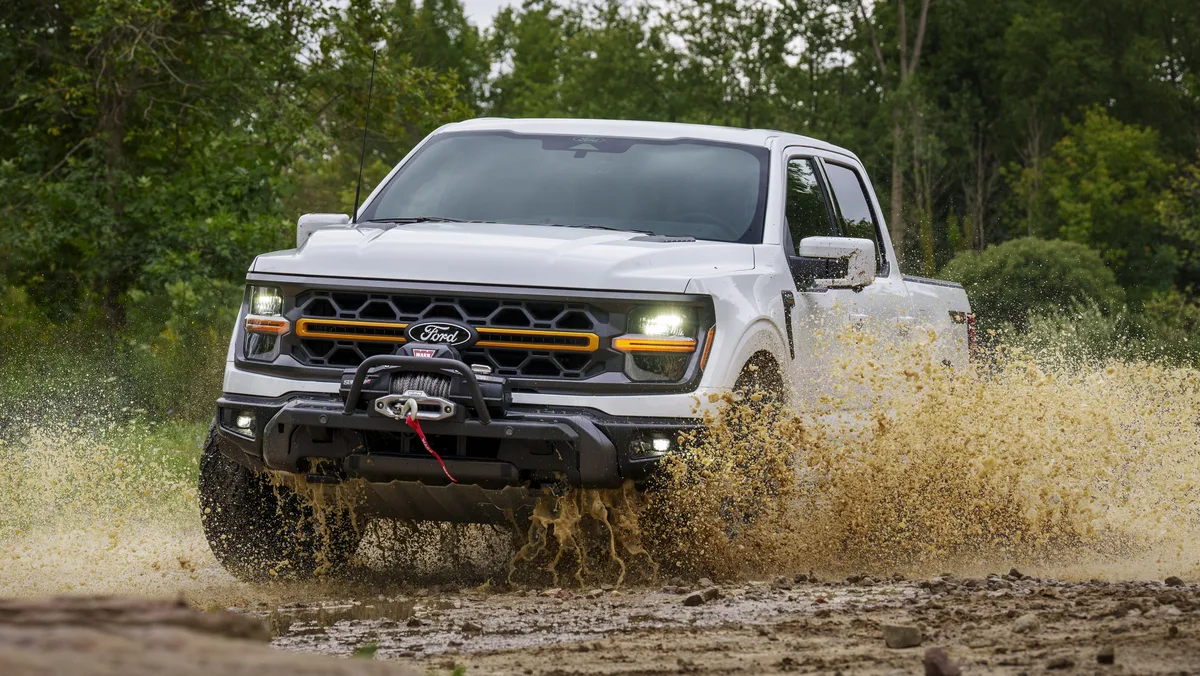
This is arguably where Trail Control proves its worth most vividly. When you're facing a really steep climb, it maintains consistent throttle input, preventing wheel spin and helping you power smoothly up without losing momentum. On descents, it acts like an advanced Hill Descent Control, automatically braking to keep a steady, ultra-low speed. This prevents uncontrolled slides and lets you focus on steering clear of obstacles.
It makes those intimidating slopes feel much more manageable.
Navigating Rocky or Technical Terrain
Crawling over rocks or through deeply rutted trails demands a slow, controlled pace. Trail Control lets you set that precise crawl speed, freeing up your feet from the brake and accelerator pedals. You can then devote all your attention to carefully placing your tires and avoiding costly damage to your undercarriage. It really reduces the physical and mental strain during tricky sections.

Slippery Surfaces Like Mud, Sand, and Snow
On loose or slick surfaces, inconsistent throttle application can lead to immediate loss of traction. Trail Control's ability to precisely manage power delivery and apply individual wheel braking helps maintain continuous forward motion. It prevents wheels from digging in on sand or mud, and it provides a more stable, controlled feel on snowy or icy trails, reducing the risk of sliding. It’s about measured, steady progress over unpredictable ground.
How to Activate and Adjust Trail Control in Your F-150

Engaging and managing Trail Control in your F-150 is pretty straightforward once you know where the controls are. It's designed for intuitive use, even when you're already focused on the trail ahead. Just remember to be in 4WD (either 4H or 4L, depending on the conditions) for optimal performance.
Here’s a step-by-step guide:
- Select a 4WD Mode: Ensure your F-150 is in a four-wheel-drive setting, typically 4H (Four-High) or 4L (Four-Low). 4L provides more torque and finer control for very technical or extremely steep terrain.
- Locate the Trail Control Button: Look for the dedicated Trail Control button on your dashboard or center console. It usually has an icon that resembles a truck with a speedometer or a wavy line.
- Activate Trail Control: Press the button to engage the system. You'll see an indicator light or message appear on your instrument cluster confirming it's active.
- Set Your Speed: Once active, use the cruise control buttons on your steering wheel (usually + and -) to adjust your desired speed.
- Forward Speed: You can typically set speeds from 1 mph up to about 20 mph.
- Reverse Speed: For backing up, the range is usually between 1 mph and 6 mph.
- The system will then automatically maintain that speed, handling the throttle and brakes.
Setting Your Speed
Adjusting your speed with Trail Control active is just like using regular cruise control. A simple tap of the "SET+" or "SET-" button will incrementally increase or decrease your target speed. This allows you to fine-tune your pace based on the terrain you're encountering. For really challenging spots, a slower speed is almost always better.
Steering While Trail Control is Active
While Trail Control handles the pedals, you are still fully in charge of steering. In fact, one of the main benefits is that it frees up your mental bandwidth to focus exclusively on your steering line, looking for obstacles, and anticipating changes in the trail. Make smooth, deliberate steering inputs. Avoid sudden, jerky movements, as these can confuse the system or cause a loss of traction, even with Trail Control engaged.
Key Benefits of Using Trail Control
When you're out on the trails, especially those that are new or particularly challenging, any tool that can reduce workload and increase control is a huge plus. Trail Control provides several significant advantages that can genuinely enhance your off-road experience. It's more than just a convenience feature, it's an enablement tool.
These benefits combine to make tough terrain feel more approachable, allowing you to focus on the adventure itself. Let's look at why it's such a game-changer for many F-150 owners.
Reduced Driver Fatigue and Stress
Off-roading, particularly in technical sections, can be physically and mentally exhausting. Constantly feathering the throttle and brake to maintain a crawl speed, especially on uneven ground, is tiring work. Trail Control takes over this demanding task, freeing your feet from the pedals.
This reduction in physical effort translates directly to less driver fatigue. When you're less tired, you're sharper and can make better decisions, which is critical for safety on the trail. It helps turn a white-knuckle experience into a more relaxed, focused drive.
Smoother, More Controlled Progress
The system's automatic and precise modulation of power and braking creates incredibly smooth vehicle movement. Unlike a human driver who might inadvertently apply too much gas or brake, Trail Control delivers consistent inputs. This minimizes jerking, sudden slips, and loss of momentum.
Smoother progress reduces stress on your F-150's drivetrain components and tires. It also makes for a more comfortable ride for everyone in the truck, especially over prolonged technical sections. That steady pace can be the difference between clearing an obstacle and getting stuck.
Focusing on Steering, Not Pedals
Perhaps the biggest benefit is the ability to shift your entire focus to steering and obstacle identification. When Trail Control is active, your feet are free, and your brain isn't preoccupied with pedal work. This allows you to really concentrate on your tire placement, looking far ahead, and choosing the optimal line.
On tricky trails, spotting potential hazards and making precise steering adjustments are paramount. Trail Control empowers you to master these aspects, improving both safety and your overall off-road capability. It's all about making the driver more effective.
Important Limitations and When to Think Twice
While Trail Control is a fantastic piece of technology, it's crucial to understand its limitations. No system can completely replace driver judgment and experience. Relying on it blindly in every situation can lead to trouble or damage.
Knowing when to engage it and, just as importantly, when to override it or choose a different approach, is key to being a responsible off-roader. It’s a tool, not a substitute for skill.
Not for Every Off-Road Situation
Trail Control isn't designed for high-speed off-roading, extreme rock crawling with very large obstacles, or deeply submerged water crossings. Its primary function is controlled, low-speed movement. Trying to use it outside its intended parameters can be ineffective or even risky.
For instance, attempting to use it in deep, soupy mud where momentum is key might lead to getting stuck more quickly. Similarly, extremely steep side-slopes or situations requiring significant articulation are often better handled with manual control and a spotter. Always assess the terrain first.
Understanding Its Speed Range
The system operates within a specific speed envelope, typically 1-20 mph forward and 1-6 mph in reverse. This narrow range is intentional, as it's optimized for technical, low-speed maneuvers. You can't engage Trail Control and expect it to manage your speed at 30 mph over washboard roads.
Exceeding these speeds or trying to engage it inappropriately will either disengage the system or it simply won't function as expected. Always keep its operational speed limits in mind when deciding whether to use it. Manufacturer specifications clearly outline these boundaries.
Impact on Braking and Steering Feel
When Trail Control is active, you'll notice a distinct change in how your F-150 feels. The automatic braking can sometimes feel abrupt or unusual compared to manual braking, as it's applying brakes to individual wheels. This can also affect steering feel, sometimes making it feel a little less direct as the system works to maintain traction.
It's important to get accustomed to these sensations. Don't be surprised if the steering wheel feels like it's fighting you slightly or if you hear more brake actuation noise. This is the system doing its job. However, if it feels truly out of control, disengage immediately.
Common Mistakes to Avoid with Trail Control
Even experienced off-roaders can make mistakes when integrating new technology into their driving habits. Trail Control is designed to simplify things, but certain missteps can negate its benefits or, worse, lead to dangerous situations. Learning from common pitfalls can save you a lot of headache.
Here are a few common errors we've observed or found reported in aggregate user reviews:
Over-Reliance on the System
The biggest mistake is treating Trail Control as an "autopilot" for off-roading. It’s a driver assistance feature, not a driver replacement. You still need to actively observe the terrain, choose your line, and be ready to take manual control at any moment. Never take your eyes off the trail.
This system is meant to assist your skills, not to completely compensate for a lack of judgment or inexperience. Think of it as a helpful tool in your arsenal, not the entire solution.
Ignoring Other Off-Road Driving Principles
Just because you've engaged Trail Control doesn't mean you can forget about other fundamental off-road principles. Proper tire pressure (airing down), using a spotter, knowing your vehicle's clearances, and understanding recovery techniques are all still crucial. The system works best when combined with good driving practices.
Trail Control is a piece of the puzzle, not the whole picture. Always prepare your vehicle and yourself for the challenges ahead, even with advanced tech at your fingertips.
Improper Tire Pressure
Running incorrect tire pressure, especially being aired up to street pressures, is a common error that significantly hampers Trail Control's effectiveness. Lowering your tire pressure (airing down) increases your tire's contact patch, which is vital for maximizing traction on soft or uneven surfaces. It also allows the tire to conform better to obstacles, reducing the chance of punctures.
If your tires aren't properly aired down, Trail Control will have to work much harder to find grip, potentially overheating brakes or struggling where it shouldn't. Always air down for serious off-roading.
Expert Tips for Maximizing Trail Control
Once you understand what Trail Control does and doesn't do, you can really start to optimize its use. These expert tips come from countless hours of real-world off-road experience and can help you get the most out of your F-150's capabilities. It's about blending technology with intuition.
Applying these practices will make you a more confident and effective off-road driver. They bridge the gap between simply activating the system and truly mastering it.
Look Ahead and Plan Your Line
Even with Trail Control handling the pedals, your eyes are your most important tool. Constantly look far ahead on the trail, not just at your front bumper. Identify potential obstacles, choose your intended path (your "line"), and plan your steering inputs well in advance. This foresight allows Trail Control to work more smoothly.
By planning your line, you minimize surprises and allow the system to maintain a consistent crawl without sudden, heavy interventions. A good line can make a tough obstacle feel easy.
Gentle Steering Inputs
While Trail Control gives you more mental space for steering, resist the urge to make sudden or jerky turns. Smooth, controlled steering inputs are always best off-road, especially with the system active. Abrupt steering can confuse the system, cause tire scrub, or even lead to a loss of traction on slippery surfaces.
Think of it like driving on ice, gentle and deliberate movements are key. Small, precise adjustments are far more effective than large, rapid ones.
Know When to Override Manually
Despite its intelligence, there will be moments when you need to take over. Trail Control is not infallible. If you feel the truck losing control, digging in excessively, or simply not performing as you expect, don't hesitate. You can override Trail Control by manually applying the brake or accelerator.
The system is designed to disengage when it detects direct driver input on the pedals. Trust your gut, if something feels wrong, take over. Knowing when to step in is a mark of an experienced off-roader.
Trail Control vs. Traditional Manual Off-Road Driving
The rise of systems like Trail Control brings up a common question: Is it better than driving purely manually? The answer, like most things in off-roading, isn't a simple yes or no. Both methods have their strengths, and the "best" approach often depends on the specific situation, the driver's experience, and personal preference.
Let's break down how Trail Control stacks up against traditional manual throttle and brake control, looking at the pros and cons of each. This can help you decide when to lean on the tech and when to trust your feet.
| Feature / Scenario | Trail Control (Automated) | Traditional Manual Driving |
|---|---|---|
| Throttle/Brake Control | Automatic, precise, individual wheel modulation. | Manual, driver-dependent, requires finesse. |
| Driver Fatigue | Significantly reduced. Feet are free. | Higher, constant pedal modulation is tiring. |
| Consistency | Highly consistent speed, especially on uneven terrain. | Varies greatly with driver skill and terrain. |
| Focus | Allows driver to focus almost entirely on steering and spotting. | Requires simultaneous focus on steering, spotting, and pedal control. |
| Learning Curve | Easier for novices to gain confidence on technical terrain. | Requires significant practice and feel to master. |
| System Limitations | Limited speed range, not for extreme articulation or high speed. | No inherent speed limitations other than driver skill/vehicle capability. |
| Vehicle Recovery | Can assist in consistent pulls, but requires driver oversight. | Full driver control for complex recovery maneuvers. |
For many, Trail Control provides a fantastic bridge for learning and gaining confidence on difficult trails. It allows new off-roaders to experience challenging terrain without the immediate overwhelm of pedal management. Experienced drivers might use it to reduce fatigue on long, technical routes or to maintain extreme precision on specific obstacles.
However, traditional manual driving offers the ultimate level of granular control. There are situations, particularly in very dynamic or unpredictable terrain, where a seasoned driver's immediate, instinctual manual input can outperform an automated system. It's about feeling the terrain and reacting instantly, something technology can't fully replicate. Ultimately, the best approach is often a combination of both: using Trail Control where it excels and being ready to take manual control when conditions demand it.
Safety First: Essential Warnings and Best Practices
Off-roading, even with advanced aids like Trail Control, carries inherent risks. Your F-150 is a capable machine, but responsible driving, awareness, and preparation are non-negotiable for safety. Ignoring these warnings can lead to vehicle damage, personal injury, or even getting stranded in remote areas.
Always prioritize safety above all else. Technology assists, but it doesn't replace common sense and good judgment.
Pre-Trip Vehicle Checks
Before heading off-road, a thorough inspection of your F-150 is critical. This isn't just a casual glance, it's a systematic check to ensure your truck is ready for the demands of the trail. You wouldn't hit the track in a race car without a pit crew's once-over, and off-roading is no different.
Here are a few key things to inspect:
- Tires: Check for proper inflation (adjusting for off-road use, as discussed), inspect for cuts, bulges, or embedded objects. Ensure lug nuts are tight.
- Fluids: Verify oil, coolant, brake fluid, and power steering fluid levels. Top off as needed.
- Undercarriage: Look for any loose components, damaged skid plates, or hanging wires.
- Recovery Gear: Make sure you have essential recovery equipment, like a shovel, recovery straps, and a first-aid kit.
- Brakes: Test brake function before you hit the challenging sections.
Always Be Ready to Take Over
Trail Control is smart, but it's not sentient. It doesn't "see" every nuance of the terrain or anticipate sudden changes like a human driver can. Your hands should always be on the steering wheel, and your feet should be positioned to quickly apply the brake or accelerator. This readiness allows for immediate manual override if the system isn't performing as expected or if an unexpected obstacle appears.
Never get complacent. Maintain situational awareness and be prepared to take full control of your F-150 at a moment's notice. Your vigilance is the ultimate safety net.
Environmental Considerations: Tread Lightly
Responsible off-roading extends beyond just vehicle safety, it includes respecting the environment. Following "Tread Lightly!" principles is crucial for preserving trails and natural habitats. This means staying on designated trails, avoiding sensitive areas, and minimizing your impact.

Trail Control helps you maintain control, which in turn helps reduce environmental damage like excessive wheel spin that tears up trails. Always leave the area cleaner than you found it.
FAQs About Your F-150's Trail Control
We get a lot of questions about how Trail Control works and when to use it. It's a relatively new technology for many F-150 owners, so a bit of clarification goes a long way. Let's tackle some of the most common inquiries to help you better understand and utilize this feature.
Does Trail Control work in 2WD?
No, Trail Control requires your F-150 to be in a four-wheel-drive (4WD) mode to function. It needs the traction and control capabilities of 4WD, specifically 4H (Four-High) or 4L (Four-Low), to effectively manage power and braking to individual wheels. You won't be able to activate it in 2WD.
Can I use Trail Control on pavement?
While technically you could activate it on pavement, Trail Control is specifically designed for off-road conditions and low speeds. There's no practical benefit to using it on paved roads, and it wouldn't function like traditional cruise control at higher speeds. It's best reserved for its intended challenging terrain.
What if I accidentally hit the accelerator or brake while Trail Control is on?
If you manually apply the accelerator or brake pedal, Trail Control will temporarily disengage. The system is designed to give the driver priority. Once you release the pedals, and if the conditions are still met, Trail Control will typically re-engage and resume its set speed. This allows for quick, manual intervention when needed.
Will Trail Control wear out my brakes faster?
Trail Control does use the brakes extensively, particularly on descents or when managing wheel spin. Over prolonged, demanding use, this can lead to increased brake wear compared to purely manual driving. It can also cause brake fade if the brakes get excessively hot. It's something to be aware of, but for typical use, it shouldn't be a major concern for short periods.
Always allow brakes to cool if you smell them or notice reduced performance.
Final Word: Mastering Your F-150 Off-Road
Your F-150, equipped with Trail Control, is an incredibly capable off-road machine, ready to tackle a wide variety of challenging terrain. This system isn't just a gimmick, it's a sophisticated piece of engineering designed to enhance your control, reduce fatigue, and ultimately make your off-road adventures safer and more enjoyable. By precisely managing throttle and braking, it frees you up to concentrate on the crucial task of steering and navigating.
Remember, though, that technology is always a tool to assist, not to replace, skilled driving and common sense. Understanding its limitations, knowing when to engage it, and combining it with sound off-road driving principles will truly let you master your F-150 off-road. Get out there, explore responsibly, and enjoy the capability your truck offers!
Related posts:
 How Do Ball Joints Work: A Comprehensive Guide
 How Do I Know If My Clutch Cable Has Gone
 Can Spark Plugs Really Break Glass
 How Big of Tires Can I Fit on My F150? A Comprehensive Guide
 How Can I Protect My Windshield From Rock
 How Do Spark Plugs Break Windows
 How Far Can I Drive With A Bad Alternator
 How Far Can I Drive With A Blown Water Pump
 How Far Can I Drive With A Broken Serpentine Belt
 How Far Can You Drive With A Dead Battery
 How Far Can You Drive Without An Alternator
 How To Put Down Nissan Altima Back Seats