How to Unlock a Ford F150 with a Coat Hanger (Step-by-Step)
Locked out of your Ford F150? This guide shows how to safely unlock your truck using a coat hanger as a temporary solution. Always prioritize safety and consider calling a professional if unsure.
Key Takeaways
- Use only in emergencies: A coat hanger should only be used when you’re locked out and have no other option. It’s not a long-term fix.
- Know your truck’s model year: Older Ford F150s (pre-2015) are more accessible with this method due to manual locks and simpler window seals. Newer models (2015+) often have stronger door seals, anti-theft shields, and side airbags that make this method risky or ineffective.
- Be gentle to avoid damage: Forcing the hanger can scratch paint, break window seals, or damage door mechanisms.
- Straighten and hook the hanger: A straightened hanger with a small hook at the end works best for reaching the lock rod.
- Have a backup plan: If the hanger method fails within a few minutes, stop and call a locksmith or roadside assistance to avoid costly damage.
How to Unlock Ford F150 with Coat Hanger
Locked out of your Ford F150? It’s a frustrating situation—especially if you’re in a hurry or far from help. While modern vehicles come with advanced security systems, older Ford F150 models (typically 2014 and earlier) often have manual door locks that can be accessed with a simple tool like a coat hanger. This guide walks you through how to unlock your Ford F150 using a coat hanger safely and effectively.
Important Note: This method works best on older F150s with manual locks and traditional window seals. Newer models (2015 and later) have tighter seals, electronic locks, and reinforced doors, making this technique difficult or ineffective. Always try your spare key or call roadside assistance first. Use the coat hanger method only as a last resort.
What You’ll Need

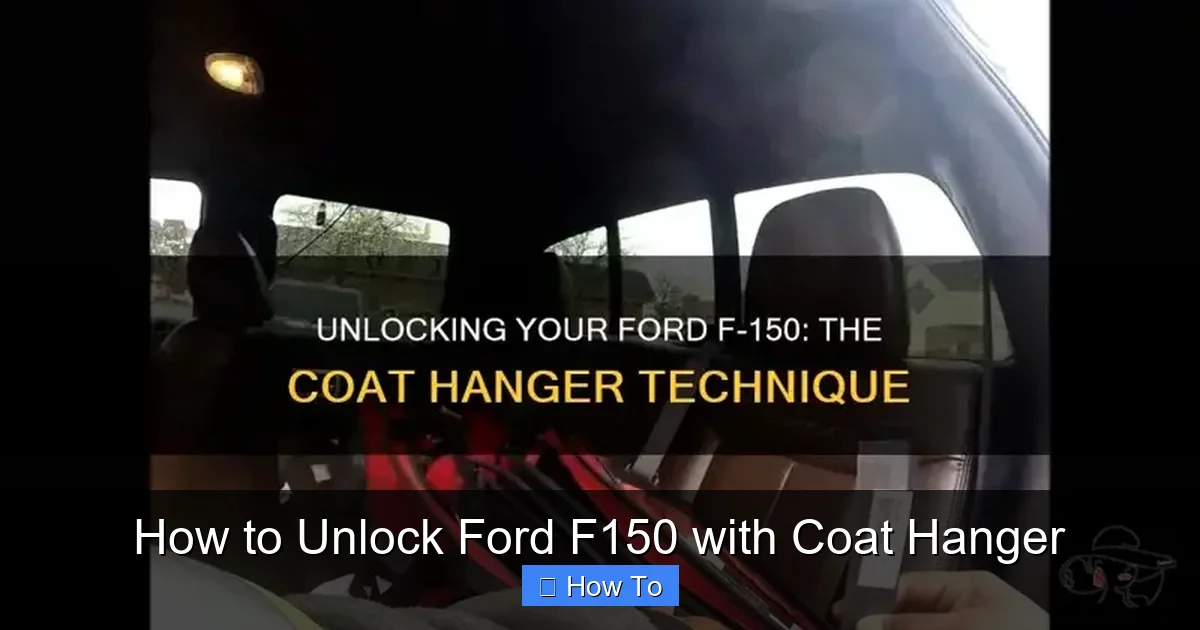
Visual guide about how to unlock ford f150 with coat hanger
Image source: i.pinimg.com
Before you start, gather these items:
- A sturdy wire coat hanger (preferably metal, not plastic-coated)
- Pliers (to bend and shape the hanger)
- A flashlight (to see inside the door gap)
- A cloth or towel (to protect the paint and window)
- Patience and a steady hand
Avoid using sharp or rusty hangers, as they can scratch your truck or break inside the door. A clean, smooth metal hanger works best.
Step 1: Assess Your Ford F150’s Lock Type
Before You Start: Is Your Truck a Good Candidate?
Not every F150 can be unlocked with a coat hanger. Trucks with manual locks, visible lock rods, and simple door seals are the best candidates. Trucks with anti-theft shields, side airbags, or electronic locks are usually not. If your truck falls into the second group, skip ahead to the professional help section.

Visual guide about how to unlock ford f150 with coat hanger
Image source: shunvogue.com
Not all Ford F150s are the same. The success of this method depends heavily on your truck’s model year and lock system.
Older Models (1997–2014)
Most 1997–2014 F150s use a traditional vertical lock rod inside the door. With the window slightly down or the door seal pulled back, a straightened hanger can reach the rod and pull it upward to unlock the door. Models with manual locks and no anti-theft shield are the easiest.
These trucks often have manual door locks with a visible lock rod inside the door. The window seal is usually loose enough to insert a hanger. This is the ideal scenario for the coat hanger method.
Newer Models (2015 and Later)
2015 and newer F150s often have stronger door seals, a plastic anti-theft shield around the lock mechanism, and side airbags near the door panel. The coat hanger method is much harder and can damage the airbag or wiring. For these trucks, a locksmith or Ford dealer is the safer choice.
These use electronic locks and tighter window seals. The gap between the window and door frame is too small for a hanger. Attempting this method may damage the weather stripping or trigger the alarm.
Tip: If your F150 has power locks and a key fob, this method is unlikely to work. Skip to the troubleshooting section or call a professional.
Step 2: Prepare the Coat Hanger

Visual guide about how to unlock ford f150 with coat hanger
Image source: i.ytimg.com
A regular coat hanger won’t do—you need to shape it into a tool that can reach and hook the lock mechanism.
Straighten the Hanger
Unwind the coat hanger and straighten it as much as possible by hand or with pliers. Leave a small loop or bend at one end to use as a handle. A straighter hanger slides through the door gap more easily and gives you better control.
Use pliers to unbend the hanger into a long, straight wire. Remove any hooks or curves. You want a straight rod about 24–30 inches long.
Create a Small Hook
Use pliers to bend the opposite end into a small U-shaped hook, about half an inch wide. The hook needs to be small enough to fit through the gap but strong enough to catch the lock rod without slipping off.
At one end, bend a small hook—about the size of a paperclip loop. This hook will grab the lock rod inside the door. Make sure the hook is smooth and not sharp to avoid damaging internal components.
Optional: Add a Handle
Bend the other end into a small loop or twist it into a handle. This gives you better grip and control when inserting the hanger.
Pro Tip: Practice bending the hanger before inserting it. A well-shaped tool saves time and reduces the risk of slipping.
Step 3: Locate the Door Gap
The goal is to slide the hanger between the window glass and the door frame—specifically, the top corner of the door where the window meets the seal.
Find the Right Spot
On most F150s, the best spot is the top corner of the driver’s door, near the window. Gently pull the weather stripping back just enough to slide the hanger in. Avoid prying the door frame, which can bend metal or crack the seal.
Stand on the side of the locked door. Look for the small gap between the window and the rubber weather stripping. This gap is usually widest at the front corner of the door (near the side mirror).
Use a Flashlight
Shine a flashlight through the gap or through the window to see the lock rod and door mechanism. If you can see the rod, you can aim the hook more accurately and avoid snagging wires or linkages.
Shine a light into the gap to see inside. You’re looking for a vertical metal rod—the manual lock rod—that moves up and down when you lock or unlock the door.
Warning: Do not force the hanger. If it doesn’t slide in easily, stop and reassess. Forcing it can tear the weather stripping or scratch the paint.
Step 4: Insert the Hanger
Now comes the delicate part: guiding the hanger into the door to reach the lock rod.
Protect the Paint and Window
Place a cloth or towel along the edge of the door and window. This prevents scratches if the hanger slips.
Slide the Hanger In
Insert the hooked end into the gap with the hook facing the lock rod. Move slowly and keep the hanger against the window or door frame so it doesn’t scratch the paint. If you feel resistance, pull back and adjust the angle rather than forcing it.
Gently insert the hooked end of the hanger into the gap at the front top corner of the door. Angle it downward toward the interior of the door.
Feel for the Lock Rod
Once inside, gently move the hanger up and down until you feel the vertical lock rod. It is usually a thin metal rod near the door latch. Tap it lightly with the hook to confirm you’ve found it before pulling.
Move the hanger slowly side to side and up and down. You’re trying to hook the vertical lock rod, which is usually located about 6–8 inches down from the top of the door.
Tip: If you feel resistance, don’t pull hard. Wiggle the hanger gently to find the rod. It may take several attempts.
Step 5: Hook and Pull the Lock Rod
Once you’ve located the lock rod, it’s time to unlock the door.
Engage the Hook
Position the hook under or around the lock rod and twist slightly to catch it. Take your time — if the hook slips off, reposition and try again rather than yanking the hanger.
Gently maneuver the hook around the lock rod. You may need to rotate the hanger slightly to get a secure grip.
Pull Upward
With the hook engaged, pull the hanger upward in a smooth, steady motion. You should feel the lock rod move with it. If it doesn’t budge, the hook may not be seated properly — reset and try again.
Once hooked, pull the hanger upward in a smooth motion. This mimics the action of manually unlocking the door. You should feel the rod move.
Listen for the Click
When the lock rod reaches the unlocked position, you’ll hear a click and feel the resistance release. Stop pulling at that point and slowly withdraw the hanger.
If successful, you’ll hear a soft click as the lock disengages. The door should now be unlocked.
Note: If the door doesn’t open immediately, try pulling the handle from the outside. Sometimes the lock needs a second tug to fully release.
Step 6: Remove the Hanger and Open the Door
Once the door is unlocked, carefully remove the hanger to avoid damaging the interior.
Slide It Out Slowly
Pull the hanger straight out without twisting. Sudden movements can scratch the paint or dislodge the weather stripping.
Open the Door
Pull the exterior handle to open the door. Check that the lock mechanism is functioning normally.
Inspect for Damage
How to Unlock a Ford F150 Without a Coat Hanger
If the coat hanger method isn’t working or you don’t want to risk damage, you have other options. A wedge and long-reach tool can push the unlock button on some models. A locksmith can open the door without damage. Ford roadside assistance or a dealer can also help, especially on newer trucks with anti-theft systems.
Look for any scratches, dents, or torn seals. If you notice damage, consider having it repaired to prevent water leaks or further issues.
Troubleshooting Common Issues
Even with careful execution, things can go wrong. Here’s how to handle common problems.
The Hanger Won’t Go In
The window seal may be too tight, especially on newer models. Try warming the seal with a hairdryer for a few seconds to make it more flexible. Never use excessive force.
Can’t Find the Lock Rod
If you can’t locate the rod, the door may have an anti-theft shield or a different lock design. Try a different angle with the flashlight, or check whether your model year uses a cable instead of a rod. If you still can’t find it, stop and call a professional.
The rod may be hidden behind insulation or foam inside the door. Use the flashlight to look for movement when you wiggle the hanger. Ask a friend to watch inside the cab (if a window is open) to see if the lock moves.
The Door Still Won’t Open
The lock may be electronically controlled, or the rod may be disconnected. In this case, the coat hanger method won’t work. Stop and call a locksmith.
Alarm Goes Off
Some F150s have sensitive alarms. If the alarm triggers, stop immediately. Wait for it to stop, then try again more gently. If it keeps going off, move away and call for help.
Safety and Legal Considerations
Safety and Legal Considerations
Only use this method on a vehicle you own or have permission to open. Attempting to unlock a vehicle you don’t own can be illegal. Always prioritize safety — never reach into a door with the engine running or the airbags active, and avoid damaging the door seal or wiring.
Using a coat hanger to unlock a car is generally legal if you own the vehicle. However, there are important safety and ethical points to remember.
Only Do This on Your Own Vehicle
Never attempt to unlock a vehicle you don’t own. Even with good intentions, this can be seen as tampering or theft.
Avoid Damage
Your truck’s exterior and interior are valuable. Scratches, dents, or broken seals can lead to costly repairs. If you’re unsure, don’t risk it.
Consider the Weather
Avoid this method in extreme cold or rain. Cold weather makes seals brittle, and wet conditions increase the risk of slipping and damage.
Have a Backup Plan
Always keep a spare key in a magnetic key box under the truck or with a trusted neighbor. Modern solutions like smartphone apps or keyless entry systems are also worth investing in.
When to Call a Professional
The coat hanger method is a temporary fix. If it doesn’t work, or if you’re uncomfortable trying it, call a professional.
Contact a Locksmith
A licensed automotive locksmith has the tools and expertise to unlock your F150 without damage. Many offer 24/7 emergency service.
Use Roadside Assistance
If you have AAA or a similar service, they can send help quickly. Some insurance plans also include lockout assistance.
Visit a Ford Dealer
Dealerships can reprogram keys or provide replacement fobs. While more expensive, it’s the safest option for newer models.
Preventing Future Lockouts
Preventing Future Lockouts
- Keep a spare key: Store one in a secure, hidden location or give it to a family member.
- Use a keyless entry system: Consider installing a keypad or smartphone-controlled lock.
- Check your key fob battery: A dead fob is a common cause of lockouts.
- Teach family members: Make sure everyone who drives the truck knows where the spare key is.
- Hide a magnetic key box: A magnetic box under the frame gives you a backup that doesn’t rely on batteries.
Once you’re back inside, take steps to avoid this situation again.
- Keep a spare key: Store one in a secure, hidden location or give it to a family member.
- Use a keyless entry system: Consider installing a keypad or smartphone-controlled lock.
- Check your key fob battery: A dead fob is a common cause of lockouts.
- Teach family members: Make sure everyone who drives the truck knows where the spare key is.
Conclusion
Unlocking a Ford F150 with a coat hanger is a practical skill for owners of older models. While it’s not foolproof and carries some risk, it can save you time and money in an emergency. Remember to act calmly, work gently, and prioritize safety. If the method doesn’t work after careful attempts, don’t force it—call a professional instead.
This technique is a reminder of how far vehicle security has come. Modern F150s are built to prevent break-ins, but that also means they’re harder to open without the right key. Stay prepared, stay safe, and keep that spare key handy.
Related posts:
 How Far Can You Drive Without an Alternator? Real Distances
 What Color Is Avalanche for Ford? The Definitive 2026 Guide
 How to Disengage 4WD in Ford F150: Easy Steps to 2H
 Ford F150 Power Steering Assist Fault: Fix by Year, Codes & Cost
 What Lug Pattern is a Ford F150: Unveiling the Perfect Fit for Your Ride
 Does My F150 Have Remote Start? 3 Easy Ways to Check
 Does 2016 F150 Have Apple CarPlay? SYNC 3 vs SYNC 2 Guide
 Best 6X8 Speakers for Ford F150: Tested & Reviewed
 Best Adjustable Hitch for F150
 How to Change Battery in F150 Key Fob
 Ultimate 7 Best Bed Cover For 2025 Ford F150: Expert Guide
 Top 5 Best Tonneau Covers for 2023 Ford F150