How Many Tons Is a Ford F250
If you're asking how many tons is a Ford F250, you’re probably trying to figure out whether it can handle your trailer, tools, or work load, not just satisfy a trivia itch. The short answer? It’s not as simple as dividing by 2,000. Modern F-250s span a wide weight range depending on what’s under the hood, how it’s configured, and even the year it rolled off the line.
Calling it a “¾-ton” truck is a legacy label that doesn’t reflect real-world numbers.
Manufacturer specifications indicate the Ford F-250 Super Duty’s curb weight typically falls between 5,800 and 7,000 pounds as of 2026, with Gross Vehicle Weight Ratings (GVWR) stretching from 8,000 to over 10,000 pounds. That means payload and towing capacities vary dramatically, so guessing could leave you overloaded or underutilized. Let’s walk through exactly how to find your truck’s true weight and what that means for your next haul.
Why “¾-Ton” Doesn’t Mean What You Think
The term “¾-ton” comes from a 1930s classification system based on payload capacity, not actual weight. Back then, it roughly meant the truck could carry 1,500 pounds, but today’s F-250s often exceed that by a wide margin. Ford hasn’t built a literal ¾-ton truck in decades; the label stuck for marketing and tradition.
In reality, your F-250’s true capacity depends on its specific build. A base-model Regular Cab with the 6.2L gas V8 will weigh and carry far less than a diesel-powered Crew Cab with the Heavy-Duty Trailer Tow Package. Relying on the old “¾-ton” idea can lead to dangerous overloading or wasted budget on a truck bigger than you need. Always check your actual specs, not the nickname.
What Actually Determines an F-250’s Weight
Three main factors dictate how much your F-250 weighs and how much it can handle: configuration, powertrain, and optional equipment.
- Cab and bed size: A Crew Cab adds hundreds of pounds over a Regular Cab due to extra steel, glass, and interior. Longer beds (8 ft vs. 6.75 ft) also increase weight.
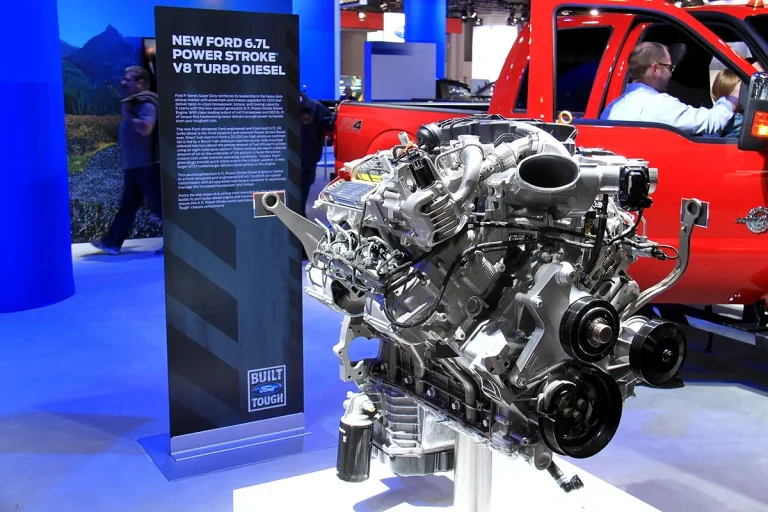
- Engine choice: The 6.7L Power Stroke diesel is heavier than the 6.2L or 7.3L gas engines, adding 200, 300 pounds alone.
- Drivetrain and packages: 4×4 systems, upgraded suspensions, and towing packages all add mass but also boost capability.
Even trim level matters: a loaded Limited trim with leather, tech, and sound insulation will weigh more than a work-focused XL. Every pound counts when you’re calculating payload.
Step-by-Step: Find Your Exact F-250’s Weight
Don’t guess, get precise numbers straight from your truck. Here’s how:
Check the Door Jamb Sticker
Open your driver’s side door and look for a white or yellow sticker on the B-pillar. It lists your truck’s GVWR (maximum safe total weight), curb weight, tire size, and recommended pressures. This is the most reliable source because it reflects your exact build, including optional equipment installed at the factory. If the sticker’s faded or missing, move to the next step.
Decode Your VIN (If the Sticker’s Gone)
Your 17-character Vehicle Identification Number holds configuration details. Use Ford’s free VIN decoder or third-party tools like NICB’s VINCheck. Look for codes indicating cab type (e.g., “C” for Crew Cab), engine (“D” for 6.7L diesel), and GVWR range. Cross-reference these with Ford’s official spec sheets for your model year.
Use Ford’s Official Towing Guide
Ford publishes a yearly towing guide that breaks down capacities by exact configuration, down to axle ratio and wheelbase. Find it on ford.com under “Owner” > “Towing & Payload.” Match your VIN-derived specs to the table to get your max towing and payload. Never rely on dealer estimates or online forums; configurations vary too much.
Real Weight Ranges by Configuration
Here’s what our research shows for recent model years (2020, 2024):
| Configuration | Curb Weight (lbs) | GVWR (lbs) | Payload (lbs) |
|---|---|---|---|
| Regular Cab, 6.2L gas, 4×2 | ~5,800 | 8,000 | ~2,200 |
| SuperCab, 7.3L gas, 4×4 | ~6,400 | 9,500 | ~3,100 |
| Crew Cab, 6.7L diesel, 4×4 | ~6,900 | 10,000+ | ~3,300 |
Payload = GVWR minus curb weight. Notice how much variance there is, over 1,000 pounds between lightest and heaviest setups. Diesel models dominate heavy towing, but they also cost more upfront and at the pump.
Common Mistakes That Lead to Overloading
Even experienced owners slip up. Watch for these traps:
- Confusing GVWR with towing capacity: GVWR includes passengers, fuel, cargo, and tongue weight. If your truck weighs 6,500 lbs and has a 10,000-lb GVWR, you only have 3,500 lbs left for everything else, not just the trailer.
- Ignoring payload stickers: Some F-250s have a separate payload certification label near the door jamb. It’s legally binding, exceed it and you void insurance in an accident.
- Assuming “¾-ton” means 1,500-lb payload: Modern F-250s often carry twice that. Underestimating leads to buying a smaller trailer than you can safely tow.
- Forgetting passenger and gear weight: Four adults plus coolers and tools can easily add 600, 800 lbs, eating deeply into your payload budget.
Always calculate total onboard weight before hitching up. Better yet, weigh your loaded truck at a public scale (many truck stops offer this for $10, $15).
When Your F-250 Might Need Commercial Registration
If your F-250’s GVWR hits 10,001 pounds or more, common with diesel Crew Cabs and chassis cab models, you’ve crossed into commercial vehicle territory in most U.S. states. That triggers different rules: DOT registration, potential CDL requirements, and stricter inspection schedules.
Check your door jamb sticker first. If GVWR is 10,000 lbs exactly, you’re usually safe for personal use. But add a heavy flatbed, auxiliary fuel tank, or winch package, and you might push it over. Some owners retrofit their trucks without realizing they’ve changed the legal classification.
When in doubt, call your state’s DMV or DOT office, they’ll ask for your VIN and confirm your status.
Best for Heavy Towing? Yes—But Know Your Limits
The F-250 shines when you need to pull serious weight, especially with the 6.7L Power Stroke diesel. Manufacturer specs confirm max tow ratings up to 22,800 pounds when properly equipped, enough for large fifth-wheel RVs, equipment trailers, or horse floats.
But that number assumes ideal conditions: proper hitch, weight-distributing setup, and minimal passenger/cargo load. In real-world use, your actual safe towing capacity is often 20, 30% lower once you account for gear, fuel, and people. Always subtract your onboard weight from GVWR before calculating how much trailer you can legally and safely pull.
F-250 vs. F-150 vs. F-350: Which Weight Class Fits Your Job?
Half-ton (F-150), ¾-ton (F-250), and one-ton (F-350) aren’t just marketing labels, they reflect real capability gaps.
- F-150: Best for light-duty hauling, daily driving, and occasional trailer use (max tow ~13,000 lbs). Saves fuel and costs less upfront.
- F-250: The sweet spot for serious towing, frequent heavy loads, and work use. Handles 90% of recreational and commercial needs without overkill.
- F-350: Needed only for extreme payloads (3,500+ lbs) or gooseneck/fifth-wheel setups exceeding 25,000 lbs. Costs more and rides rougher unloaded.

If you’re towing under 15,000 lbs regularly, an F-250 gives you the right balance of capability and everyday usability. Go F-350 only if your trailer specs demand it.
Pro Tips for Safe Loading and Legal Compliance
- Weigh your loaded truck annually: Public scales at truck stops or feed mills cost $10, $15 and give you exact numbers for curb weight, axle loads, and total GVW.
- Distribute weight evenly: Keep 60% of cargo over the rear axle to avoid trailer sway. Tongue weight should be 10, 15% of total trailer weight.
- Check tire ratings: Your door jamb lists max load per tire. Overloading tires is a leading cause of blowouts, even if GVWR isn’t exceeded.
- Update registration if modified: Adding a utility bed, lift kit, or auxiliary tanks can change your truck’s classification. Document changes to avoid fines.
These steps prevent surprises at weigh stations or, worse, during emergency braking.
Final Decision Guide: Is Your F-250 Ready for the Load?
Ask three questions:
- What’s my actual GVWR? (Door jamb sticker or VIN decode)
- How much do I already weigh? (Fuel, passengers, tools, accessories)
- What’s my trailer’s loaded weight plus tongue weight?
If (2) + (3) ≤ (1), you’re legal and safe. If not, either lighten your load, upgrade your truck, or choose a smaller trailer.
For most users, an F-250 with the right configuration handles heavy-duty tasks without stepping up to an F-350. But never assume, verify with real numbers from your specific truck. That’s how you avoid breakdowns, tickets, or worse.
Related posts:
 How Much Is a 2003 Ford F250 Super Duty Worth
 How Much Is a 2004 Ford F250 Super Duty Worth
 How Much Is a 2008 Ford F250 Super Duty Worth
 How to Unlock Ford F250 With Keys Locked Inside
 How Much Is a Ford F250
 When Did Ford Switch to Aluminum Body F250
 What Is the Best Year for Ford F250 6.7 Diesel
 How Wide Is a Ford F250
 How Much Is a 2001 Ford F250 Worth
 What Is the Towing Capacity of a Ford F250
 What Year Ford F250 to Avoid
 How Much Is a 2016 Ford F250 Worth