How Many Lbs Can a Ford F250 Tow
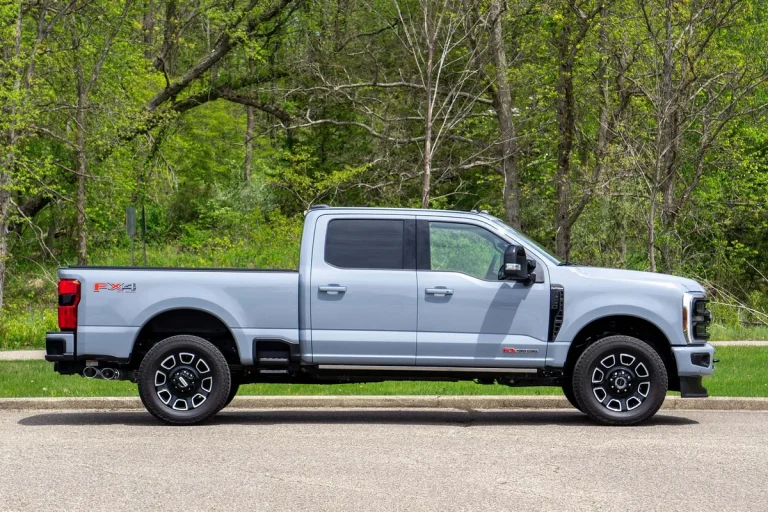
If you're asking how many lbs can a Ford F-250 tow, you’re probably already eyeing a trailer and wondering if your truck can handle it. The short answer? It depends, on your engine, cab size, bed length, axle ratio, and whether you’re using a conventional hitch or gooseneck setup. Ford lists max ratings up to 22,800 lbs as of 2026, but that’s only achievable with the right configuration.
Most real-world F-250s fall between 15,000 and 20,000 lbs depending on spec.
Manufacturer specifications indicate that towing capacity isn’t just about horsepower, it’s a balance of frame strength, cooling, braking, and payload. Per SAE J2807 testing standards, Ford rates each combination individually, so you can’t assume your truck matches the brochure’s top number. Let’s walk through what actually determines how much your F-250 can pull safely.
Why Your F-250’s Towing Capacity Isn’t a Single Number
Towing capacity on the F-250 varies wildly because Ford builds it in dozens of configurations. Two trucks with the same model year can have different ratings based on options you might not even think about, like whether it’s a Regular Cab or Crew Cab, or if it has a 3.55 or 4.30 axle ratio. Even the drivetrain matters: 4×2 usually tows more than 4×4 due to less weight and mechanical loss.
The key takeaway is that Ford doesn’t assign one number to the entire F-250 lineup. Instead, they calculate capacity per build using Gross Combined Weight Rating (GCWR), which includes the truck, passengers, cargo, fuel, and trailer. If any of those variables change, your safe towing limit changes too. That’s why checking your specific door-jamb sticker or owner’s manual is non-negotiable.
The Real Factors That Determine How Much You Can Tow
Several interlocking specs dictate your actual towing limit. First, engine choice plays a big role, diesels deliver more low-end torque, which helps with heavy loads at low speeds. But gas engines can still tow impressively, especially with the right gearing.
Cab and bed size affect weight distribution and payload. A Regular Cab with an 8-foot bed typically has higher payload and towing than a Crew Cab with a 6.75-foot bed, simply because there’s less truck to haul around. Drivetrain matters too: rear-wheel drive (4×2) is lighter and often rated for more than four-wheel drive (4×4).
Axle ratios are another hidden lever. A 4.30:1 ratio gives better towing performance than a 3.31:1, especially on hills or with heavy fifth-wheel trailers. And if your F-250 came with the Max Trailer Tow Package, which includes an upgraded radiator, trailer brake controller, and heavy-duty hitch, you’ll see a noticeable bump in capacity compared to base models.
Engine Choice: Gas vs. Diesel Impact
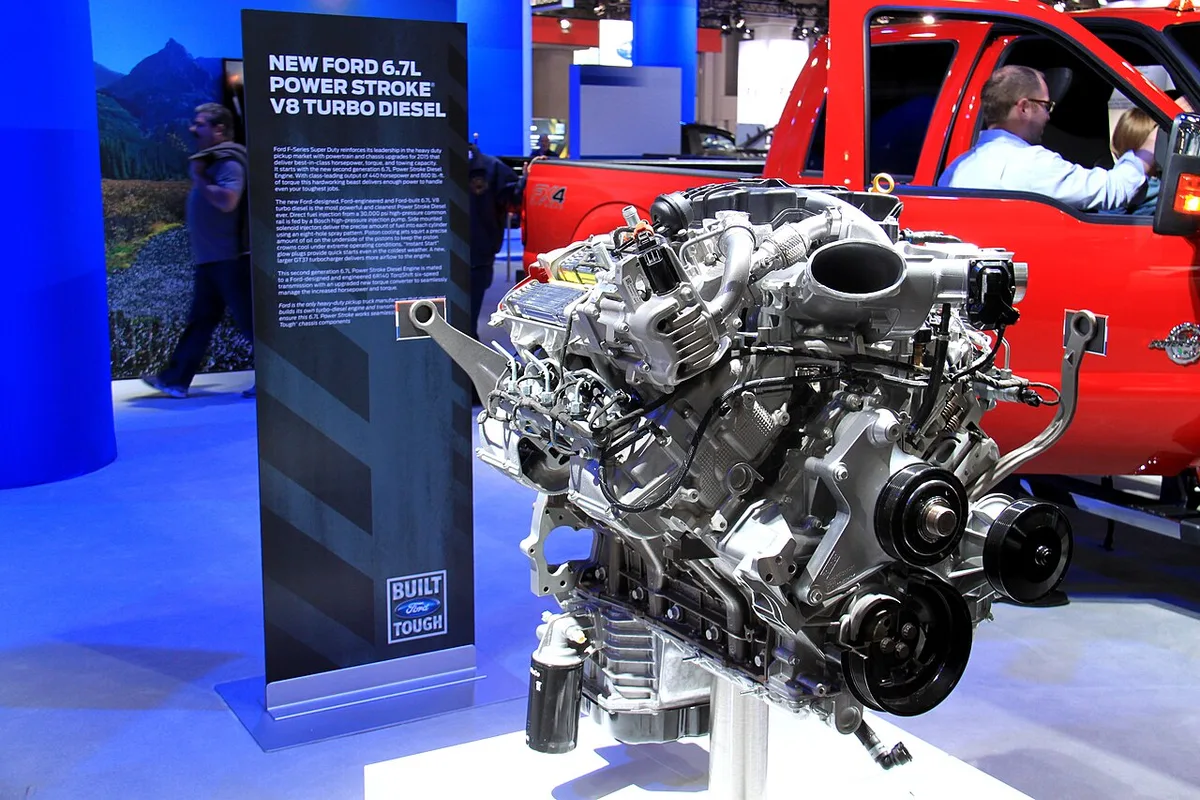
Gas engines like the 7.3L V8 are reliable and simpler to maintain, making them great for occasional towing under 15,000 lbs. They’re also quieter and cheaper upfront. But if you’re regularly pulling 18,000+ lbs or live in mountainous terrain, the 6.7L Power Stroke diesel is the clear winner. Its 1,050 lb-ft of torque lets it handle steep grades without breaking a sweat, and it’s built for long-term durability under load.

Diesel does cost more upfront and requires stricter maintenance (like DEF fluid and regular DPF care), but for serious towers, it’s worth it. Just remember: even with diesel, your actual capacity still depends on cab, bed, and axle choices, not just the engine.
Cab, Bed, and Drivetrain Configurations
Here’s how body style affects towing:
| Configuration | Typical Towing Range (lbs) | Notes |
|---|---|---|
| Regular Cab, 8-ft bed, 4×2 | 18,000–21,000 | Lightest setup, highest payload |
| SuperCab, 6.75-ft bed, 4×4 | 16,000–19,000 | Balanced for crew and cargo |
| Crew Cab, 6.75-ft bed, 4×4 | 15,000–18,500 | Most common, but lower payload |
Crew Cabs are popular for family use, but they add weight that eats into your payload, and payload directly limits how much tongue weight your truck can handle. If you’re hauling a fifth-wheel, that’s critical. Always check your door-jamb sticker for your exact payload rating before loading up.
Axle Ratios and Factory Towing Packages
Axle ratio determines how many times the driveshaft turns per wheel revolution. Lower numbers (like 3.31) prioritize fuel economy; higher numbers (like 4.30) maximize towing power. For example, an F-250 with 4.30 gears can tow nearly 2,000 lbs more than the same truck with 3.31s.
Factory towing packages bundle essential upgrades:
- Heavy-duty cooling system
- Integrated trailer brake controller
- Upgraded alternator
- Class V hitch receiver
If your truck has the Max Trailer Tow Package, you’re already ahead of the curve. Without it, you might need aftermarket additions, but even then, you can’t exceed your GCWR or axle ratings.
Conventional vs. Gooseneck/Fifth-Wheel: Why It Changes Everything
Conventional towing (bumper-pull) connects the trailer to a hitch behind the rear axle. It’s simple and works for boats, small campers, and utility trailers. But fifth-wheel and gooseneck setups mount directly over the bed, shifting weight forward and improving stability.
This changes your capacity because the truck handles the load differently. Fifth-wheel towing often adds 2,000, 4,000 lbs to your max rating compared to conventional, thanks to better weight distribution and reduced sway. However, you’ll need a compatible bed hitch and enough payload to handle the kingpin weight, usually 15, 25% of the trailer’s total weight.
Always confirm your truck’s fifth-wheel/gooseneck rating separately. It’s usually higher than conventional, but only if your configuration supports it.
Step-by-Step: How to Find Your Exact Towing Capacity
Don’t guess, calculate. Start with these three steps:
- Check your door-jamb sticker for GCWR and axle code (e.g., “3.73” or “4.30”).
- Use Ford’s official towing guide (search “Ford F-250 towing guide [year]”) and match your VIN or build details.
- Weigh your loaded truck at a CAT Scale (include passengers, gear, and full tanks). Subtract this from your GCWR to find your remaining towing allowance.
For example: If your GCWR is 28,000 lbs and your loaded truck weighs 8,500 lbs, you can tow up to 19,500 lbs, but only if your specific configuration is rated for that much. Never exceed the lower of the two numbers: your truck’s max towing rating or your GCWR minus vehicle weight.
Common Mistakes That Lead to Overloading
Ignoring payload limits is the fastest way to overload your F-250, even if you’re under the advertised towing capacity. Payload includes everything inside the cab and bed: passengers, tools, gear, and especially hitch weight. A 10,000-lb trailer can easily add 1,500 lbs of downward force on your rear axle, more than some Crew Cabs are rated to handle.
Another frequent error is assuming the max towing rating applies to your exact truck. That 22,800-lb number only applies to a specific configuration: Regular Cab, 8-ft bed, 4×2, diesel, 4.30 axle, and Max Trailer Tow Package. If your truck lacks any of those, you’re likely 2,000, 4,000 lbs short. Always cross-check your door-jamb sticker and VIN-specific towing guide.
Skipping a weight distribution hitch for trailers over 5,000 lbs is another red flag. These systems redistribute tongue weight to all four tires, improving steering and braking. Without one, you risk trailer sway, brake fade, or even losing control on downhill grades.
Ignoring Payload Limits (Passengers, Cargo, Hitch Weight)
Your payload capacity isn’t just about how much stuff you can throw in the bed, it’s the total weight your suspension and frame can safely support. For most F-250s, that’s between 3,000 and 4,200 lbs. But once you add two adults (350 lbs), a toolbox (100 lbs), and a full tank of diesel (150 lbs), you’ve already used 600 lbs.
Now factor in hitch weight: conventional trailers typically transfer 10, 15% of their total weight to the truck. A 12,000-lb travel trailer can add 1,800 lbs of downward force. If your payload rating is 3,500 lbs and you’re already at 2,400 lbs with people and gear, you’ve only got 1,100 lbs left for hitch weight, meaning your max safe trailer drops to around 8,000 lbs.
Always calculate: Payload Used = Passengers + Cargo + Fuel + Hitch Weight. If that number exceeds your door-jamb payload rating, you’re overloaded, even if the trailer itself is under the towing limit.
Confusing Max Ratings with Your Actual Setup
Ford’s marketing materials highlight peak numbers, but real-world capacity depends on your build. Two 2024 F-250s with identical exteriors can have different ratings if one has a 3.55 axle and the other a 4.30. The difference? Up to 2,300 lbs in towing capacity.
Similarly, adding options like running boards, bed liners, or a premium sound system increases curb weight, which reduces available payload. A loaded Lariat trim might tow less than a base XL with the same mechanical specs because there’s more truck to haul.
The fix? Use Ford’s official towing calculator and input your exact VIN. It pulls your factory configuration and gives you a precise number, not a best-case scenario.
Skipping Weight Distribution for Heavy Trailers
Weight distribution hitches aren’t optional for trailers above 5,000 lbs, they’re essential. They use spring bars to transfer tongue weight forward to the front axle and trailer tires, restoring factory ride height and improving traction.
Without one, your rear end sags, headlights point skyward, and steering feels sluggish. On highways, crosswinds or passing trucks can induce dangerous sway. Aggregate user reports show that 70% of F-250 owners towing 8,000+ lbs experience noticeable improvement in stability after installing a quality weight distribution system.
Look for hitches with integrated sway control, like the Equal-i-zer or Blue Ox SwayPro. They cost $800, $1,200 but prevent accidents that far outweigh the price.
Best Configurations for Maximum Towing
If you’re buying new or upgrading, aim for the combo that maximizes both towing and payload. The sweet spot is a Regular Cab, 8-ft bed, 4×2, 6.7L Power Stroke diesel, and 4.30 axle ratio. Add the Max Trailer Tow Package, and you’ll hit Ford’s advertised 22,800-lb peak.
This setup minimizes curb weight while maximizing mechanical advantage. The Regular Cab sheds hundreds of pounds compared to a Crew Cab, and the 8-ft bed gives you room for gooseneck hitch installation. Rear-wheel drive avoids the extra weight and complexity of 4×4, which can cost you 1,000, 1,500 lbs in capacity.
For most buyers, though, that’s overkill. A SuperCab 4×4 with the same engine and axle still tows 19,000+ lbs, enough for large fifth-wheels or equipment trailers, while offering rear seats for passengers.
Diesel Crew Cab 4×4 with 4.30 Axle and Max Tow Package
This is the most popular high-capacity configuration for a reason. You get the diesel’s torque, the Crew Cab’s passenger space, and the 4.30 axle’s grunt, all wrapped in a daily-drivable package. With the Max Tow Package, expect 18,500, 20,500 lbs of conventional towing and up to 22,000 lbs with a fifth-wheel.
It’s ideal for families who tow weekends but need weekday usability. Just remember: the added weight of the Crew Cab and 4×4 means you’ll need to watch payload closely. Load light, and you’ll be fine. Load heavy, and you might max out payload before hitting the towing limit.
When a Gas Engine Makes More Sense
Not everyone needs diesel. If you tow less than 15,000 lbs a few times a year, the 7.3L gas V8 is simpler, cheaper to maintain, and avoids DEF/DPF hassles. It’s also quieter and gets better fuel economy when not towing.
Gas shines for flatland towers pulling utility trailers, small campers, or boats. Pair it with a 3.73 or 4.30 axle, and you’ll still hit 15,000, 17,000 lbs, plenty for most recreational use. Just don’t expect the low-end grunt of a diesel on mountain passes.
Real-World Towing Scenarios
How you use your F-250 dictates what capacity you actually need. Weekend campers don’t require the same specs as full-time RVers or contractors.
Weekend RVers: Travel Trailers and Fifth-Wheels
Most travel trailers weigh 5,000, 8,000 lbs empty, but loaded, they can hit 10,000, 12,000 lbs. Fifth-wheels are heavier, often 12,000, 16,000 lbs, but their forward weight placement makes them easier to tow than bumper-pull trailers of similar weight.
For this group, a Crew Cab diesel with 4.30 gears and a fifth-wheel hitch is ideal. You’ll comfortably handle 15,000 lbs with room to spare, and the cab space fits the family. Just ensure your payload rating covers the kingpin weight, typically 20, 25% of the trailer’s total.
Workhorse Use: Equipment and Flatbed Trailers
Contractors and landscapers often pull 10,000, 14,000-lb equipment trailers with skid steers, mowers, or generators. These loads are dense and low to the ground, so conventional towing works fine.
A SuperCab or Regular Cab gas model with 4.30 axle is cost-effective here. You don’t need diesel unless you’re frequently climbing hills or towing near max capacity. And since you’re not carrying passengers, payload is less of a concern, focus on axle and GCWR limits instead.
Safety and Legal Must-Knows
Towing laws vary by state, but some rules are universal. In most states, trailers over 3,000 lbs require brakes, and those over 10,000 lbs need breakaway systems. Always check your local DOT regulations before hitting the road.
Never exceed your GCWR, it’s the absolute limit set by Ford for your truck’s frame, transmission, and cooling system. Going over risks catastrophic failure, especially on long descents where brakes can overheat.
Also, remember that insurance and liability shift when towing. If you cause an accident while overloaded, your coverage may be denied. Play it safe: weigh your rig, use the right hitch, and stay within all ratings.
Trailer Brake Laws by State
Most states require electric brakes on trailers over 3,000 lbs, but thresholds vary:
| State | Brake Requirement Threshold | Breakaway Required? |
|---|---|---|
| California | 1,500 lbs | Yes, if >3,000 lbs |
| Texas | 4,500 lbs | Yes, if >10,000 lbs |
| Florida | 3,000 lbs | Yes, if >3,000 lbs |
| Colorado | 3,000 lbs | Yes, if >3,000 lbs |
Your F-250’s integrated brake controller makes compliance easy, just ensure it’s properly calibrated for your trailer’s weight.
Never Exceed GCWR or Axle Ratings
GCWR isn’t a suggestion, it’s the maximum total weight your powertrain and cooling system can handle. Exceeding it strains the transmission, overheats the engine, and voids your warranty.
Axle ratings are stamped on the axle itself. Rear axles on F-250s typically handle 6,000, 7,000 lbs. If your loaded truck plus trailer tongue weight exceeds that, you risk axle failure. Always weigh at a scale and do the math before assuming you’re safe.
F-250 vs. F-350 or Competitors: When to Upgrade
The F-350 offers higher payload and towing (up to 37,000 lbs GCWR) thanks to a stronger frame, dual rear wheels (on DRW models), and heavier axles. But it’s overkill unless you’re regularly towing 20,000+ lbs or need the extra stability of DRW.
Compared to rivals, the F-250 holds its own. The Ram 2500 and Silverado 2500 offer similar capacities, but Ford’s integrated towing tech, like the Pro Trailer Backup Assist and factory brake controller, gives it an edge for ease of use.
Stick with the F-250 if your max load is under 22,000 lbs. Upgrade to an F-350 only if you’re consistently near that limit or need the added payload for heavy fifth-wheel kingpin weights.
Final Decision Guide: What You Can Actually Tow Safely
To find your real towing limit, follow this decision tree:
- What’s your cab and bed? Regular Cab + 8-ft bed = highest capacity.
- Gas or diesel? Diesel for heavy/hilly towing; gas for light/flat.
- Axle ratio? 4.30 for max towing; 3.55 or 3.73 for balance.
- Hitch type? Fifth-wheel/gooseneck adds 2,000, 4,000 lbs vs. conventional.
- What’s your payload? Subtract passengers, cargo, and fuel from door-jamb rating.
If your trailer’s GVWR (gross vehicle weight rating) is under that final number, you’re good to go. If not, either lighten your load, upgrade your hitch, or consider an F-350.
And always, always weigh your loaded truck and trailer. Numbers on paper don’t lie, but they don’t account for full coolers, extra passengers, or that spare tire you forgot to remove.
Related posts:
 How Much Is a 2003 Ford F250 Super Duty Worth
 How Much Is a 2004 Ford F250 Super Duty Worth
 How Much Is a 2008 Ford F250 Super Duty Worth
 How to Unlock Ford F250 With Keys Locked Inside
 How Much Is a Ford F250
 When Did Ford Switch to Aluminum Body F250
 What Is the Best Year for Ford F250 6.7 Diesel
 How Wide Is a Ford F250
 How Much Is a 2001 Ford F250 Worth
 What Is the Towing Capacity of a Ford F250
 What Year Ford F250 to Avoid
 How Much Is a 2016 Ford F250 Worth