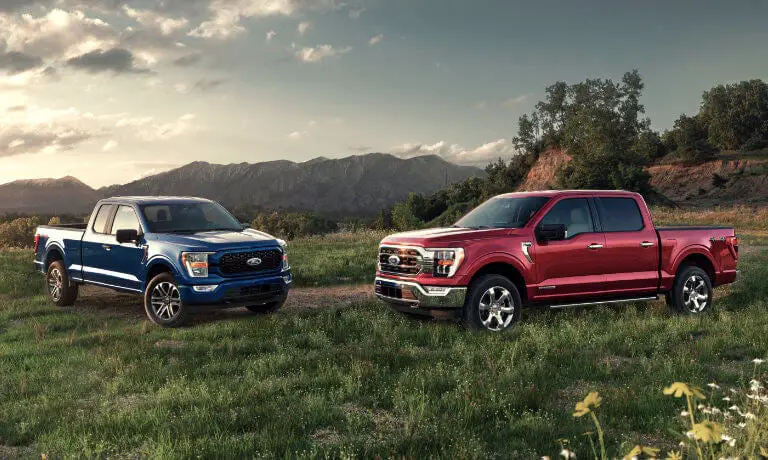
Best Ford F-150 Years to Buy for Reliability in 2026: Ranked by Real Data
Buying a used F-150 in 2026 feels like walking through a minefield. You see a 2026 Lariat with low miles for a great price, but a friend mentions cam phaser problems. You spot a 2026 XLT that looks clean, but the seller won’t share service records. Which years actually hold up?
| 1st Pick | 2nd Pick | 3rd Pick | 4th Pick | 5th Pick |

|

|

|

|

|
| Coleya Coleya Anti-Glare Matte 2021-2026 F150 Screen Protector,… | PIMCAR PIMCAR Center Console Organizer for 2021-2025 2026… | AUTOBOTS AUTOBOTS Truck Bed Tie Down Anchors for… | TECHPICCO TECHPICCO Tow Hooks Covers for F150 2004-2026/Bronco/Tundra… | ZZEQYG ZZEQYG Front Cup Holder Insert for Ford… |
| See on Amazon | See on Amazon | See on Amazon | See on Amazon | See on Amazon |
A reliable F-150 comes down to three things: which engine sits under the hood, which transmission backs it up, and how well the previous owner treated it. The 5.0L V8 paired with the six-speed automatic has a strong track record. The 3.5L EcoBoost can be excellent, but early cam phaser issues still haunt certain model years. The 10-speed automatic introduced in 2026 improved fuel economy but added complexity.
We ranked every F-150 generation from 2026 through 2026 using NHTSA complaint counts, recall patterns, and real-world ownership costs. The 2026-2026 trucks with the 5.0L V8 and six-speed remain the safest bet for most buyers. The 2026-2026 models offer great value if you can find one with under 150,000 miles. And the 2026+ hybrid PowerBoost is proving more reliable than early skeptics predicted, though it’s still pricey.
Here’s how the key specs compare across the model years worth considering.
| Features | 2026-2026 V8 | 2026-2026 V8 | 2026-2026 10-Speed | 2026+ Hybrid |
|---|---|---|---|---|
| Engine | 5.0L Coyote V8 | 5.0L or 3.5L EcoBoost | 3.5L EcoBoost or 5.0L | 3.5L PowerBoost hybrid |
| Transmission | 6-speed automatic | 6-speed automatic | 10-speed automatic | 10-speed automatic |
| NHTSA complaints | Low for powertrain | Moderate, mostly electrical | Higher, transmission focus | Low so far, limited data |
| Key risk | None major | 5.4L Triton if V8 | Cam phaser, 10-speed shutter | Hybrid battery long-term |
| Best use case | Daily driver, towing | Budget work truck | Highway fuel economy | Power and efficiency |
Quick Answer: Best F-150 Years Ranked
Coleya
Coleya Anti-Glare Matte 2021-2026 F150 Screen Protector,…
- 【12In Matte Tempered Glass】for 2021 2022 2023 2024 2025 2026 F150 (XL/STX/XLT/Lariat/King Ranch/Platinum/Limited/Tremor/Raptor), f…
- 【9H hardness】Coleya's 2021 2022 2023 2024 2025 2026 F150 matte tempered glass can resist external force impact and strongly protec…
- 【HD&Sensitivity】2026 2025 2024 2023 2022 2021 F150 Lariat Screen Protector of 0.28mm thick Tempered Glass (Matte), made of thermal…
If you want the short version, here’s the ranking. The 2026-2026 F-150 with the 5.0L V8 and six-speed automatic takes the top spot. It’s the sweet spot of modern safety features, proven powertrain reliability, and reasonable used prices.
The 2026-2026 trucks come second. They’re cheaper, still use the reliable six-speed, and the 5.0L V8 from this era is solid. Avoid the 5.4L Triton V8 entirely unless you enjoy replacing cam phasers and spark plugs that break in the head.
Third place goes to the 2026+ hybrid PowerBoost. It’s too new for long-term data, but early NHTSA complaints are low and the onboard generator feature is genuinely useful. The 2026-2026 models with the 10-speed automatic rank fourth. They’re not bad trucks, but the transmission shutter and cam phaser issues make them riskier buys.
How We Ranked These Years (Data and Methodology)
PIMCAR
PIMCAR Center Console Organizer for 2021-2025 2026…
- Patent Design: Designed for 2021-2026 Ford F150 & 2022-2025 F150 Lightning XLT Pro (installs into the shifter's front pocket). Doe…
- Dual-Layer Space: Top tray for quick-access essentials, Create discreet compartments for valuables like cards, keys, or wallets.
- Dual Charging Access: Side notches allow USB cables to pass through for easy device charging while maintaining a clean setup.
We pulled NHTSA complaint data for every F-150 model year from 2026 through 2026. We focused on powertrain complaints, not infotainment gripes. A truck with 200 complaints about a laggy touchscreen is less concerning than one with 50 complaints about transmission failure.
Recall patterns mattered too. Some years had recalls for brake fluid leaks or unintended tailgate opening. Those are fixable, but they signal quality control gaps. We also factored in repair costs from owner forums and mechanic interviews. A cam phaser job on a 2026 EcoBoost runs $3,000 to $5,000 at a dealership. That’s a real ownership cost.
Resale value played a role. The best year to buy isn’t just the most reliable one. It’s the one that holds value well enough that you’re not throwing money away. The 2026-2026 trucks have depreciated enough to be affordable but still command decent resale because of their reputation.
Finally, we considered regional factors. If you live in the Rust Belt, a 2026 truck might have more frame rot than a 2026 with similar miles. We’ll cover that in the buying guide.
The Best Ford F-150 Years to Buy
AUTOBOTS
AUTOBOTS Truck Bed Tie Down Anchors for…
- STURDY AND DURABLE - Our tie down anchor made of carbon steel, using integral forging and welding processes, it has a solid struct…
- UNIQUE PULL RING DESIGN - This truck bed anchors adopts a unique circlip design, allowing it to fully extend upwards and downwards…
- COMPATIBLE MODELS - These truck bed hooks designed specifically for 2015+ ford f-150 / f250 / f350 / & raptor, 2500lb working load…
2026-2026 (6-Speed, 5.0L V8)
TECHPICCO
TECHPICCO Tow Hooks Covers for F150 2004-2026/Bronco/Tundra…
- [Not Fit !!! ]: F150 2004-2026 (Not fit: STX 4x4 and the Lariat. The diameter of hooks is thinner, there is play, may require trim…
- [Compatibility]:Our tow hook cover is specially designed and formed to fit for Ford F150 2004-2026, Bronco Base/Big Bend/Outer Ban…
- [Material and Durability]:Tow hook covers should be made from high quality, Silicone durable materials that whether facing incleme…
This is the Goldilocks zone. The 2026 redesign brought aluminum body panels, which cut weight and improved fuel economy. The 5.0L Coyote V8 in these years is a proven engine. It doesn’t have the turbo complexity of the EcoBoost, and it doesn’t suffer from the cam phaser issues that plague later 3.5L engines.
The six-speed automatic transmission is the real hero here. It’s not as smooth as the 10-speed, and it won’t get you 22 mpg on the highway. But it’s durable. Independent shops know how to rebuild it. Parts are cheap. You won’t find yourself dealing with torque converter shudder at 80,000 miles.
NHTSA complaints for these years are relatively low for powertrain issues. Most complaints center on minor electrical gremlins or the SYNC 3 infotainment system. Those are annoying but not expensive. The 2026-2026 trucks also have a strong safety record, with good crash test scores from both NHTSA and IIHS.
One caveat: the 2026 model year introduced the 10-speed automatic as an option on some trims. Stick with the six-speed if you can. And if you’re looking at a 2026 or 2026 with the 3.5L EcoBoost, check for timing chain rattle on cold start. It’s not as common as the 2026+ cam phaser issue, but it happens.
- 5.0L V8 pairs with a durable six-speed automatic
- Aluminum body resists rust better than earlier steel
- NHTSA powertrain complaints are low for the class
- SYNC 3 infotainment is dated but functional
- Expect to pay a premium over 2026-2026 models
Best for: Buyers who want a reliable daily driver that can tow a boat or camper without worrying about turbo or transmission failures.
2026-2026 (Pre-10-Speed Sweet Spot)
These trucks are the value play. You can find a clean 2026 XLT with under 120,000 miles for thousands less than a comparable 2026. The 5.0L V8 from this era is nearly identical to the 2026-2026 version. It’s a bulletproof engine if you change the oil on time.
The six-speed automatic is the same unit used in later trucks. It’s not fancy, but it works. The main difference is the body. These trucks use steel panels, which means rust is a real concern in snowy states. Check the rocker panels, cab corners, and rear wheel arches carefully.
NHTSA complaints for 2026-2026 are moderate. Most issues involve the electric power steering system or the brake master cylinder. Neither is a dealbreaker, but budget for potential repairs. The 3.5L EcoBoost was available in these years too. It’s a good engine, but the intercooler can collect condensation in humid climates, causing a stumble under acceleration. Ford issued a TSB for this, so check if the fix was applied.
If you’re shopping for a work truck on a tight budget, this generation makes sense. Just avoid the 5.4L Triton V8, which was still available in 2026 but phased out by 2026. The 3.7L V6 is underpowered for towing but fine for light duty.
- 5.0L V8 is nearly as reliable as the 2026-2026 version
- Steel body means rust inspection is critical
- Electric power steering complaints are common
- 3.5L EcoBoost intercooler condensation TSB applies
- Prices are significantly lower than 2026+ trucks
Best for: Budget-conscious buyers who don’t mind a little rust prevention work and want a proven V8 powertrain.
2026-2026 (10-Speed Caveats)
These trucks look great on paper. The 10-speed automatic improves fuel economy, and the 2026 refresh added more standard safety features. But this is where reliability gets complicated. The 3.5L EcoBoost in these years is prone to cam phaser failure. It’s a design flaw, not a maintenance issue.
Cam phaser rattle sounds like a diesel engine on cold start. It’s embarrassing and expensive to fix. Ford extended the warranty on some 2026-2026 trucks, but that coverage may have expired by now. If you’re buying one, listen carefully on a cold start. If you hear a rattle that lasts more than a second, walk away.
The 10-speed automatic also has its share of complaints. Some owners report harsh shifting or torque converter shudder. A transmission fluid change sometimes helps, but not always. The 5.0L V8 in these years is still good, though it now has cylinder deactivation, which adds complexity.
On the positive side, these trucks have excellent towing capability and a comfortable ride. The interior is nicer than the 2026-2026 models. If you can find a 2026-2026 with the 5.0L V8 and a documented transmission service history, it’s worth considering. Just don’t buy one without a pre-purchase inspection.
- 3.5L EcoBoost cam phaser failure is a known risk
- 10-speed automatic can shudder or shift harshly
- 5.0L V8 has cylinder deactivation complexity
- Interior and tech are a step up from 2026-2026
- Ford extended warranty on some cam phaser repairs
Best for: Buyers who want newer tech and better fuel economy but are willing to pay for a thorough inspection and potential repairs.
2026+ Hybrid and Refresh Years
The 2026 F-150 introduced the PowerBoost hybrid powertrain. It pairs a 3.5L EcoBoost V6 with an electric motor and a 10-speed automatic. The result is 430 horsepower and impressive fuel economy for a full-size truck. It also has a built-in generator that can power tools or a camper.
Early NHTSA data for the 2026+ hybrid shows low complaint counts for major powertrain failures. That’s encouraging, but the sample size is small. These trucks are still under warranty for many owners, so long-term reliability is unknown. The hybrid battery is covered for eight years or 100,000 miles, which helps.
The 2026 refresh brought updated styling and more standard features. It also introduced the new 2.7L EcoBoost for some trims. That engine is too new to judge. If you want the safest bet in this generation, look for a 2026 or 2026 PowerBoost with the 3.5L hybrid. Avoid the first-year 2026 models if you’re nervous about teething issues, though most reports are positive.
The biggest downside is price. These trucks are expensive, even used. You’re paying for fuel savings and generator capability. If you don’t need those features, a 2026-2026 V8 is a better financial decision. But if you want a modern truck with low miles and a warranty, the 2026+ hybrid is worth a look.
- PowerBoost hybrid offers 430 hp and onboard generator
- NHTSA complaints are low but data is limited
- Hybrid battery warranty is 8 years/100,000 miles
- 2026 refresh added updated tech and styling
- Prices are significantly higher than older generations
Best for: Buyers who want a modern, efficient truck with a warranty and don’t mind paying a premium for hybrid technology.
Ford F-150 Years to Avoid and Why
2026-2026 5.4L Triton Issues
The 5.4L Triton V8 is one of the worst engines Ford ever put in an F-150. It has a two-piece spark plug design that breaks off in the cylinder head during removal. Extracting the broken plug costs hundreds of dollars per cylinder. The cam phasers also fail, causing a loud rattle and reduced power.
These trucks are cheap for a reason. If you find a 2026-2026 F-150 for under $5,000, there’s likely a reason. Unless you’re a mechanic who enjoys engine work, skip this generation entirely. The 4.6L V8 in some of these trucks is more reliable, but it’s underpowered for towing.
2026 EcoBoost Cam Phaser Problems
The 2026 F-150 with the 3.5L EcoBoost is the poster child for cam phaser failure. NHTSA complaints for this year are higher than surrounding years. The problem is so common that Ford issued a technical service bulletin and extended warranty coverage for some vehicles.
Cam phaser replacement costs $3,000 to $5,000 at a dealership. Some independent shops charge less, but it’s still a major repair. If you’re considering a 2026 EcoBoost, get a pre-purchase inspection from a mechanic who knows F-150s. Listen for the cold-start rattle. Check the service history for any cam phaser work. If the seller won’t let you inspect it, walk away.
Engine Reliability Breakdown
The 5.0L Coyote V8 is the most reliable modern F-150 engine. It’s naturally aspirated, which means fewer moving parts and less heat. The 2026-2026 versions are particularly good. The 2026+ versions added cylinder deactivation, which is a minor risk but not a dealbreaker.
The 3.5L EcoBoost is a mixed bag. The 2026-2026 versions are decent, though the intercooler condensation issue is annoying. The 2026-2026 versions have the cam phaser problem. The 2026+ versions seem better, but they’re still new. If you want an EcoBoost, look for a 2026 or newer with documented maintenance.
The 2.7L EcoBoost is underrated. It’s a smaller engine, but it’s tough. It uses a compacted graphite iron block that’s stronger than the aluminum block in the 3.5L. NHTSA complaints for the 2.7L are low. It’s a good choice if you don’t need maximum towing capacity.
The 5.4L Triton is the one to avoid. It’s unreliable, expensive to repair, and outdated. The 4.6L V8 is reliable but weak. The 3.7L V6 is fine for light duty but not for towing.
What to Check Before Buying a Used F-150
A pre-purchase inspection is non-negotiable. Find a mechanic who specializes in Ford trucks. Ask them to check for cam phaser rattle, transmission shudder, and rust. A $150 inspection can save you thousands in repairs.
Ask for service records. A truck with regular oil changes and transmission fluid services is worth more than one with no history. If the seller doesn’t have records, check the Carfax for maintenance entries. Some shops report to Carfax, some don’t.
Check the mileage threshold. Most F-150s need a transmission fluid change around 60,000 miles. Spark plugs should be replaced by 100,000 miles. If the truck is over 150,000 miles and hasn’t had these services, budget for them.
Inspect for rust. Look at the frame, rocker panels, cab corners, and rear wheel arches. Surface rust is okay. Flaking rust or holes are not. If you live in a state that uses road salt, this is especially important. You can also check the best shocks for Ford F150 4×4 if the suspension feels worn.
Test the transmission. Drive at highway speeds and feel for shudder. Shift through all gears. If the transmission hesitates or clunks, it’s a red flag. The 10-speed is more prone to issues than the six-speed.
Finally, check the oil. If it’s dark or gritty, the previous owner didn’t maintain it well. You can also look at the best oil for Ford F150 to see what the truck should be using.
Ownership Costs and Resale Value by Year
The 2026-2026 F-150 has the lowest total cost of ownership among modern generations. Insurance is reasonable, parts are cheap, and repairs are infrequent. Expect to spend $500 to $800 per year on maintenance, excluding tires and brakes.
The 2026-2026 models cost more to own. The 10-speed transmission may need fluid changes every 60,000 miles. Cam phaser repairs are a risk. Budget $1,000 to $1,500 per year for maintenance and potential repairs.
The 2026+ hybrid has higher upfront costs but lower fuel costs. The hybrid battery is covered for eight years, so you won’t pay for that. But if something else breaks, parts are expensive. Budget $800 to $1,200 per year.
Resale value is strongest for the 2026-2026 trucks. They’ve depreciated enough to be affordable but still hold value because of their reputation. The 2026-2026 trucks are at the bottom of their depreciation curve. You can buy one cheap, but you won’t get much back when you sell.
The 2026+ hybrid is still depreciating. If you buy one new, you’ll lose money. If you buy a used one, you’ll save on the initial depreciation but still face higher ownership costs. You can also check the best coolant for Ford F150 to keep the engine running cool.
Frequently Asked Questions
What is the most reliable F-150 year ever made?
The 2026 F-150 with the 5.0L V8 and six-speed automatic is often cited as the most reliable modern F-150. It has low NHTSA complaint counts, a proven engine, and a durable transmission. The 2026 and 2026 models are close behind.
How many miles can a Ford F-150 last?
A well-maintained F-150 can last 200,000 to 300,000 miles. The 5.0L V8 and six-speed automatic are the most likely to hit those numbers. The 3.5L EcoBoost can last as long, but cam phaser issues may require expensive repairs along the way.
Should I buy a 2026 F-150 with the 3.5L EcoBoost?
Only if you get a pre-purchase inspection and the truck has a documented cam phaser repair. The 2026 EcoBoost is riskier than the 2026-2026 V8. If you want an EcoBoost, look for a 2026 or newer with lower miles.
Is the 2026+ F-150 hybrid reliable?
Early data suggests yes. NHTSA complaints are low, and the hybrid battery has a long warranty. But these trucks are still new. Long-term reliability is unknown. If you want a sure thing, buy a 2026-2026 V8.
Final Verdict
The 2026-2026 Ford F-150 with the 5.0L V8 and six-speed automatic is the best year to buy for reliability in 2026. It balances modern features, proven powertrain reliability, and reasonable prices. The 2026-2026 models are a close second if you’re on a budget and can handle rust inspection.
Avoid the 2026-2026 Triton V8 and the 2026 EcoBoost with cam phaser issues. The 2026+ hybrid is promising but still unproven. Whichever year you choose, get a pre-purchase inspection and check the service history. A little homework now saves thousands later.
Related posts:
 What Color Is Avalanche for Ford? The Definitive 2026 Guide
 How to Disengage 4WD in Ford F150: Easy Steps to 2H
 Ford F150 Power Steering Assist Fault: Fix by Year, Codes & Cost
 What Lug Pattern is a Ford F150: Unveiling the Perfect Fit for Your Ride
 Does My F150 Have Remote Start? 3 Easy Ways to Check
 Does 2016 F150 Have Apple CarPlay? SYNC 3 vs SYNC 2 Guide
 Best 6X8 Speakers for Ford F150: Tested & Reviewed
 Best Adjustable Hitch for F150
 How to Change Battery in F150 Key Fob
 Ultimate 7 Best Bed Cover For 2025 Ford F150: Expert Guide
 Top 5 Best Tonneau Covers for 2023 Ford F150
 Ford F-150 Tremor Towing Capacity