How Much Is a 2003 Ford F250 Super Duty Worth
How much is a 2003 Ford F-250 Super Duty worth? It depends, wildly. This isn’t a sedan with predictable depreciation; it’s a heavy-duty workhorse whose value swings based on engine type, rust status, trim level, and whether it’s been babied or beaten. A base-model gas XL with 200,000 miles might fetch $8,000, while a low-mileage 7.3L Power Stroke diesel in Arizona could command $35,000 or more.
In our research, the 7.3L Power Stroke diesel alone adds $10,000, $15,000 to the price compared to gas engines, per NADA and private sale data as of 2026. That gap widens if the truck’s been well maintained. Let’s break down exactly what drives your F-250’s value, and how to spot a fair deal.
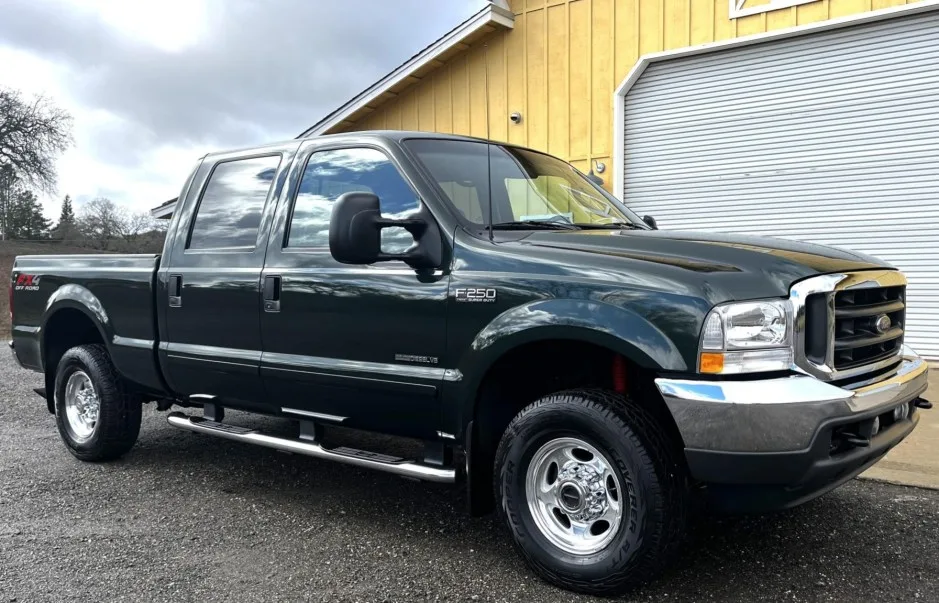
Why Your 2003 F-250’s Value Depends on These 5 Things
Five factors decide your truck’s worth: engine, condition, drivetrain, cab configuration, and location. Skip any of these, and you’ll overpay or undersell. The 7.3L diesel is king for resale, but only if it’s healthy. Rust can kill a truck’s value overnight, especially in the frame. 4×4 adds a premium, but not if the transfer case is shot.
Crew cabs hold value better than regular cabs, and XLT or Lariat trumps base XL. Finally, geography matters: a rust-free Southwest truck costs more than the same model from Minnesota, even with identical mileage.
Gas vs. Diesel: The $10,000+ Difference
If you're choosing between a gas and diesel 2003 F-250, the diesel almost always wins on resale, but only if it’s the 7.3L Power Stroke. This pre-emissions engine is legendary for longevity, and buyers pay up for it. Gas models (5.4L V8 or 6.8L V10) are cheaper upfront but depreciate faster and cost more per mile to fuel.
| Engine Type | Avg. Price Range (2026) | Key Considerations |
|---|---|---|
| 5.4L V8 Gas | $8,000–$15,000 | Lower maintenance cost, but weaker resale |
| 6.8L V10 Gas | $9,000–$16,000 | Stronger than 5.4L, still poor fuel economy |
| 7.3L Power Stroke | $15,000–$35,000+ | High demand, expensive repairs if neglected |
Diesel buyers expect full service records, especially for injectors, turbo, and transmission. A neglected 7.3L can need $5,000+ in repairs, wiping out its value advantage. Gas engines are simpler but less desirable in today’s used market.
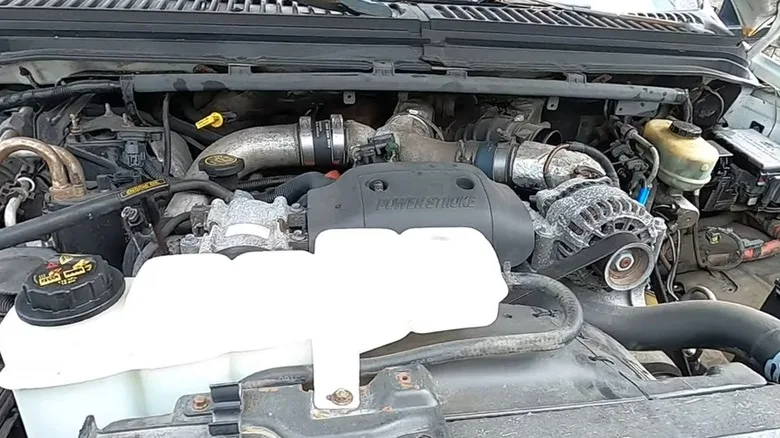
Trim, Cab, and Bed: How Configuration Changes Price
Not all F-250s are built equally, and buyers know it. Trim level, cab size, and bed length directly impact value. Base XL models with vinyl seats and manual windows sit at the bottom of the pricing ladder. XLT adds cloth seats, power options, and better trim, worth $2,000, $4,000 more.
Lariat brings leather, premium audio, and dual climate control, pushing prices higher, especially in diesel form.
Cab configuration matters too. Regular Cab trucks are rare and often work-focused, limiting buyer pool. SuperCab (extended cab) offers rear access doors and some storage, appealing to contractors. Crew Cab is the sweet spot, four full doors, back seat space, and broad appeal.
Crew Cabs typically sell for $3,000, $5,000 more than Regular Cabs in similar condition.
Bed length is subtler but important. The 8-foot bed is standard for heavy hauling and preferred by tradespeople. The 6.75-foot bed suits tighter spaces but can limit resale if you’re in a rural or commercial market. Always check the VIN to confirm factory specs, some trucks were ordered with mixed configurations.
The Rust Test: Why Location Matters More Than Mileage
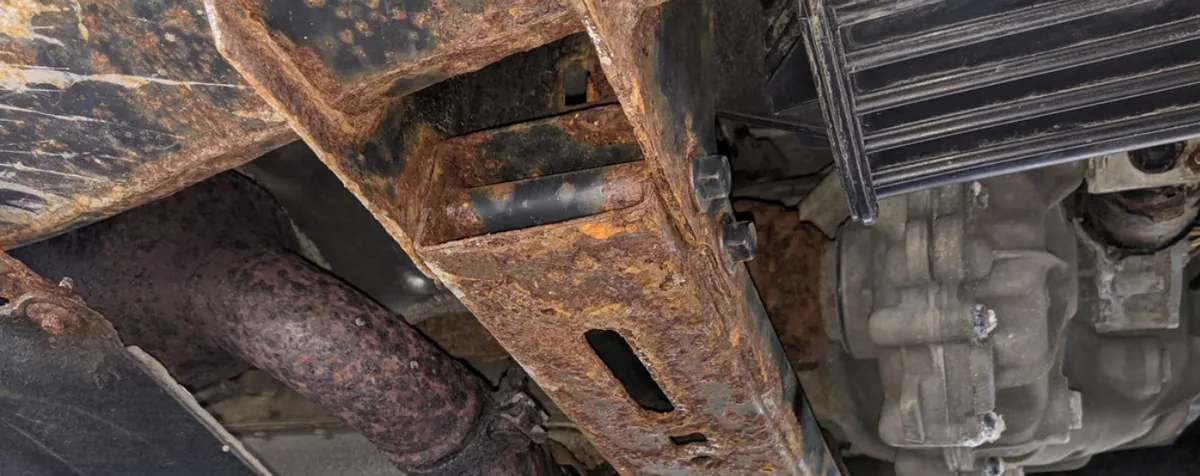
Rust isn’t just cosmetic, it’s structural. A high-mileage truck from Arizona with no rust can be a better buy than a low-mileage one from Michigan with frame corrosion. The 2003 F-250’s frame, rocker panels, cab mounts, and bed supports are rust magnets, especially in snowy states where road salt accelerates decay.
Inspect these areas first:
- Frame rails (look for flaking paint, soft spots, or holes)
- Rocker panels (poke with a screwdriver, solid metal shouldn’t give)
- Wheel wells (both front and rear)
- Cab corners and bed mounts
A truck with surface rust can be cleaned and treated, but frame rust often means a rebuild or scrap. In our research, rust damage reduces value by 30, 50%, even if the engine runs perfectly. Buyers in dry climates pay premiums for rust-free examples, sometimes $5,000+ over identical trucks from the Rust Belt.
Checking the 7.3L Power Stroke’s Health (If You’re Lucky Enough to Find One)
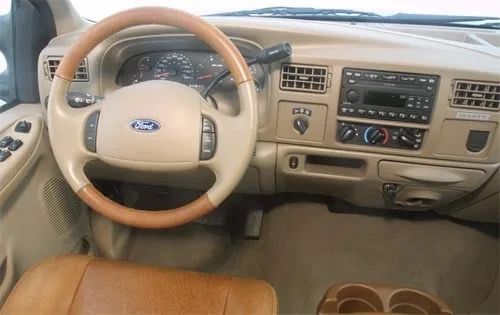
The 7.3L Power Stroke is the holy grail of 2003 F-250 engines, if it’s been cared for. But “legendary reliability” only applies to well-maintained units. Neglect the basics, and you’re looking at costly repairs. Here’s what to verify before buying:
- Injector O-rings: Common leak point. Look for oil around the valve covers or fuel rails. Replacement costs $800, $1,200.
- Turbo pedestal: Cracks here cause oil leaks and boost issues. Inspect the Y-pipe connection.
- Transmission: The 4R100 auto is strong but wears with high mileage. Listen for slipping or delayed shifts.
- Glow plugs and relay: Cold starts should be quick. Slow cranking or white smoke points to glow system failure.
- Exhaust Backpressure (EBP) sensor: Clogs cause performance loss. Check for cracked tubing.
Ask for maintenance logs. Oil changes every 5,000 miles, fuel filter changes every 10,000, and injector service every 100,000 are signs of a cared-for diesel. No records? Walk away or budget $3,000 for a pre-purchase inspection.
Gas Engine Red Flags: 5.4L and 6.8L Weak Points
Gas engines in the 2003 F-250 are simpler but come with their own traps. The 5.4L Triton V8 is prone to spark plug blowout, a nightmare to fix without breaking threads in the aluminum heads. Listen for pinging under load; that’s often a sign of carbon buildup or failing plugs. The 6.8L V10 avoids plug issues but eats fuel and wears out cam phasers early, causing rough idle and reduced power.
Both engines share weak plastic intake manifolds that warp over time, leading to coolant leaks. If the coolant reservoir is low or the oil looks milky, walk away, head gasket failure isn’t uncommon in high-mileage examples.
4×4 vs. 4×2: Off-Road Premium or Unnecessary Cost?
4×4 adds $2,000, $4,000 to the price, but only if it works properly. Many 4×4 F-250s sit in 2WD most of their lives, wearing out the front drivetrain unevenly. Test the 4×4 system: shift into 4H at low speed on gravel or dirt, there should be no grinding or hesitation. If the front hubs don’t engage smoothly, the vacuum lines or shift motor may be faulty.
For city drivers or flat-terrain users, 4×2 saves weight, improves fuel economy, and reduces complexity. But if you tow often or drive in snow, mud, or uneven ground, 4×4 is worth the premium, just budget $1,000 for a full 4×4 inspection if records are missing.
Aftermarket Mods: Help or Hindrance to Value?
Most mods hurt resale. Lift kits over 4 inches raise the center of gravity, stress steering components, and often void factory warranties, even years later. Tuners or chips can boost power but also strain the transmission and fuel system; a modified 7.3L might make 400 hp but wear out twice as fast. Exhaust systems sound great but attract scrutiny, some states flag non-OEM exhaust for noise or emissions.
The only mods that add consistent value are practical ones: bed liners, tow packages, or upgraded towing mirrors. If the truck has a tuner, ask for dyno sheets and tune history, otherwise, assume it’s been driven hard.
Private Seller vs. Dealer: Where to Get the Best Deal
Dealers offer reconditioning, paperwork ease, and sometimes warranties, but charge $3,000, $5,000 more for the same truck. Private sellers price lower but expect you to handle title transfer, inspections, and potential issues. In our research, private diesel F-250s average 15, 20% below dealer prices, especially on Craigslist or Facebook Marketplace. But dealers often fix known issues before sale; private sellers may hide problems.
Always get a pre-purchase inspection (PPI) from a diesel specialist if buying privately, costs $150, $250 but saves thousands in surprises. Avoid auctions unless you’re experienced; “as-is” sales offer no recourse.
How to Price It Right: Step-by-Step Valuation
Start with NADA’s “Clean Retail” for your exact trim and engine, then adjust. Subtract $1,000 for every 20,000 miles over 100,000. Deduct $2,000, $5,000 for rust, transmission issues, or missing service records. Add $3,000 for a documented 7.3L with under 150k miles.
Check local listings: if three similar trucks in your area ask $22k, that’s your ceiling. Use KBB’s private party estimate as a floor. Finally, factor in urgency, if you need a work truck tomorrow, pay a slight premium. If you can wait, watch for motivated sellers dropping prices in winter months.
Common Scams and Misrepresentations to Spot
Some sellers hide problems behind fresh paint or new tires. Odometer rollback is rare but not unheard of, check service records and wear on pedals, steering wheel, and seats against the mileage. “Rust-free” claims from northern states should raise immediate suspicion; demand undercarriage photos. Beware of trucks labeled “new engine” without documentation; that often means a used long block with unknown history. Also watch for “rebuilt title” trucks sold as clean, these can have hidden frame damage and struggle to resell.
Always run a VIN check through NICB or AutoCheck to verify accident and title history.
Final Checklist: Is This F-250 Worth Your Money?
Before you hand over cash, run this quick test. Does it start cold without excessive smoke? Does the transmission shift smoothly through all gears? Are there signs of fresh undercoating hiding rust?
Are service records available, especially for injectors or coolant changes? Can you verify the 4×4 works without noise? If any answer is no, either walk away or deduct $2,000, $5,000 from the asking price for repairs. For diesels, insist on a compression test or leak-down test, costs $200 but confirms engine health.
And never skip the PPI: a $200 inspection can save you $5,000 in surprise repairs.
Related posts:
 Where Is Ford F250 Built
 Where Is Ford F250 Made
What Is the Gvwr of a Ford F250 Super Duty
How Long Is a Ford F250 Crew Cab
Are Ford F250 Aluminum Body
Are Ford F250 Diesel Reliable
How Do Ford F250 Auto Locking Hubs Work
Where Is Ford F250 Made
What Is the Gvwr of a Ford F250 Super Duty
How Long Is a Ford F250 Crew Cab
Are Ford F250 Aluminum Body
Are Ford F250 Diesel Reliable
How Do Ford F250 Auto Locking Hubs Work
 How Heavy Is a Ford F250 Super Duty
 How It Feels to Drive a Ford F250
 Meme
How It Feels to Drive a Ford F250
How It Feels to Drive a Ford F250 Meme
 How Long Do Ford F250 Diesel Last
 How Long Do Ford F250 Last