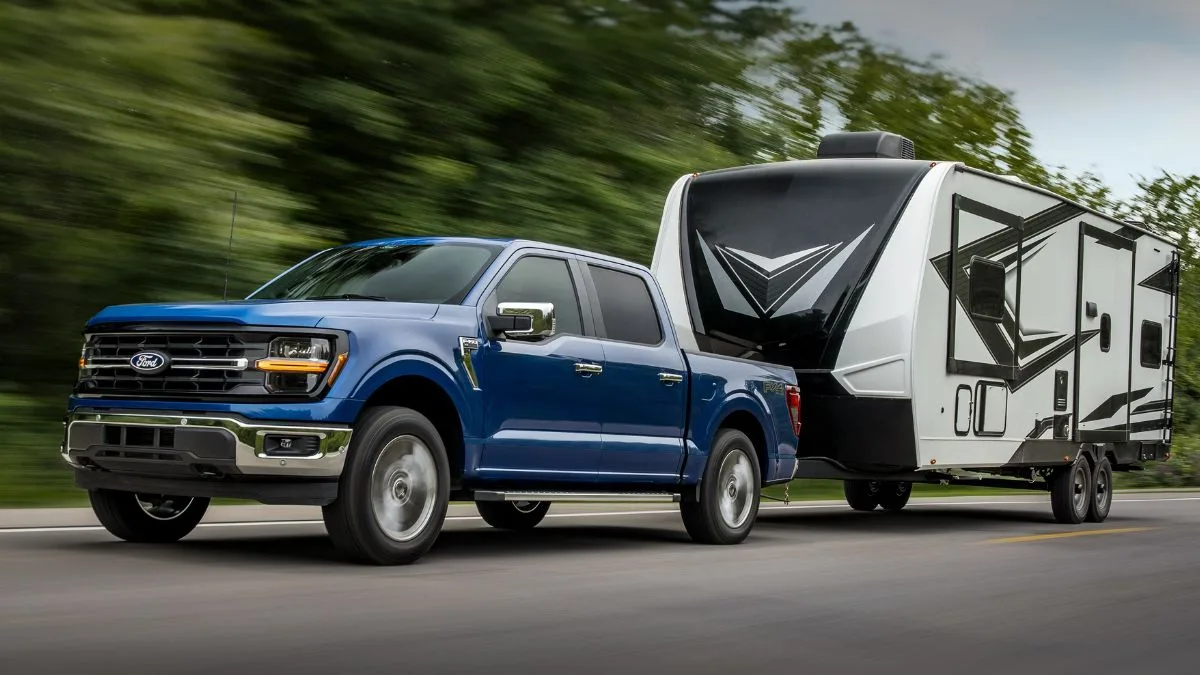
2025 F150 Neutral Towing
If you're an RV owner looking to bring your full-size truck along, you've probably wondered about 2025 F150 Neutral Towing. Good news: yes, the 2025 Ford F-150 can indeed be flat-towed, also known as dinghy towing or four-wheel-down towing, behind your motorhome. But here's the kicker: getting it wrong can lead to serious, expensive damage, especially to your truck's sophisticated drivetrain.
Manufacturer specifications, including those for the 2025 F-150, clearly outline precise procedures that must be followed to avoid issues like transmission overheating or transfer case failure. We're talking about a multi-thousand-dollar investment in your truck, so understanding these steps isn't just a suggestion, it's a necessity for both safety and your wallet. Let's dive into why getting this right is so crucial.
Why You Need to Get 2025 F-150 Neutral Towing Right
Flat towing your F-150 isn't like hitching up a small utility trailer. You're dealing with a significant vehicle, often weighing in at over 4,000 pounds, being pulled by another large vehicle. The stakes are high when it comes to the complex mechanical systems involved, particularly the drivetrain. Incorrect setup can lead to catastrophic damage to the transmission or transfer case, often rendering your F-150 inoperable and costing thousands in repairs.
Beyond the mechanical issues, there's a huge safety component. An improperly prepared vehicle can become a hazard on the road, potentially causing accidents if it isn't braking correctly or if steering binds up. This expert guidance isn't just about saving money, it's about protecting yourself, your passengers, and everyone else on the highway. We're going to walk you through exactly what needs to happen to ensure a safe, hassle-free experience.
Quick Answer: Yes, the 2025 F-150 Can Be Flat Towed (But There's a Catch!)
Yes, the 2025 Ford F-150 is capable of being flat towed, but this capability almost exclusively applies to four-wheel-drive (4WD) models. The critical "catch" is that you absolutely must activate the truck's specific Neutral Tow Mode. This isn't just about shifting the transmission into neutral, it involves a specific sequence of steps that disengages the transfer case.
Two-wheel-drive (2WD) F-150 models, unfortunately, typically lack this crucial transfer case neutral position and therefore should not be flat-towed, as it would lead to direct transmission damage. Always consult your specific F-150's owner's manual to confirm its flat towing capabilities and the exact procedure. This isn't a step you want to guess at.

Understanding Neutral Towing: What It Is and How It Protects Your Drivetrain
Neutral towing, often called flat towing or dinghy towing, is the practice of pulling a vehicle with all four of its wheels on the ground, typically behind a recreational vehicle (RV). The key to safe neutral towing is making sure the towed vehicle's drivetrain is completely disengaged from its wheels. This prevents any internal components, like the transmission or transfer case, from rotating without lubrication, which would cause severe friction and heat damage.
For a 4WD F-150, this protection comes from correctly engaging the Neutral Tow Mode. This mode puts the transfer case into a true neutral position, effectively disconnecting the transmission from both the front and rear axles. It's a vital safeguard against wear and tear, ensuring your F-150's mechanicals stay healthy even over long distances.
4WD vs. 2WD F-150s: The Critical Difference for Flat Towing
The primary difference when it comes to flat towing lies in the F-150's drivetrain configuration. Four-wheel-drive (4WD) F-150 models are designed with a transfer case that can be shifted into a dedicated neutral position. This crucial feature completely disconnects the front and rear axles from the transmission, allowing the wheels to spin freely without damaging internal components. This is why 4WD F-150s are generally the only ones suitable for flat towing.
Conversely, two-wheel-drive (2WD) F-150s lack this neutral transfer case option. If you were to flat tow a 2WD F-150, the transmission would be rotating without lubrication from the engine, leading to rapid and severe damage, often resulting in complete transmission failure. Always double-check your F-150's specific configuration before considering flat towing. Your F-150's Electronic Shift-on-the-Fly (ESOF) system, present in 4WD models, is central to activating this safe towing mode.

Key Components for Safe Flat Towing Your F-150
Preparing your F-150 for flat towing involves more than just selecting the right mode, you need specific equipment to do it safely and legally. Here are the essential components:
- Tow Bar: This is the primary connection between your RV and the F-150. It needs to be rated for the weight of your F-150, which can easily exceed 4,000 pounds.
- Base Plate: This custom-fit bracket mounts to the frame of your F-150 and provides the attachment points for the tow bar. Ensure it's designed specifically for your 2025 F-150 model for a secure fit.
- Safety Chains: These are a non-negotiable backup in case the tow bar fails. They crisscross between the RV and the F-150, preventing the truck from becoming detached.
- Auxiliary Braking System: Many states legally require a supplemental braking system for towed vehicles over a certain weight. This system applies the F-150's brakes in sync with the RV's brakes, greatly improving stopping power and safety.
- Lighting Harness: Your F-150's tail lights, brake lights, and turn signals need to function with your RV's lighting system to communicate your intentions to other drivers. This typically involves a dedicated wiring harness connecting the two vehicles.
The Risks of Incorrect F-150 Neutral Towing: Drivetrain Damage, Safety & Costs
Ignoring the proper procedures for neutral towing your 2025 F-150 can lead to a cascade of problems, ranging from inconvenient breakdowns to life-threatening accidents. It's not just about turning a key, it's about safeguarding complex machinery and ensuring public safety. The most common and costly issue is severe drivetrain damage.
When the transfer case or transmission isn't properly disengaged, internal components can spin without adequate lubrication. This generates extreme heat and friction, rapidly wearing down gears, bearings, and seals. You could face complete transmission failure, transfer case disintegration, or even damage to the axles. Repairs for these components can easily run into thousands of dollars, far exceeding the initial cost of proper towing equipment.
Beyond the mechanical, there are critical safety risks. An F-150 that isn't connected securely, or one that lacks proper auxiliary braking, can be incredibly dangerous. Imagine a heavy truck pushing your RV down a steep hill, or its steering binding unexpectedly. Such scenarios can lead to loss of control, jackknifing, or serious collisions.
Incorrect key positioning can also drain the vehicle battery, leaving you stranded or unable to restart the truck upon arrival. Manufacturer instructions, found in your Ford F-150 Owner's Manual, are your absolute best source to mitigate these significant risks.

Preparing Your 2025 F-150 for Flat Towing: A Step-by-Step Guide
Getting your 2025 F-150 ready for a long tow behind your RV demands precision. This isn't a quick, slap-dash job, it's a careful process to protect your truck and ensure safety on the road. We'll break down the essential steps, from initial checks to engaging the specific towing mode.
Before You Start: Essential Pre-Towing Checks
Before you even think about connecting the tow bar, a few quick checks can save you a lot of headaches later. Think of these as your pre-flight safety routine for your F-150.
- Tire Pressure: Ensure your F-150's tires are inflated to the recommended pressure. Incorrect pressure can affect handling and lead to premature tire wear.
- Fluid Levels: Briefly check engine oil, transmission fluid, and brake fluid levels. While the engine won't be running, this ensures everything is in good working order before you hit the road.
- Lights Functionality: Verify all your F-150's lights, especially the brake lights and turn signals, are working correctly before connecting the lighting harness.
- Parking Brake: Double-check that the parking brake is fully disengaged. Towed with the parking brake on, you'll quickly cause severe damage to the rear brakes.
Activating Neutral Tow Mode in Your F-150: The Exact Steps
Activating the Neutral Tow Mode is the most critical step for any 4WD 2025 F-150 owner planning to flat tow. Ford has a specific procedure that must be followed precisely. Don't deviate from these steps outlined in your owner's manual.
- Start the Engine: Ensure your F-150's engine is running.
- Shift to 2H: Turn the Electronic Shift-on-the-Fly (ESOF) system selector to the "2H" (Two-Wheel Drive High) position.
- Transmission to Neutral: Place the automatic transmission in the "Neutral" (N) position.
- Simultaneous Hold: With your foot firmly on the brake pedal, press and hold the "4×4 Auto" (or "4H" depending on trim) and "2H" buttons on the ESOF selector simultaneously for at least five seconds.
- Confirm Activation: Look for a message on your instrument cluster, usually "NEUTRAL TOW ENABLED" or similar, to confirm the mode is active.
- Engine Off: Turn the ignition off. For push-button start F-150s, you'll often need to press the start button twice without pressing the brake pedal to fully turn off the ignition.
- Final Check: The instrument cluster should remain off, but you might see a small light indicating the parking brake if it's engaged. Ensure it's off.
Connecting Your F-150 to Your RV: Tow Bar & Safety Systems
Once Neutral Tow Mode is active, you can physically connect your F-150 to your RV. This involves several distinct connections, each vital for a secure and safe setup.
- Tow Bar Attachment: Securely attach the tow bar to the base plate installed on your F-150. Double-check all pins, latches, and locking mechanisms.
- Safety Chains: Connect the safety chains, crossing them underneath the tow bar. This creates a cradle effect, preventing the F-150 from breaking free entirely if the tow bar fails.
- Auxiliary Braking System: Install and connect your chosen auxiliary braking system. This might involve setting up a controller in your RV and connecting a cable or wireless signal to the F-150's braking unit.
- Lighting Harness: Plug in the lighting harness between your F-150 and the RV. Test all lights, including brake lights, turn signals, and running lights, to ensure they function correctly.
Common Mistakes to Avoid When Flat Towing Your F-150
Even experienced RVers can make mistakes when flat towing, and with a vehicle as substantial as a 2025 F-150, these errors can have serious consequences. Here's a rundown of common pitfalls to actively avoid.
- Towing a 2WD F-150: As we covered, 2WD models lack the neutral transfer case and will incur severe transmission damage if flat towed. Always confirm your F-150 is 4WD and has the correct functionality.
- Forgetting Neutral Tow Mode: Simply putting the transmission in "N" isn't enough. Failing to engage the specific Neutral Tow Mode will leave your transfer case and transmission vulnerable to damage, even in a 4WD model.
- Leaving the Parking Brake Engaged: This seems obvious, but it's a mistake that happens. Towed with the parking brake on, your F-150's rear brakes will overheat and suffer significant damage quickly.
- Incorrect Ignition Key Position: For F-150s with a traditional key, leaving the key in the "ACC" or "ON" position can drain the battery, lock the steering, or potentially trigger electrical issues. Always follow the manual's specific key position for towing (often "OFF" or removed, with steering unlocked). Push-button start models have their own quirks, too.
- Neglecting Auxiliary Braking: Many drivers underestimate the stopping power needed for an F-150. Not installing or properly connecting an auxiliary braking system is a significant safety risk and often a legal violation.
- Poor Wiring Harness Connection: Without proper lighting, your F-150 won't signal your turns or stops, making it a danger to other drivers. Always test your lights after connection.
Keeping Your F-150's Battery Charged While Flat Towing
A common frustration for F-150 flat towing enthusiasts is arriving at their destination only to find the truck's battery completely drained. Modern F-150s, especially the 2025 models, have complex electrical systems that draw power even when "off," particularly if the key isn't fully removed or specific fuses aren't pulled. These parasitic drains can deplete your battery over long towing trips.
To combat this, we highly recommend installing a battery charge line from your RV to your F-150. This small electrical connection continuously trickle charges your F-150's battery while you drive, ensuring it's topped off and ready to start when you unhitch. Some setups might also require pulling specific fuses, as detailed in your F-150's owner's manual, to reduce parasitic draw. Always check your manual for any manufacturer-recommended fuse removal or specific battery tender requirements.
Post-Towing: Disconnecting and Returning Your F-150 to Drive Mode
After a long journey, the relief of reaching your destination is real, but don't rush the disconnection process. Reversing the setup correctly is just as important as setting it up properly, ensuring your 2025 F-150 is ready to drive and that no components are stressed. Taking your time here prevents accidental damage or unexpected issues later.
Start by parking your RV and F-150 on level ground, if possible, and engage the RV's parking brake. Then, methodically disconnect each component:
- Disconnect the Lighting Harness: Unplug the electrical connection between the F-150 and the RV.
- Remove Auxiliary Braking System Components: Disconnect the auxiliary braking system from both vehicles, stowing any cables or units securely.
- Release Safety Chains: Unhook the safety chains from both the F-150 and the RV.
- Detach Tow Bar: Carefully release the tow bar from the F-150's base plate and then from the RV.
- Re-engage Drivetrain: This is critical. Reversing Neutral Tow Mode generally involves starting the F-150's engine, shifting the transmission to Park (P), then back to Drive (D), and cycling the transfer case selector. Always refer to your specific 2025 F-150 owner's manual for the exact sequence.
- Verify Disengagement: Listen for any unusual noises and check your instrument cluster for any warning lights related to the drivetrain. Take a short, slow drive to confirm everything feels normal.
Beyond the F-150: Alternatives to Flat Towing
While flat towing a 4WD 2025 F-150 offers immense convenience, it's not the only way to bring a vehicle along on your RV adventures. Sometimes, an alternative method might suit your specific needs or existing vehicle better. Understanding these options helps you make the best choice for your travels.
- Tow Dolly (Two-Wheel Down Towing): A tow dolly lifts the front two wheels of your F-150 off the ground, allowing the rear wheels to roll freely. This can be an option for 2WD F-150s, but it's crucial to confirm if your particular 2WD model can be towed this way without transmission damage (some require the drive shaft to be disconnected). This method adds another piece of equipment to store.
- Flatbed Trailer / Car Hauler: This involves loading your entire F-150 onto a dedicated trailer. This is the safest and most mechanically benign option for any F-150, 2WD or 4WD, as no part of its drivetrain is engaged. However, it adds significant weight, length, and requires a heavy-duty trailer, reducing maneuverability and increasing fuel consumption.
- Driving the F-150 Separately: For shorter trips or when traveling with multiple drivers, simply driving the F-150 as a separate vehicle is always an option. This avoids all towing complications but means coordinating two vehicles and potentially paying more in tolls and fuel.
- Smaller Dinghy Vehicles: If your F-150 is simply too much hassle or weight, considering a smaller, lighter vehicle specifically designed for easy flat towing might be a good alternative. Many compact SUVs and sedans offer simpler flat towing procedures.
Safety First: Legal Requirements and Best Practices
Safety should always be your top priority when towing, especially with a large vehicle like the F-150. Beyond manufacturer guidelines, you need to be aware of legal requirements that vary from place to place. Ignoring these can lead to fines, accidents, or even legal liability.
Most states, for example, have laws regarding supplemental or auxiliary braking systems for towed vehicles over a certain weight. Since the F-150's curb weight can exceed 4,000 pounds, an auxiliary braking system is almost always a legal necessity. This system ensures your F-150's brakes assist your RV's brakes, preventing dangerous stopping distances and excessive wear on your RV. Always check the specific regulations for the states you plan to travel through, as of 2026.
Other critical safety components include proper safety chains, functioning lighting harnesses, and breakaway switches for auxiliary braking systems. The breakaway switch automatically applies the towed vehicle's brakes if it somehow becomes detached from the RV. Your 2025 F-150 Owner's Manual is your authoritative source for all manufacturer-specific safety protocols, and National Highway Traffic Safety Administration (NHTSA) resources can provide general towing safety information.

FAQs About 2025 F-150 Neutral Towing
We get a lot of questions about flat towing the F-150, and for good reason. It's a significant undertaking, and clarity is key. Here are answers to some of the most common inquiries.
Does my F-150 need specific tires for flat towing?
No, your F-150 generally doesn't require specific tires just for flat towing. You should use the tires recommended by Ford for normal operation. However, it's essential to ensure they are in good condition, properly inflated to the manufacturer's specified pressure for towing, and regularly inspected for wear. Over long distances, consistent tire pressure helps prevent uneven wear patterns.
Can I flat tow an F-150 with a manual transmission?
The 2025 Ford F-150 typically comes only with an automatic transmission, so this question is usually moot for recent models. If you happen to have an older F-150 with a manual transmission, flat towing capabilities would depend entirely on that specific model's transfer case and owner's manual instructions. Always consult the manual for older models, as requirements can vary greatly.
How often should I stop and run my F-150's engine while towing?
Ford's owner's manuals for flat-towable F-150s typically recommend starting the engine and letting it run for a few minutes periodically, often every few hundred miles or during fuel stops. This helps circulate transmission and transfer case fluids, ensuring proper lubrication and preventing component wear, even when the drivetrain is theoretically disengaged. It also helps recharge the battery.
What if my F-150's battery dies during a tow?
If your F-150's battery dies during a tow, you won't be able to restart the truck when you arrive at your destination. This is why a battery charge line from your RV is so crucial for long trips. If it does happen, you'll need to jump-start the F-150, just as you would any other dead battery. It can be a major inconvenience, especially if you're in a remote location.
Expert Tips for a Smooth Flat Towing Experience
Even after you've got the basic steps down, a few expert tips can make your F-150 flat towing experience smoother, safer, and more enjoyable. These insights come from years of understanding vehicle dynamics and long-distance towing.
- Practice Connecting and Disconnecting: Don't wait until you're on a tight schedule at a busy campground to try connecting your F-150 for the first time. Practice in your driveway until you can do it quickly and confidently.
- Pre-Trip Checklist: Create a physical checklist for both connecting and disconnecting your F-150. This helps ensure you don't miss a critical step, especially when you're tired or distracted. Include items like "confirm Neutral Tow Mode message" and "test all lights."
- Regular Equipment Inspection: Periodically inspect your tow bar, base plate, safety chains, and wiring harness for any signs of wear, rust, or damage. Replace components as needed, don't wait for a failure on the road.
- Mind Your Weight: Be acutely aware of the combined weight of your RV and the F-150. Ensure your RV's Gross Combined Weight Rating (GCWR) is not exceeded. Overloading significantly impacts braking distance, handling, and fuel economy.
- Take Wide Turns: Remember you're essentially driving a very long vehicle. Account for the F-150 following behind you, especially on turns, to avoid cutting corners or hitting obstacles.
Related posts:
 How Do Ball Joints Work: A Comprehensive Guide
 How Do I Know If My Clutch Cable Has Gone
 Can Spark Plugs Really Break Glass
 How Big of Tires Can I Fit on My F150? A Comprehensive Guide
 How Can I Protect My Windshield From Rock
 How Do Spark Plugs Break Windows
 How Far Can I Drive With A Bad Alternator
 How Far Can I Drive With A Blown Water Pump
 How Far Can I Drive With A Broken Serpentine Belt
 How Far Can You Drive With A Dead Battery
 How Far Can You Drive Without An Alternator
 How To Put Down Nissan Altima Back Seats