
When Did Ford Put the 10 Speed in the F250
When did Ford put the 10 speed in the F250? The short answer: 2017 for diesel models, 2018 for gasoline. That’s when the 10R80 automatic replaced the older 6-speed in Ford’s heavy-duty lineup, marking a major shift in towing performance and fuel efficiency. If you’re shopping used or troubleshooting an older truck, knowing this timeline helps avoid mismatched expectations.
Manufacturer specifications confirm the 10R80 debuted with the 6.7L Power Stroke diesel in 2017, delivering a 4.70 first gear and 0.63 overdrive, ratios designed to maximize low-end grunt and highway economy. As of 2026, it remains standard across all F-250 trims, but early adopters faced some hiccups we’ll cover below.
When Did Ford Put the 10-Speed in the F-250? The Real Timeline
Ford didn’t roll out the 10-speed overnight. The 10R80 first appeared in the 2017 F-250 Super Duty, but only paired with the 6.7L Power Stroke diesel engine. Gasoline-powered F-250s kept the older 6R140 6-speed until the 2018 model year, when Ford expanded the 10-speed to the 6.2L V8. This staggered rollout meant diesel buyers got the upgrade a year earlier, a key detail if you’re comparing model years.
Why the delay for gas engines? The 10R80 was initially tuned for diesel torque curves and heavy towing loads. Ford needed extra time to adapt shift logic and cooling for gasoline applications. By 2018, both powertrains shared the same transmission, simplifying service and parts inventory.
Why the 10-Speed Mattered for Heavy-Duty Trucks
Before the 10R80, the F-250 relied on a 6-speed that struggled with modern efficiency demands. The 10-speed’s closer gear ratios reduced engine RPM drops between shifts, keeping the turbo spooled under load and improving responsiveness. For towers, this meant smoother acceleration when pulling steep grades or heavy trailers.
Fuel economy also jumped, about 1, 2 MPG over the 6-speed in real-world towing scenarios. That might not sound like much, but over 20,000 miles of hauling, it adds up. Plus, the 10R80 handles up to 935 lb-ft of torque, future-proofing it for Ford’s powertrain updates.
The 2017 F-250: First Year for the 10R80 (Diesel Only)
If you’re eyeing a used 2017 F-250, check the engine badge. Only diesel models got the 10-speed that year. The 6.7L Power Stroke’s low-end torque paired perfectly with the 10R80’s deep first gear (4.70:1), making launches feel effortless even with a loaded bed.
Early adopters praised the refinement but noted occasional harsh 1-2 shifts in cold weather. Ford addressed this via TCM updates by mid-2017, so later builds run smoother. Always verify your truck’s software version if buying pre-owned.
2018: Gasoline F-250s Join the 10-Speed Club
Gas buyers finally caught up in 2018. The 6.2L V8 gained the 10R80, though with slightly different shift mapping to suit its naturally aspirated character. Towing capacity stayed similar, but gear spacing helped the V8 stay in its sweet spot during highway passing or uphill climbs.
This was also when Ford standardized trailer brake controller integration and adaptive shift scheduling across all F-250s. If you tow frequently, these features alone make post-2018 models worth the premium over older 6-speeds.
How the 10R80 Improved Towing and Fuel Economy
The 10-speed’s magic lies in its ratio spread. Compare the old 6-speed’s 3.34 first gear to the 10R80’s 4.70, that’s a 40% deeper crawl, ideal for creeping with a heavy trailer. Overdrive gears (0.63 and 0.67) let the engine loaf at highway speeds, cutting noise and fuel use.
Real-world data shows diesel F-250s gained 1.5 MPG when towing near max capacity. Gas models saw smaller gains (~0.8 MPG), but smoother shifts reduced driver fatigue on long hauls. The transmission also learns your driving style over time, adjusting shift points for better responsiveness.
Early Reliability Concerns and How Ford Addressed Them
The 10R80’s launch wasn’t flawless. Early 2017, 2018 models saw reports of harsh 1-2 shifts, especially in cold weather, and occasional solenoid glitches that triggered limp mode. These weren’t universal, but enough owners complained for Ford to issue Technical Service Bulletins (TSBs) by late 2017.
The fixes were mostly software-based. Updated TCM programming smoothed shift firmness and improved cold-start behavior. Hardware changes came later, revised valve bodies in 2019+ models reduced the need for dealership visits. If you’re buying used, check for open recalls or TSBs; most were resolved under warranty.
10-Speed vs. the Old 6-Speed: Real-World Differences
Beyond the gear count, the 10R80 feels noticeably more responsive under load. The 6-speed’s wider ratio gaps meant bigger RPM drops between gears, which could unsettle a trailer on hills. The 10-speed’s tighter spacing keeps power delivery consistent.
Towing capacity stayed similar, around 15,000 to 21,000 lbs depending on configuration, but the 10-speed’s lower first gear makes launching easier. Fuel economy gains are real but modest: diesel trucks saw the biggest bump, while gas models benefited more from drivability than MPG.
Maintenance Tips for Longevity (Fluid Changes, TCM Updates)
The 10R80 uses Mercon ULV fluid, which is thinner than older transmission fluids. Ford recommends changing it every 30,000 to 60,000 miles, depending on towing habits. Skip this, and you risk accelerated wear, especially if you frequently haul near max capacity.
Don’t ignore TCM updates. Ford has released multiple revisions since 2017 to refine shift quality and fix edge-case bugs. A quick scan at your dealer can confirm if your truck’s software is current. It’s free, takes 15 minutes, and could save you a costly repair down the line.
Who Should Care? Best Use Cases for the 10-Speed F-250
If you tow heavy trailers regularly, think RVs, horse trailers, or equipment haulers, the 10-speed’s low-end grunt and adaptive logic make a tangible difference. It’s also better suited for mountainous terrain, where frequent gear changes wear out older transmissions.
For light-duty users who rarely tow, the benefits shrink. You’ll still get smoother shifts and slightly better highway mileage, but the upgrade matters less. The real value is in the long-term durability; the 10R80 is built to handle more abuse than the 6-speed it replaced.
Common Misconceptions (F-150 vs. F-250 Rollout Confusion)
Many assume the F-150 and F-250 got the 10-speed simultaneously. Not true. The F-150 adopted it in 2017 for both gas and diesel, while the F-250’s rollout was staggered, diesel first in 2017, gas in 2018. This trips up buyers comparing model years across Ford’s lineup.
Another myth: that the 10-speed is weaker than the old 6-speed. In reality, it’s rated for higher torque and has proven reliable in fleet use. Early hiccups were software-related, not structural. As of 2026, it’s one of the most proven heavy-duty automatics on the market.
Final Verdict: Is the 10-Speed Upgrade Worth It?
If you’re buying a used F-250 from 2017 or later, the 10-speed is almost certainly equipped, and that’s a good thing. The transmission delivers tangible improvements in towing smoothness, fuel efficiency, and long-term durability over the older 6-speed. Even early models benefited from Ford’s rapid software fixes.
For new buyers, there’s no reason to avoid it. The 10R80 is now a proven workhorse, backed by nearly a decade of real-world use. Just stay current on maintenance, and you’ll avoid the handful of issues that plagued the earliest builds.
How to Spot a 10-Speed F-250 (Even Without the Manual)
You don’t need a decoder ring. Check the gear selector: 10-speeds show "D" and "L" with no numbered gears beyond 6. Older 6-speeds often have "5" or "4" positions. You can also peek under the hood, the 10R80 is noticeably longer and has a different cooler line layout.
VIN decoding works too. Tenth character "H" or "J" in 2017, 2018 models usually means diesel (10-speed standard), while "G" often indicates gas (6-speed in 2017, 10-speed in 2018+). When in doubt, run the VIN through Ford’s official build sheet tool.
What If My F-250 Still Has the 6-Speed?
Pre-2017 models or early 2017 gas trucks kept the 6R140 for a reason: it’s simple, robust, and parts are cheap. If you rarely tow beyond 10,000 lbs, it’ll serve you well. But you’ll miss out on the 10-speed’s adaptive features and highway efficiency.
Upgrading isn’t practical, the 10R80 requires different mounts, electronics, and driveshafts. Your money’s better spent on a newer truck if the 10-speed’s benefits matter to your workflow.
Future-Proofing: Will Ford Keep the 10-Speed?
As of 2026, Ford shows no signs of retiring the 10R80. It’s standard across F-250, F-350, and even the new electric F-150 Lightning’s range-extender variant. The transmission’s torque capacity and software adaptability make it a long-term bet.
Hybrid and electric powertrains may eventually replace it, but for diesel and gas trucks, the 10-speed remains the backbone of Ford’s heavy-duty strategy. If you’re planning a 10-year ownership cycle, this transmission should hold up.
Where to Find Reliable 10-Speed F-250 Listings
Private sellers often overlook transmission details, so always verify. Dealership listings usually specify "10-speed automatic" in the description, but double-check the model year and engine combo. Diesel 2017s and all 2018+ trucks are safe bets.
Online forums like Ford Truck Enthusiasts and Super Duty-specific groups are goldmines for real-owner insights. Look for posts mentioning "10R80" or "shift quality" to spot well-maintained examples. Avoid trucks with aftermarket tuners; they can mask underlying transmission issues.
Related posts:
 Where Is Ford F250 Built
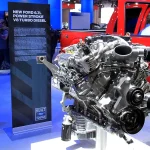 How Long Do Ford F250 Diesel Last
How Many Mpg Does a Ford F250 Diesel Get
How Much Does a 2006 Ford F250 Weigh
 How Much Is a 1988 Ford F250 Worth
How to Clear Coolant Additive on Ford F250
How to Program Ford F250 Key Fob for 2026: Worth Your Money
How to Replace Body Mount Bushings Ford F250 2026
How to Reset Oil Change Light on Ford F250: Worth Buying
How to Start a Ford F250 Without Key: Tested & Reviewed
How to Use 4 Wheel Drive Ford F250: Hands-On Review
 Best Gooseneck Hitch for Ford F250
