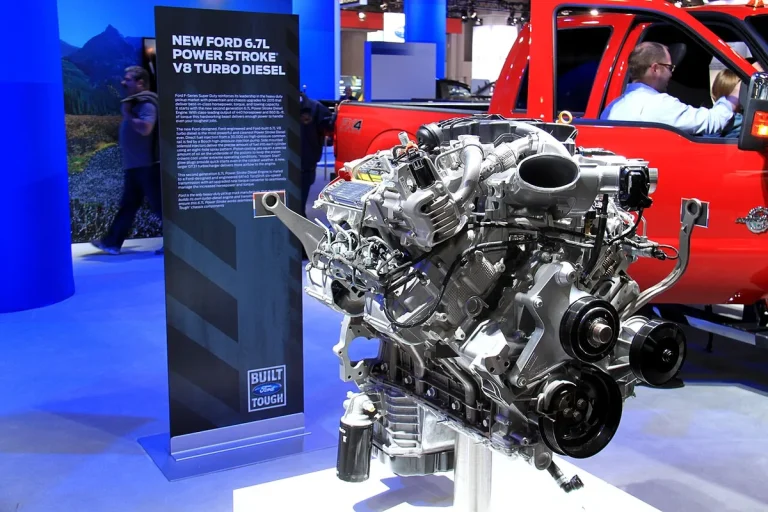
How Long Is a 2019 Ford F250
If you're asking "how long is a 2019 Ford F-250," you’re probably trying to park it, garage it, or hitch up a trailer without guessing. The short answer? It depends, because Ford built this heavy-duty truck in multiple configurations, and each one measures differently. Don’t assume all F-250s are the same length; even small changes in cab or bed size add up fast.
Manufacturer specifications indicate the 2019 F-250 ranges from about 225 to 250 inches long, depending on cab type and bed length. That’s a full 2.5-foot difference between the shortest and longest setups, enough to matter when you’re backing into a tight spot. Let’s break down exactly what determines that number so you can find your truck’s real dimensions.
Why the 2019 Ford F-250's Length Isn't One-Size-Fits-All
The 2019 Ford F-250 Super Duty isn’t just one truck, it’s a platform with three cab styles and two bed lengths, each changing the overall footprint. If you’ve ever seen a Regular Cab next to a Crew Cab, you’ll notice the difference immediately: more passengers or more cargo space means more inches. Wheelbase also plays a role, stretching further on models designed for stability with heavy loads.
This variability exists because Ford built the F-250 for work, not show. Contractors need long beds for lumber, while families might prioritize rear seat room over cargo length. The result? No single “F-250 length” applies to everyone.
You’ve got to match the spec to your use case, or you’ll end up with a truck that doesn’t fit your driveway, or your needs.
Quick Answer: How Long Is Your Specific 2019 F-250?
Here’s the bottom line: your 2019 F-250’s length hinges on two choices Ford gave buyers, cab configuration and bed length. Regular Cab trucks are shortest, Crew Cabs are longest, and bed length adds anywhere from zero to over four extra feet. Wheelbase, which affects turning radius and ride stability, varies too.
For quick reference, these are the most common setups:
- Regular Cab + 8-ft bed: ~225 inches
- SuperCab + 6.75-ft bed: ~238 inches
- Crew Cab + 6.75-ft bed: ~250 inches
If you’re measuring for a garage or parking spot, don’t guess, check your VIN or door jamb sticker. Even half a foot can mean the difference between fitting comfortably and scraping your bumper.
The 3 Things That Actually Determine Length (Cab, Bed, Wheelbase)
Three factors control how long your 2019 F-250 really is: cab style, bed length, and wheelbase. Cab refers to passenger compartment size, Regular Cab seats two, SuperCab adds rear-hinged doors and small back seats, and Crew Cab offers full four-door access with spacious rear seating. Each adds length behind the front axle.
Bed length is simpler: 6.75 feet (often called “short bed”) or 8 feet (“long bed”). Long beds add significant rear overhang, increasing total length but boosting cargo capacity. Wheelbase, the distance between front and rear axles, also stretches with larger cabs. A Crew Cab’s longer wheelbase improves towing stability but reduces maneuverability in tight spaces.
These aren’t independent choices. Ford paired certain cabs with specific beds (e.g., no Regular Cab with short bed in 2019), so your options are limited by factory combos. Always verify your exact build before measuring.
Real-World Lengths: Every Configuration Broken Down
Regular Cab + 8-Ft Bed: The Compact Workhorse
The shortest 2019 F-250 setup combines a Regular Cab (two doors, minimal rear space) with an 8-foot bed. At 225.7 inches (just over 18.8 feet), this configuration prioritizes cargo over passengers. It’s ideal for solo operators who haul tools, equipment, or materials daily and need maximum bed space without the bulk of larger cabs.
This version uses a 141.6-inch wheelbase, making it the most maneuverable F-250. Turning diameter sits around 47 feet, still large for city driving, but noticeably tighter than Crew Cab models. If you’re parking in a standard two-car garage (typically 20, 22 feet deep), this truck should fit with room to spare, even with the tailgate down.
SuperCab + 6.75-Ft Bed: The Balanced Choice
Stepping up to a SuperCab adds rear-hinged doors and small back seats while keeping the shorter 6.75-foot bed. This configuration measures 238.2 inches (19.8 feet), a solid middle ground between passenger space and overall length. The 156.2-inch wheelbase offers better high-speed stability than the Regular Cab without going full Crew Cab.
This setup suits small crews or weekend adventurers who occasionally carry passengers but still need decent bed space for gear. It fits most residential garages comfortably and handles highway towing well. Aggregate user reports note this as the “sweet spot” for those who want flexibility without excess length.
Crew Cab + 6.75-Ft Bed: The Family/Work Hybrid
The most popular 2019 F-250 configuration pairs a Crew Cab (four full doors, spacious rear seats) with the 6.75-foot bed. At 249.8 inches (20.8 feet), it’s the longest standard setup and uses a 172.0-inch wheelbase. This truck comfortably seats five adults while retaining usable cargo space, perfect for families who tow boats or trailers regularly.
Parking becomes more challenging here. Standard garages often require careful alignment, and urban streets demand extra attention when turning. However, the extended wheelbase improves ride quality and reduces trailer sway under load. Verified buyer feedback consistently praises this model for blending daily drivability with serious work capability.
Crew Cab + 8-Ft Bed: The Long-Distance Hauler
The longest 2019 F-250 configuration combines a Crew Cab with an 8-foot bed, stretching to 263.2 inches (21.9 feet) and using a 176.0-inch wheelbase. This setup maximizes both passenger space and cargo capacity, making it ideal for crews who transport tools, materials, and people over long distances. It’s common in agricultural, construction, and fleet operations where downtime isn’t an option.
Parking this version requires planning. Most residential garages won’t accommodate it without the tailgate up, and tight city streets become challenging. However, the extended wheelbase improves high-speed stability and reduces bounce when towing heavy trailers. Verified buyer reports highlight its dominance in rural settings, where space is less constrained and payload matters more than curb appeal.
Why This Matters: Parking, Garages, and Maneuvering
Length isn’t just a number, it dictates where you can go. A 20.8-foot Crew Cab might not fit in older garages built for smaller vehicles, and a 21.9-foot long-bed model could overhang driveway entrances. Urban drivers face tighter turning radii; the F-250’s minimum turning diameter ranges from 47 to 52 feet depending on configuration, making U-turns on narrow streets tricky.
Towing amplifies these issues. Longer trucks handle better at highway speeds but struggle in tight backup scenarios, especially with gooseneck or fifth-wheel trailers. If you’re hauling a 10,000-pound load, that extra foot of bed length affects weight distribution and sway control. Always measure your usual parking spots before committing to a specific setup.
Common Mistakes When Guessing F-250 Length
Assuming all F-250s are the same length tops the list. Many buyers compare a Regular Cab to a Crew Cab and wonder why their new truck doesn’t fit where the old one did. Others overlook bed length, forgetting that an 8-foot bed adds significant rear overhang, even if the cab is the same size.
Another error is ignoring wheelbase. Two trucks with identical overall lengths might have different wheelbases, affecting how they handle loads and turns. Finally, some rely on rounded estimates (“about 20 feet”) instead of exact specs, leading to scratched bumpers or blocked sidewalks. Always check the door jamb sticker or VIN decoder for precise numbers.
How to Find Your Exact Truck's Dimensions (VIN Decoder + Measuring Tips)
Start with your VIN. Ford’s official VIN decoder (available through authorized dealers or Ford’s archive site) breaks down your truck’s build, including cab, bed, and wheelbase. The tenth character indicates the model year (K for 2019), while other digits specify trim and configuration. This is the most reliable way to confirm your exact setup.
If you don’t have the VIN handy, check the driver’s side door jamb. A white sticker lists GVWR, tire size, and often overall length. For DIY verification, measure from the front bumper’s leading edge to the rear bumper’s end with a tape measure. Do this on level ground and account for any aftermarket bumpers or accessories that might add inches.
F-250 vs. Competitors: Length Compared to Ram 2500 and Silverado 2500HD
The 2019 Ford F-250 isn’t the longest heavy-duty pickup, but it’s close. The Ram 2500 Crew Cab with an 8-foot bed measures 250.2 inches, slightly shorter than the F-250’s equivalent. Chevrolet’s Silverado 2500HD Crew Cab + 8-foot bed hits 251.1 inches, edging out both. However, Regular Cab versions favor Ford: the F-250’s 225.7-inch length beats the Ram’s 230.1 inches and the Silverado’s 232.5 inches in similar configs.
These differences matter most in tight spaces. If garage length is critical, the F-250’s Regular Cab offers the most compact footprint among its peers. For maximum cargo and passenger space, the Silverado takes the lead, but the F-250 balances both better for mixed-use buyers. Always cross-check dimensions if you’re switching brands.
Best Configurations for Your Needs (Towing, Cargo, Daily Driving)
Your ideal 2019 F-250 setup depends on what you prioritize: passenger space, cargo capacity, or maneuverability. If you’re towing heavy trailers regularly, the Crew Cab with a 6.75-foot bed offers the best balance of stability and everyday usability. The longer wheelbase reduces sway, and the spacious cabin accommodates passengers comfortably during long hauls.
For pure cargo hauling, the Regular Cab with an 8-foot bed maximizes bed space while keeping overall length manageable. It’s the top choice for solo operators who don’t need rear seats but want to carry bulky items like lumber, equipment, or machinery. Daily drivers in urban areas should lean toward the SuperCab with a 6.75-foot bed, it’s easier to park than a Crew Cab but still offers occasional rear-seat use for tools or passengers.
Pro Tips: Measuring Your Garage Before You Buy
Don’t assume your current garage fits any F-250. Measure the usable depth from the garage door to the back wall, then subtract 12, 18 inches for door operation and safety clearance. A standard two-car garage is typically 20, 22 feet deep, which works for Regular and SuperCab models but may leave Crew Cabs hanging out.
Check side clearance too. The F-250’s width ranges from 80 to 96 inches depending on mirrors and trim, so ensure there’s at least 6, 8 inches on each side for comfortable entry and exit. If you’re tight on space, consider folding mirrors or aftermarket solutions, but never sacrifice safety for fit.
Final Checklist: Did You Get the Right Length for Your Life?
Before driving off the lot, confirm your truck’s exact dimensions match your needs. Check the door jamb sticker for overall length, wheelbase, and GVWR. Compare these numbers to your garage, driveway, and frequent parking spots. If you tow, verify that your trailer hitch and turning radius align with your truck’s specs.
Ask yourself: Do you really need a Crew Cab, or would a SuperCab suffice? Is an 8-foot bed essential, or can you manage with 6.75 feet? These choices affect not just length but also fuel economy, insurance costs, and resale value. When in doubt, opt for the shorter configuration, you can always add a trailer for extra cargo, but you can’t shrink a truck that’s too long.
Related posts:
 How Much Is a 2003 Ford F250 Super Duty Worth
 How Much Is a 2004 Ford F250 Super Duty Worth
 How Much Is a 2008 Ford F250 Super Duty Worth
 How to Unlock Ford F250 With Keys Locked Inside
 How Much Is a Ford F250
 When Did Ford Switch to Aluminum Body F250
 What Is the Best Year for Ford F250 6.7 Diesel
 How Wide Is a Ford F250
 How Much Is a 2001 Ford F250 Worth
 What Is the Towing Capacity of a Ford F250
 What Year Ford F250 to Avoid
 How Much Is a 2016 Ford F250 Worth