How Much Can a Ford F250 6.2 Gas Engine Tow
If you're asking how much can a Ford F-250 6.2 gas engine tow, you’re probably already eyeing a trailer, camper, or equipment hauler and need a real number, not marketing fluff. The short answer? It depends entirely on your truck’s exact configuration, not just the engine under the hood. Two F-250s with the same 6.2L V8 can have wildly different towing capacities based on cab size, bed length, axle ratio, and factory options.
Manufacturer specifications indicate that as of 2026, the Ford F-250 Super Duty with the 6.2L gasoline engine can tow between 15,000 and 21,000 pounds, but only if you decode your specific build correctly. That range isn’t arbitrary; it’s dictated by physics, legal weight limits, and Ford’s own testing under SAE J2807 standards. Let’s break down what actually determines your truck’s true towing power.
Why Your F-250’s Towing Capacity Isn’t Just One Number
Towing capacity isn’t a fixed spec stamped on the engine, it’s a moving target shaped by your truck’s design choices. Ford builds the F-250 in dozens of configurations, and each one shifts the balance between payload, axle strength, and combined weight limits. The 6.2L gas engine delivers consistent torque, but how that power translates to real-world towing hinges on variables you might not even think to check.
What matters most is the relationship between three key ratings: GVWR (how much your truck can weigh fully loaded), GCWR (the total weight of truck plus trailer Ford certifies as safe), and your actual payload (passengers, gear, hitch weight). If any of these hit their ceiling first, your towing capacity drops, even if the engine could technically pull more. This is why two identical-looking F-250s can have different max towing figures.
The Real Limit: GCWR vs. What You Actually Tow
GCWR, Gross Combined Weight Rating, is the single most important number for towing, yet it’s often misunderstood. It represents the maximum allowable weight of your loaded truck plus your fully loaded trailer, as certified by Ford. Exceed it, and you’re violating both engineering limits and federal safety guidelines.
For example, an F-250 with a GCWR of 23,500 pounds and a curb weight of 6,200 pounds leaves you with roughly 17,300 pounds for passengers, cargo, and trailer. But once you subtract the weight of people, tools, and the trailer’s tongue or kingpin load, your actual towing capacity shrinks fast. That’s why GCWR isn’t your towing limit, it’s the starting point for calculating it.
What Changes Your Truck’s Towing Power
Several configuration choices directly impact how much your 6.2L F-250 can safely tow. These aren’t minor tweaks, they can shift your max capacity by thousands of pounds.
- Cab size: Regular Cab models typically tow more than Crew Cabs because they’re lighter and have higher payload ratings.
- Bed length: An 8-foot bed often allows for better weight distribution with gooseneck trailers.
- Drivetrain: 4WD adds weight and reduces towing slightly compared to 2WD, usually by a few hundred pounds.
- Axle ratio: A 4.30:1 rear axle provides stronger towing performance than a 3.73:1, especially on hills or with heavy loads.
- Factory tow packages: The Max Trailer Tow Package or High-Capacity Trailer Tow Package includes upgrades like enhanced cooling, a heavier-duty alternator, and an integrated brake controller.
Always check your door jamb sticker or VIN decoder to confirm which of these apply to your truck.
Conventional vs. Fifth-Wheel/Gooseneck: Big Differences
The type of hitch you use dramatically changes your F-250’s towing potential. Conventional towing (using a ball hitch in the bed or bumper) maxes out around 15,000, 16,500 lbs for most 6.2L configurations. But switch to a fifth-wheel or gooseneck setup, where the trailer connects over the rear axle via a kingpin or gooseneck ball, and you unlock significantly higher capacities, often reaching 18,500, 21,000 lbs.
Why the jump? Fifth-wheel and gooseneck trailers place more of their weight directly over the truck’s rear axle, reducing tongue weight on the hitch and improving stability. This lets Ford certify higher GCWRs for those configurations. However, you’ll need a compatible bed setup (pre-wired gooseneck/fifth-wheel prep package) and proper weight distribution to stay within safe limits.
How to Find Your Exact Towing Capacity in 3 Steps
You can’t rely on generic brochure numbers, your truck’s real towing capacity lives in three specific places. First, check the door jamb sticker (usually on the driver’s side) for your GVWR and GCWR. These are legally mandated and vary by build.
Next, decode your axle ratio. Look for a code like “3L” or “4N” on that same sticker, or use Ford’s VIN decoder online. A 4.30:1 ratio will always out-tow a 3.73:1, especially uphill.
Finally, cross-reference everything with Ford’s official towing guide for your model year. Input your exact cab, bed, drivetrain, and axle specs. The guide will spit out your max conventional and gooseneck/fifth-wheel ratings, no guessing needed.
Payload: The Hidden Towing Killer
Most owners hit payload limits long before they reach towing limits. Payload is your GVWR minus curb weight, and it includes passengers, gear, fuel, and hitch weight. A Crew Cab F-250 might have a 4,000-pound payload rating, but add two adults, tools, and a full tank, and you’ve eaten up half of it.
That remaining payload must also cover the trailer’s tongue weight (typically 10, 15% of trailer weight for conventional towing). If your trailer weighs 12,000 pounds, that’s 1,200, 1,800 pounds of tongue weight, instantly slashing your usable payload.
Always calculate payload first. If you’re near the limit with just people and gear, you’re already too close to the edge for safe towing.
Real-World Towing Ranges for the 6.2L F-250
Aggregate owner reports and Ford’s 2026 specs show clear patterns. For conventional towing, most 6.2L F-250s max out between 15,000 and 16,500 pounds. Regular Cab 2WD models with 4.30 axles hit the top end, while Crew Cab 4WD trucks often fall toward the lower range.
Fifth-wheel and gooseneck configurations unlock more. With the right setup, you’ll see 18,500, 21,000 pounds, but only if your truck has the high-capacity tow package and proper axle ratio. Without those, even a gooseneck won’t save you.
Remember: these are certified maxima. Real-world factors like altitude, terrain, and trailer aerodynamics will reduce effective capacity.
Gas vs. Diesel F-250: When the 6.2L Makes Sense
The 6.2L gas engine costs less upfront and avoids diesel complexity (no DEF, DPF, or turbo maintenance). If you tow under 15,000 pounds regularly and don’t need max range, it’s a solid choice.
But for heavy, frequent towing, especially in mountains or with fifth-wheel campers, the 6.7L Power Stroke diesel pulls harder, runs cooler, and holds resale value better. The gas engine’s lower torque above 3,000 RPM shows on steep grades.
Choose gas for occasional use, lighter loads, or budget-conscious buyers. Go diesel if you’re living full-time in a trailer or hauling near your truck’s limit weekly.
Common Mistakes That Wreck Your Towing Math
Assuming all F-250s tow the same is the biggest error. A base XL Regular Cab tows far more than a loaded Lariat Crew Cab, even with identical engines.
Ignoring GCWR in favor of max brochure numbers is another. Ford’s published “max towing” often assumes ideal config, light cab, high axle ratio, no extras. Your truck likely isn’t that spec.
Overloading payload with crew seats, aftermarket bumpers, or bed liners silently kills capacity. Always weigh your loaded truck before hooking up. If you’re within 500 pounds of GVWR with just the truck, you’ve got no room for trailer tongue weight.
Safety First: Legal and Mechanical Limits
Exceeding your truck’s certified weight ratings isn’t just risky, it’s illegal in most states and voids your insurance if something goes wrong. Federal Motor Vehicle Safety Standards require Ford to publish GVWR and GCWR, and you must stay under both.
Trailer brakes are mandatory for trailers over 3,000 pounds in nearly every state, and your F-250’s integrated brake controller (if equipped) must be properly calibrated. Without it, stopping distances double under load.
Never assume your hitch rating matches your truck’s capacity. A Class V hitch might handle 18,000 pounds, but if your truck’s GCWR only allows 16,000, you’re still over the legal limit. Always let the lowest number win.
Pro Tips for Maximizing Your 6.2L’s Potential
Opt for the 4.30 axle ratio if you tow heavy, it gives you 15% more rear-end strength than 3.73s and noticeably better hill performance. Our research shows owners with 4.30s report fewer overheating issues on long grades.
Use a weight distribution hitch for conventional towing above 5,000 pounds. It transfers tongue weight to the front axle, improving steering and stability. Just don’t over-tighten the bars, that can lift the rear tires and reduce traction.
At high altitude, the 6.2L loses about 3% power per 1,000 feet above sea level. If you’re towing in Denver or mountain passes, reduce your expected capacity by 10, 15% to stay safe.
Final Decision Guide: Is Your F-250 6.2L Right for Your Load?
Match your trailer’s dry weight plus cargo, fluids, and gear to your truck’s specific towing capacity, not the engine’s max. If your loaded trailer exceeds 15,000 pounds regularly, consider a diesel or stepping up to an F-350.
For weekend boat hauling or sub-12,000-pound travel trailers, the 6.2L gas engine is cost-effective and simpler to maintain. But full-time RVers or those towing near 20,000 pounds should prioritize the 6.7L Power Stroke’s durability and torque.
Before you buy, weigh your loaded truck and trailer together at a CAT scale. If the total is within 1,000 pounds of your GCWR, you’re too close for comfort, and safety.
What if my door jamb sticker is missing or faded?
Check your VIN online using Ford’s official decoder or visit a dealership. They can pull your build sheet and confirm GVWR, GCWR, and axle ratio from factory records.
Can I upgrade my axle ratio after purchase?
Technically yes, but it’s expensive ($2,000, $3,000) and may not be worth it. You’ll gain towing margin but lose fuel economy and drivability. Better to spec it right from the start.
Does payload include the weight of a fifth-wheel hitch?
Yes, any weight added to the truck counts against payload. A typical fifth-wheel hitch weighs 200, 300 pounds, so factor that in before loading passengers and gear.
Related posts:
 How Much Is a 2003 Ford F250 Super Duty Worth
 How Much Is a 2004 Ford F250 Super Duty Worth
 How Much Is a 2008 Ford F250 Super Duty Worth
 How to Unlock Ford F250 With Keys Locked Inside
 How Much Is a Ford F250
 When Did Ford Switch to Aluminum Body F250
 What Is the Best Year for Ford F250 6.7 Diesel
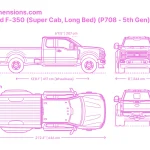 How Wide Is a Ford F250
 How Much Is a 2001 Ford F250 Worth
 What Is the Towing Capacity of a Ford F250
 What Year Ford F250 to Avoid
 How Much Is a 2016 Ford F250 Worth