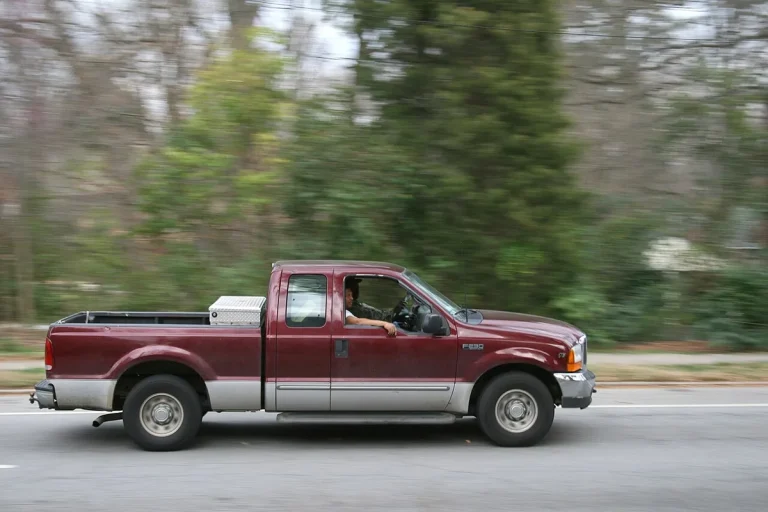
How Many Miles Per Gallon Does a Ford F250 Get
If you're asking how many miles per gallon does a Ford F-250 get, you already know the answer isn’t simple. This isn’t a compact sedan, it’s a heavy-duty workhorse built for towing, hauling, and surviving tough jobs, not sipping fuel efficiently. The real number depends on what’s under the hood, how you’re using it, and even how you drive.
Manufacturer specifications indicate the 2026 Ford F-250 Super Duty ranges from about 13 to 22 MPG combined, depending on configuration. But those EPA estimates often don’t match real-world use, especially when you’re towing or driving in hilly terrain. Let’s break down exactly what affects your mileage so you can make sense of the numbers that actually matter to you.
Why the Ford F-250’s MPG Isn’t a Simple Number
The Ford F-250 isn’t one truck, it’s a whole family of configurations, each with wildly different fuel economy. You can’t just look up “F-250 MPG” and get a useful answer because your mileage hinges on three big variables: engine type, truck setup, and how you use it. Even two identical models can report different numbers if one’s towing a trailer and the other’s empty.
Think of it like this: a lightly loaded F-250 with a gas V8 might get close to EPA estimates on flat highways, but the same truck hauling a 10,000-pound trailer uphill will burn fuel twice as fast. Diesel models behave differently too, they’re thirstier in stop-and-go traffic but more efficient under heavy loads. That’s why understanding your specific setup matters more than any single rating.
The Big Variables That Change Your Real-World MPG
Engine Choice: Gas vs. Diesel Differences
Your engine is the biggest factor in fuel economy. The F-250 offers two gasoline options, the 6.2L V8 and the newer 7.3L “Godzilla” V8, and one diesel, the 6.7L Power Stroke V8. Each has a distinct efficiency profile.
- 6.2L V8: Simpler, cheaper to maintain, but less efficient. Expect 12, 16 MPG combined in real driving.
- 7.3L V8: More power and slightly better highway economy, but still gas-guzzling at 11, 15 MPG combined.
- 6.7L Diesel: Costs more upfront but shines under load. You’ll see 15, 20 MPG combined, and it actually gets better mileage when towing heavy trailers due to higher torque at low RPMs.
Diesel also requires Diesel Exhaust Fluid (DEF) and more frequent maintenance, so factor that into your long-term costs.
Truck Configuration: Cab, Bed, and Drivetrain Impact
Even with the same engine, your cab size, bed length, and drivetrain change aerodynamics, weight, and rolling resistance, all of which affect MPG.
| Configuration | Impact on MPG |
|---|---|
| Regular Cab | Lightest, best fuel economy |
| Crew Cab | Heavier, more drag, ~1–2 MPG lower |
| 2WD | Better mileage than 4WD |
| 4WD | Extra weight and drivetrain loss |
| 8-ft bed | More wind resistance than 6.75-ft |
4WD models typically lose 1, 2 MPG compared to 2WD, and larger cabs add weight that the engine must work harder to move.
Load, Towing, and Driving Habits
This is where most people get surprised. An unloaded F-250 might return decent numbers, but once you hook up a trailer or fill the bed, efficiency plummets.
- Towing at max capacity (up to 22,800 lbs) can cut diesel MPG by 30, 40% and gas MPG by nearly half.
- Aggressive acceleration, high speeds (over 65 mph), and frequent idling all drain fuel fast.
- Proper tire pressure and regular maintenance keep efficiency from slipping further.
If you’re using your F-250 as a daily driver with occasional light hauling, you’ll see better numbers than someone who tows weekly or drives mostly in the city.
What the EPA Ratings Actually Mean (and Why They Lie)
EPA fuel economy ratings are generated using standardized tests, FTP-75 for city driving and HWFET for highway, conducted in controlled conditions with no cargo, no trailer, and ideal weather. These tests don’t account for real-world factors like hills, wind, traffic, or heavy loads.
For example, the EPA might rate a 2026 F-250 4WD with the 6.7L diesel at 16 city / 22 highway. But if you’re towing a fifth-wheel through the Rockies, you could easily see 12, 14 MPG. That’s not a flaw in the truck, it’s a flaw in assuming lab results equal real life.
Always treat EPA numbers as a baseline, not a promise. They’re useful for comparing similar configurations, but your actual mileage will almost always be lower.
Real-World MPG Ranges by Setup
Gas Models: 6.2L and 7.3L V8 Performance
Gas-powered F-250s are the budget-friendly option, but they pay for it at the pump. In our research, most owners report:
- 6.2L V8, 2WD, light use: 14, 17 MPG combined
- 6.2L V8, 4WD, mixed driving: 12, 15 MPG
- 7.3L V8, Crew Cab, 4WD: 11, 14 MPG
These engines lack the low-end torque of diesel, so they rev higher to maintain speed, especially when loaded. That means more fuel burned per mile. If you’re not towing often, the 6.2L is the more economical choice, but don’t expect Prius-like efficiency.
Diesel 6.7L Power Stroke: The Towing Efficiency Trade-Off
The 6.7L Power Stroke diesel is where the F-250 starts to make sense for serious users. It’s not just about raw MPG, it’s about usable efficiency under load.
- Unloaded, highway driving: 18, 22 MPG
- Light towing (under 10,000 lbs): 15, 18 MPG
- Heavy towing (15,000+ lbs): 12, 15 MPG
Unlike gas engines, diesel efficiency improves relative to load because of its high torque output at low RPMs. That means you’re not constantly downshifting or flooring it to maintain speed. Just remember: diesel costs more per gallon in many regions, and DEF adds another recurring expense.
How to Check Your F-250’s Actual Fuel Economy
You don’t need to guess, your truck already tracks it. Most 2018 and newer F-250s come with an onboard trip computer that displays instant and average MPG. Find it by scrolling through the instrument cluster menu using the steering wheel controls. The average readout resets each trip, so note it before long hauls or towing jobs.
For older models or manual verification, use the old-school method: fill the tank completely, reset your odometer, drive normally, then refill and divide miles driven by gallons pumped. This gives you a real-world baseline unaffected by software estimates.
Using the Onboard Computer
The trip computer shows two key metrics: instant MPG (fluctuates with acceleration) and trip average (smoothed over time). Trust the average more, it accounts for stops, hills, and load changes. If you’re towing, check it after the trip ends to see how much the load cost you per mile.
Some owners forget the computer exists, relying instead on guesswork or outdated EPA stickers. Don’t make that mistake. Regular checks help spot efficiency drops early, like when a clogged air filter or underinflated tires start costing you at the pump.
Door Jamb Sticker: Axle Ratio Matters
Pop open the driver’s door and look for the certification label on the B-pillar. It lists GVWR, tire size, and, critically, the axle ratio (e.g., 3.55 or 3.73). This number directly impacts fuel economy.
Higher ratios (like 3.73) give better towing performance but reduce highway MPG because the engine spins faster at cruising speeds. Lower ratios (3.31 or 3.55) improve highway efficiency but sacrifice low-end torque. If you’re buying used, this sticker tells you more about real-world mileage than the window sticker ever could.
Gas vs. Diesel F-250: Which Is More Efficient for You?
It depends entirely on how you use the truck. Diesel wins for heavy, frequent towing or long highway miles. Gas makes sense for lighter loads, short trips, or if you want lower upfront cost and simpler maintenance.
Diesel engines cost $9,000, $12,000 more upfront but can save money long-term if you tow often. They also last longer, many 6.7L Power Strokes exceed 300,000 miles with proper care. Gas engines are cheaper to buy and repair but burn more fuel under load and may need major work sooner.
If you’re using the F-250 as a daily driver with weekend hauling, gas might suffice. But if you’re pulling a trailer weekly or logging 20,000+ miles a year, diesel’s efficiency under load usually justifies the premium.
Common Mistakes That Kill Your MPG
Overloading or Improper Towing
Pushing past your truck’s payload or towing capacity doesn’t just risk safety, it murders fuel economy. Every extra pound forces the engine to work harder, especially uphill or against wind resistance.
Even within limits, improper setup hurts. A trailer that’s too tall creates drag. Weight distribution hitches reduce bounce but add mass. And swaying loads cause constant micro-corrections that waste fuel.
Always match your load to your truck’s rated capacity and use proper hitch equipment.
Ignoring Maintenance (Tires, Air Filters, DEF)
Small neglect adds up. Underinflated tires increase rolling resistance, drop PSI by 10%, and you could lose 1, 2 MPG. Dirty air filters restrict airflow, forcing the engine to compensate with more fuel.
Diesel owners often forget DEF. Running low triggers warning lights and eventually limits power or prevents restart. Top it off every few thousand miles, it’s cheap insurance against breakdowns and efficiency loss.
Pro Tips to Maximize Fuel Economy
Driving Techniques for Better MPG
Smooth is fast, and efficient. Avoid jackrabbit starts and hard braking. Use cruise control on highways (set it 5 mph below the limit to account for hills). Anticipate traffic to minimize stops.
At highway speeds, aerodynamic drag dominates. Reduce it by removing roof racks when not needed, keeping windows up, and avoiding excessive speed, MPG drops sharply above 65 mph, especially with a tall trailer.
Maintenance Schedule for Efficiency
Stick to Ford’s recommended service intervals, but pay extra attention to a few items:
- Rotate tires every 6,000, 8,000 miles to ensure even wear
- Replace air filters annually or when visibly dirty
- Check tire pressure monthly (including spare)
- For diesels: monitor DEF levels and replace fuel filters every 10,000, 15,000 miles
A well-maintained F-250 doesn’t just run better, it sips fuel more politely, too.
Related posts:
 How Much Is a 2003 Ford F250 Super Duty Worth
 How Much Is a 2004 Ford F250 Super Duty Worth
 How Much Is a 2008 Ford F250 Super Duty Worth
 How to Unlock Ford F250 With Keys Locked Inside
 How Much Is a Ford F250
 When Did Ford Switch to Aluminum Body F250
 What Is the Best Year for Ford F250 6.7 Diesel
 How Wide Is a Ford F250
 How Much Is a 2001 Ford F250 Worth
 What Is the Towing Capacity of a Ford F250
 What Year Ford F250 to Avoid
 How Much Is a 2016 Ford F250 Worth