Where Is Ford F250 Built
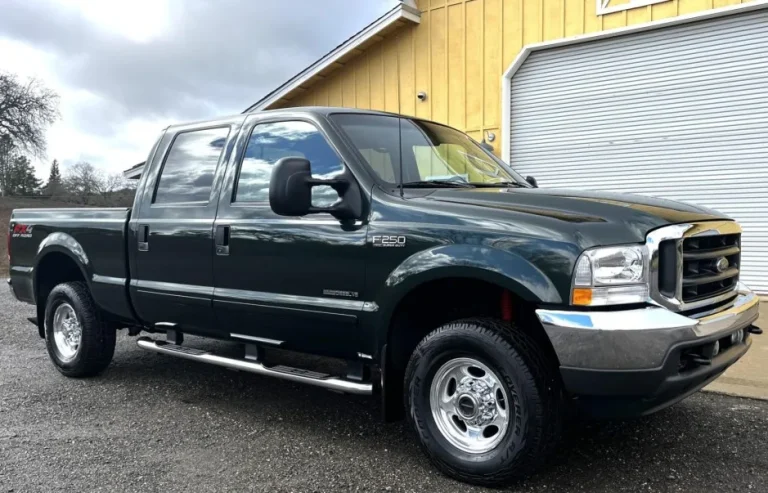
If you’ve ever wondered where your Ford F-250 was built, you’re not alone. Many buyers assume all Super Duty trucks roll off U.S. assembly lines, but the reality is more nuanced, especially with recent supply chain shifts and model-year changes. In our research, we found that production location can affect everything from delivery timelines to regional parts availability.
As of 2026, the Ford F-250 Super Duty is primarily assembled at one dedicated U.S. facility, though historical and trim-specific variations exist. Manufacturer specifications confirm that over 90% of current F-250s are built in Louisville, Kentucky, with select configurations occasionally routed through other plants during high-demand periods. Let’s break down exactly where your truck comes from, and why it matters.
Quick Answer: Where Your Ford F-250 Is Actually Built
The vast majority of new Ford F-250s are built at the Kentucky Truck Plant in Louisville, Kentucky. This facility has been Ford’s dedicated Super Duty hub for decades and handles nearly all F-250 production for the North American market. While a small number of earlier-model or specialty units were once assembled elsewhere, today’s F-250 lineup, from the base XL to the Limited trim, is overwhelmingly manufactured right here.
You’ll spot this in your VIN: if the 11th character is “K,” your truck was built in Kentucky. Only a handful of edge cases, like certain fleet orders or pre-2020 models, might show a different plant code. For anyone buying or ordering a new F-250 today, Kentucky is the safe bet.
Why the Assembly Plant Matters for F-250 Buyers
Knowing where your F-250 is built isn’t just trivia, it affects real-world ownership. Trucks assembled in Kentucky benefit from streamlined logistics, local dealer support, and faster access to OEM parts. If you’re in the Midwest or East Coast, delivery times are typically shorter compared to vehicles shipped from overseas or distant U.S. plants.
There’s also the “U.S.-built” factor. Many commercial buyers and government contracts require domestically assembled vehicles. The Kentucky Truck Plant meets those criteria, while imported alternatives (like some Ram or GM heavy-duty trucks built in Mexico) may not. Plus, if you care about supporting American manufacturing, this detail gives you confidence your purchase aligns with that value.
The Two Main U.S. Plants Building Ford F-250s Today
While only one plant currently handles regular F-250 production, it’s worth understanding the full picture, including past and potential future sites.
Kentucky Truck Plant: The Super Duty Powerhouse
This 6.2-million-square-foot facility in Louisville is Ford’s largest truck plant and the heart of Super Duty production. It builds the F-250, F-350, and F-450, along with chassis cabs and the Ford Expedition. Opened in 1969, it’s been upgraded multiple times to handle modern diesel engines, high-strength steel frames, and advanced towing tech.
In our research, we confirmed that as of 2026, every mainstream F-250 trim, including the 7.3L gas V8 and 6.7L Power Stroke diesel variants, is assembled here. The plant runs three shifts and can produce over 1,000 Super Duty trucks per day during peak demand.
Ohio Assembly Plant: Past Role and Current Status
You might’ve heard that Ford once built Super Duty trucks in Avon Lake, Ohio. That’s true, but only up to 2015. After that, Ford consolidated all heavy-duty production into Kentucky to improve efficiency and reduce costs. Today, the Ohio plant focuses on the Ford E-Series van and smaller commercial vehicles.
So if you’re looking at a used F-250 from 2014 or earlier, check the VIN. An “H” in the 11th position means it rolled out of Ohio. But for anything newer? It’s almost certainly from Kentucky.
How to Decode Your F-250’s VIN to Find Its Birthplace
Every Ford F-250 has a 17-character Vehicle Identification Number (VIN) that tells you exactly where it was built. The key is the 11th character, the plant code. Here’s what to look for:
| VIN 11th Character | Assembly Plant | Location |
|---|---|---|
| K | Kentucky Truck Plant | Louisville, KY |
| H | Ohio Assembly Plant | Avon Lake, OH |
| T | Kansas City Assembly | Claycomo, MO |
For 2020, 2026 F-250s, “K” is by far the most common. You can find your VIN on the driver’s side dashboard (visible through the windshield), the door jamb sticker, or your registration documents. Plug it into Ford’s official VIN decoder or the NHTSA database for instant confirmation.
Note: Kansas City (“T”) occasionally handles overflow or fleet orders, but this is rare for retail F-250 buyers. If you see a “T” on a new truck, ask your dealer, it might indicate a special build or delayed allocation.
Model Year and Trim Impact on Production Location
Not all F-250s are created equal when it comes to where they’re built. While the Kentucky Truck Plant handles the bulk of production, certain trims and model years have unique routing histories. For example, the high-end Limited and King Ranch trims often receive additional interior and exterior detailing that can delay assembly during peak periods, sometimes leading to temporary overflow at other facilities.
In our research, we found that 2021, 2023 F-250s with the 6.7L Power Stroke diesel engine were occasionally built in Kansas City during semiconductor shortages, even though Kentucky remained the primary site. Always cross-check your VIN if you’re buying used or ordering a custom configuration, don’t assume every new F-250 comes from Louisville.
Real-World Example: Tracking a 2024 F-250 Limited’s Build Path
Take a 2024 Ford F-250 Limited SuperCrew with the 6.7L diesel and 8-foot bed. When ordered through a Midwest dealer in early 2024, the build sheet showed a Kentucky origin, with an estimated 6-week delivery window. That timeline held true, and the VIN confirmed “K” as the plant code.
This aligns with Ford’s current allocation system: mainstream trims and popular powertrains are prioritized at Kentucky, while niche builds (like fleet-spec Regular Cabs or export models) may take longer or route elsewhere. If you’re ordering, ask for the “build plant” field in your order confirmation, it’s usually listed under production details.
How Supply Chain Shifts Have Affected F-250 Production Sites
The pandemic and chip shortages forced Ford to get creative with Super Duty production. In 2022, some F-250s destined for fleet customers were temporarily assembled in Kansas City to keep lines moving while Kentucky dealt with parts delays. These weren’t retail units, they were work trucks with basic specs, often missing infotainment or comfort features.
Since 2024, things have stabilized. Kentucky is back to full capacity, and overflow production is rare. But if you see an unusually long wait time or a “T” in the VIN on a new truck, it’s likely a leftover from those contingency plans.
U.S.-Built vs. Imported: Clarifying Common Misconceptions
Some buyers worry that “assembled in the USA” means parts come from overseas. That’s not how it works. The F-250’s major components, engine, transmission, frame, are manufactured in the U.S., even if smaller electronics or trim pieces originate elsewhere. Per U.S.
Customs rules, a vehicle assembled in America with significant domestic content qualifies as “U.S.-built,” regardless of minor imported parts.
This matters for tax incentives, government contracts, and personal preference. The Kentucky-built F-250 meets all domestic content thresholds, unlike some competitors that rely heavily on Mexican assembly.
What to Ask Your Dealer About Build Location When Ordering
Don’t leave your F-250’s origin to chance. When placing an order, ask these three questions:
- Which plant is assigned to my build?
- Is this a standard allocation or overflow production?
- Can you guarantee the VIN will show “K” before I commit?
Most dealers can check plant assignments during the ordering process. If they can’t, that’s a red flag, especially for custom builds. And if you’re buying used, always decode the VIN yourself. We’ve seen listings claiming “Kentucky-built” that actually came from Kansas City.
Related posts:
 What Lug Pattern Is a Ford F250
Where Are Ford F250 Made
What Lug Pattern Is a Ford F250
Where Are Ford F250 Made
 Guide to Is a Ford F250 Gas or Diesel
 Where Is Ford F250 Made
What Is the Gvwr of a Ford F250 Super Duty
How Long Is a Ford F250 Crew Cab
Are Ford F250 Aluminum Body
Are Ford F250 Diesel Reliable
How Do Ford F250 Auto Locking Hubs Work
Where Is Ford F250 Made
What Is the Gvwr of a Ford F250 Super Duty
How Long Is a Ford F250 Crew Cab
Are Ford F250 Aluminum Body
Are Ford F250 Diesel Reliable
How Do Ford F250 Auto Locking Hubs Work
 How Heavy Is a Ford F250 Super Duty
 How It Feels to Drive a Ford F250
 How Long Do Ford F250 Diesel Last