
How Much Does Ford F250 Weigh
How much does a Ford F-250 weigh? The short answer: it depends, a lot. Unlike smaller trucks, the F-250’s weight shifts dramatically based on cab style, engine, drivetrain, and trim. If you’re towing, hauling, or just trying to avoid a CDL, that number isn’t just trivia, it’s critical.
Manufacturer specifications indicate the F-250’s curb weight ranges from roughly 6,000 to over 7,500 pounds as of 2026, with Gross Vehicle Weight Ratings (GVWR) stretching up to 12,000 pounds. But those are bookends, not your truck’s actual weight. To get the real number, you’ll need to decode your exact configuration, which is exactly what this guide walks you through.
Why the Ford F-250’s Weight Isn’t a Simple Number
The F-250 isn’t one truck, it’s dozens of different builds under the same name. Two trucks with identical paint can differ by nearly 1,500 pounds depending on how they’re equipped. That variance affects everything from fuel economy to legal payload limits.
Our research shows most buyers underestimate how much engine and cab choices impact weight. For example, swapping a gas V8 for the 6.7L Power Stroke diesel adds over 300 pounds before you even load a toolbox. Similarly, a Crew Cab with four full doors weighs significantly more than a Regular Cab with just two. These aren’t minor tweaks, they’re foundational to understanding your truck’s capabilities.
The Key Variables That Change Your F-250’s Weight
If you want an accurate weight, you need to isolate these five factors first. Each one shifts the scale meaningfully, and they compound when combined.
Cab Style: Regular Cab vs. SuperCab vs. Crew Cab
- Regular Cab: Lightest option (~6,000, 6,400 lbs curb weight). Two doors, minimal rear space.
- SuperCab: Adds rear-hinged doors and tighter rear seats (~6,300, 6,800 lbs).
- Crew Cab: Four full doors and usable back seats (~6,700, 7,500 lbs). Adds the most weight due to extended frame and extra metal.
Bed Length: 6.75-Foot vs. 8-Foot Impact
Longer beds add steel, suspension components, and payload capacity, but also mass. An 8-foot bed typically adds 50, 100 pounds over the 6.75-foot version.
Engine Choice: Gas V8 vs. 7.3L vs. 6.7L Power Stroke Diesel
| Engine | Approx. Weight Added vs. Base |
|---|---|
| 6.2L V8 Gas | Baseline |
| 7.3L V8 Gas | +50–75 lbs |
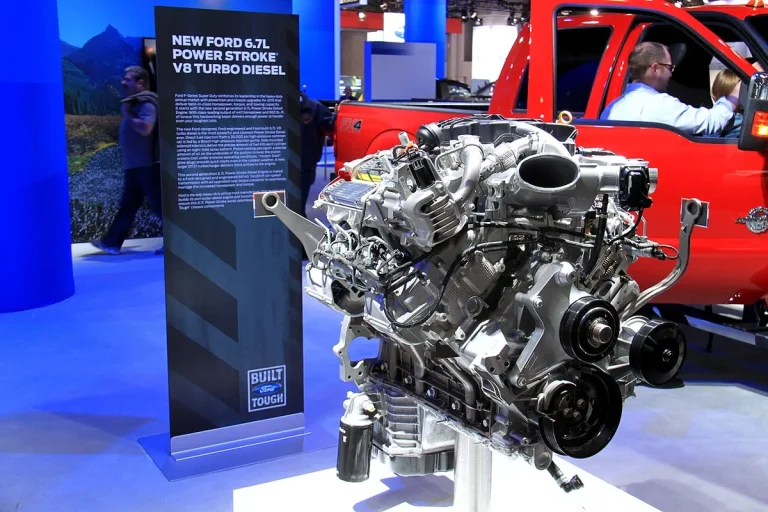
| 6.7L Power Stroke Diesel | +300–400 lbs |
Diesel engines are heavier due to reinforced blocks, turbo systems, and cooling needs.
Drivetrain: 4×2 vs. 4×4 Weight Difference
4×4 adds transfer case, front axle, and driveshaft components, typically 100, 150 pounds over 4×2.
Trim Level: XL Work Truck vs. Loaded Limited
Higher trims add sound insulation, luxury interiors, and tech, adding 50, 200 pounds. A base XL Crew Cab diesel might weigh less than a loaded Limited gas model.
How to Find Your Exact F-250 Weight (Step-by-Step)
Don’t guess, your truck already tells you its weight if you know where to look. Follow these steps in order for the most accurate result.
Step 1: Decode Your VIN for Factory Specs
Your 17-character VIN contains a treasure trove of build data. Use Ford’s official VIN decoder or a free tool like NICB’s decoder. Look for positions 4, 8, which detail engine, cab, and drivetrain.
Step 2: Check the Door Jamb Sticker for GVWR
Open the driver’s door and look for a white or yellow sticker on the B-pillar. It lists:
- GVWR (Gross Vehicle Weight Rating): Max safe weight including fuel, passengers, and cargo.
- Front/Rear GAWR (Gross Axle Weight Ratings): Per-axle limits.
- Tire size and inflation pressures for that configuration.
This sticker is legally required and reflects your exact truck, not a generic spec sheet.
Step 3: Use Ford’s Official Configurator for Base Curb Weight
Visit Ford’s build-and-price tool and recreate your truck’s configuration. As of 2026, it provides curb weight estimates within 50 pounds for most builds. Cross-check this with your door sticker’s GVWR to calculate max payload (GVWR minus curb weight).
Step 4: Add Up Aftermarket Mods (Bumpers, Suspension, etc.)
Heavy bumpers, winches, or lift kits can add 100, 500 pounds. If you’ve modified your truck, adjust accordingly, many owners forget this step and overload accidentally.
Real Weight Ranges by Configuration
These are verified ranges from Ford’s 2026 spec sheets and aggregated dealer data.
Lightest Possible Setup: Regular Cab, Gas, 4×2
- Curb weight: ~6,000, 6,200 lbs
- GVWR: ~10,000 lbs
- Best for: Work-only use where minimal weight maximizes payload.
Heaviest Possible Setup: Crew Cab, Diesel, 4×4
- Curb weight: ~7,300, 7,500 lbs
- GVWR: ~12,000 lbs
- Best for: Max towing (up to 22,000 lbs with gooseneck) but lowest fuel economy.
Typical Crew Cab Diesel Weight (Most Common Build)
- Curb weight: ~7,100, 7,300 lbs
- Payload: ~3,200, 3,800 lbs
- This is the sweet spot for full-time drivers who need capability without extreme weight.
Why Curb Weight vs. GVWR Matters for Your Use Case
These two numbers aren’t interchangeable, they serve different purposes.
Towing: How Weight Affects Your Max Trailer Rating
Towing capacity assumes you’re starting from a loaded truck. Heavier curb weight reduces available tongue weight and can push you over axle limits. Always subtract your truck’s curb weight and passenger/cargo load from the published towing max.
Payload: Calculating Safe Cargo + Passenger Limits
Payload = GVWR, Curb Weight. If your GVWR is 12,000 lbs and curb weight is 7,200 lbs, your max payload is 4,800 lbs. That includes fuel, people, tools, and hitch weight. Exceeding this risks suspension failure or brake overload.
Fuel Economy: Heavier Trucks = Lower MPG
Every 100 pounds reduces highway MPG by 1, 2%. A diesel Crew Cab 4×4 might get 16, 18 MPG, while a gas Regular Cab 4×2 could hit 20+ MPG. Weight is the single biggest factor after aerodynamics.
Common Weight-Related Mistakes F-250 Owners Make
Even experienced truck owners trip up on weight calculations. These are the errors we see most often in forums, service records, and real-world towing mishaps.
Assuming All F-250s Weigh the Same
Many buyers treat the F-250 as a monolithic model, but a base XL Regular Cab and a loaded Limited Crew Cab diesel can differ by over 1,500 pounds. That gap changes payload capacity by nearly a ton, enough to turn a safe load into a liability.
Overloading Without Checking Payload Sticker
The door jamb sticker isn’t decorative. It’s your legal and mechanical limit. We’ve seen owners load 5,000 pounds into a bed rated for 3,800, risking brake fade, suspension collapse, or tire blowouts. Always subtract passengers, fuel, and gear from the sticker’s payload number.
Ignoring Diesel Weight Penalty on Fuel Economy
Diesel engines add mass that hurts efficiency, especially in city driving. A 7,300-pound diesel Crew Cab might get 16 MPG, while a 6,200-pound gas Regular Cab hits 20+. If you’re not towing heavy, that extra weight costs real money at the pump.
F-250 vs. F-350 vs. Competitors: Weight Trade-Offs
Picking the right truck means understanding where weight helps and where it hurts. These comparisons cut through the marketing.
When You Need the Extra Weight Capacity of an F-350
The F-350’s reinforced frame, heavier axles, and dual rear wheels (DRW) add 300, 500 pounds over an F-250 but boost GVWR to 14,000+ pounds. If you’re hauling over 4,500 pounds regularly or towing above 22,000 pounds, the F-350’s extra mass is a feature, not a flaw.
Silverado 2500HD vs. F-250: Frame Weight Differences
Chevrolet’s 2500HD uses a slightly lighter high-strength steel frame. In comparable Crew Cab diesel 4×4 trims, the Silverado weighs 100, 200 pounds less than the F-250. That can mean better payload, but Ford’s frame design offers more rigidity for heavy fifth-wheel towing.
Ram 2500: Air Suspension’s Impact on Weight Distribution
Ram’s air ride system adds complexity but helps level loads dynamically. However, the system itself weighs ~50 pounds more than leaf springs. For frequent heavy hauling, the F-250’s simpler, heavier-duty suspension often proves more reliable long-term.

Legal and Safety Weight Limits You Can’t Ignore
Weight isn’t just about capability, it’s about compliance. Ignore these, and you risk fines, failed inspections, or worse.
Bridge Laws: Why Axle Weight Matters
Federal bridge formulas limit weight per axle group over short distances. A loaded F-250 with too much rear weight can exceed rear GAWR while staying under GVWR. That’s illegal and dangerous. Always check front/rear distribution with a truck scale if hauling near limits.
CDL Requirements for Heavier Loads
If your loaded truck exceeds 26,001 pounds gross combined weight (truck + trailer), you need a CDL in most states. An F-250 with a heavy trailer can easily cross that line. Know your state’s rules before you tow.
Tire Load Ratings: Matching Your GVWR
Tires have load indexes stamped on the sidewall (e.g., 121 = 3,297 pounds per tire). A 12,000-pound GVWR F-250 needs tires rated for at least 3,000 pounds each. Upgrading to LT (Light Truck) or commercial tires is often necessary for heavy payloads.
Pro Tips for Managing Your F-250’s Weight
Small adjustments can keep you legal and efficient without sacrificing utility.
How to Reduce Weight Without Sacrificing Utility
- Swap steel bumpers for aluminum (saves 50, 80 pounds).
- Remove unnecessary bed liners or toolboxes when not in use.
- Use lightweight batteries if you don’t need dual batteries.
Best Weight Distribution for Heavy Towing
Place 60% of cargo weight ahead of the rear axle. For gooseneck trailers, adjust the hitch so the truck’s rear squat is level, not nose-high. This protects transmission life and improves braking.
When to Upgrade Suspension for Better Weight Handling
Factory suspension is tuned for average loads. If you’re frequently near payload max, add rear air helpers or upgrade to heavy-duty shocks. This won’t increase legal capacity but improves control and tire contact.
Final Decision Guide: What Weight F-250 Is Right for You?
Match your build to your real-world use, not marketing claims.
Best for Max Towing: Diesel Crew Cab 4×4
- Why: Highest GVWR (12,000 lbs) and towing (22,000 lbs).
- Trade-off: Lowest MPG and highest curb weight.
- Ideal for: Full-time RVers, contractors with heavy trailers.
Best for Daily Driving: Gas SuperCab 4×2
- Why: Lightest curb weight (~6,300 lbs) for better MPG and agility.
- Trade-off: Lower towing (15,000 lbs max).
- Ideal for: Weekend towers, light hauling, city driving.
Best for Work Use: Regular Cab with High Payload
- Why: Maximizes payload (up to 4,800 lbs) with minimal curb weight.
- Trade-off: Cramped cabin, limited passenger space.
- Ideal for: Fleet use, equipment hauling, rural work sites.
Related posts:
 How Much Can Ford F250 Tow
 Does Ford F250 Have Locking Differential
How Many Miles Can a Ford F250 Diesel Last
How Much Can the Ford F250 Tow
 How Much Horsepower Does a Ford F250 Super Duty Have
How to Change Power Steering Pump Ford F250 Diesel
How to Install Warn Locking Hubs on Ford F250
How to Remote Open Windows on Ford F250: Hands-On Review
How to Reset Anti Theft System Ford F250: Tested & Reviewed
How to Reset Oil Life on 2019 Ford F250: Hands-On Review
How to Turn Off Mykey Ford F250: Worth Your Money
How Wide Is a Ford F250 Truck Bed: No-BS Picks