What Is the Towing Capacity of a Ford F250
What is the towing capacity of a Ford F-250? It’s not one number, it’s a moving target shaped by your truck’s exact build. Walk up to any F-250 and you’ll find a different answer depending on what’s under the hood, how it’s configured, and what you’re hooking up to the back.
In our research, we found that Ford’s published max towing figure, 22,800 lbs for a properly equipped 2024 F-250, only applies to a narrow set of conditions. Most real-world trucks fall short unless they’re spec’d for heavy hauling from day one. That’s why you can’t just Google “F-250 towing capacity” and call it done.
Why Your F-250’s Towing Capacity Isn’t Just One Number
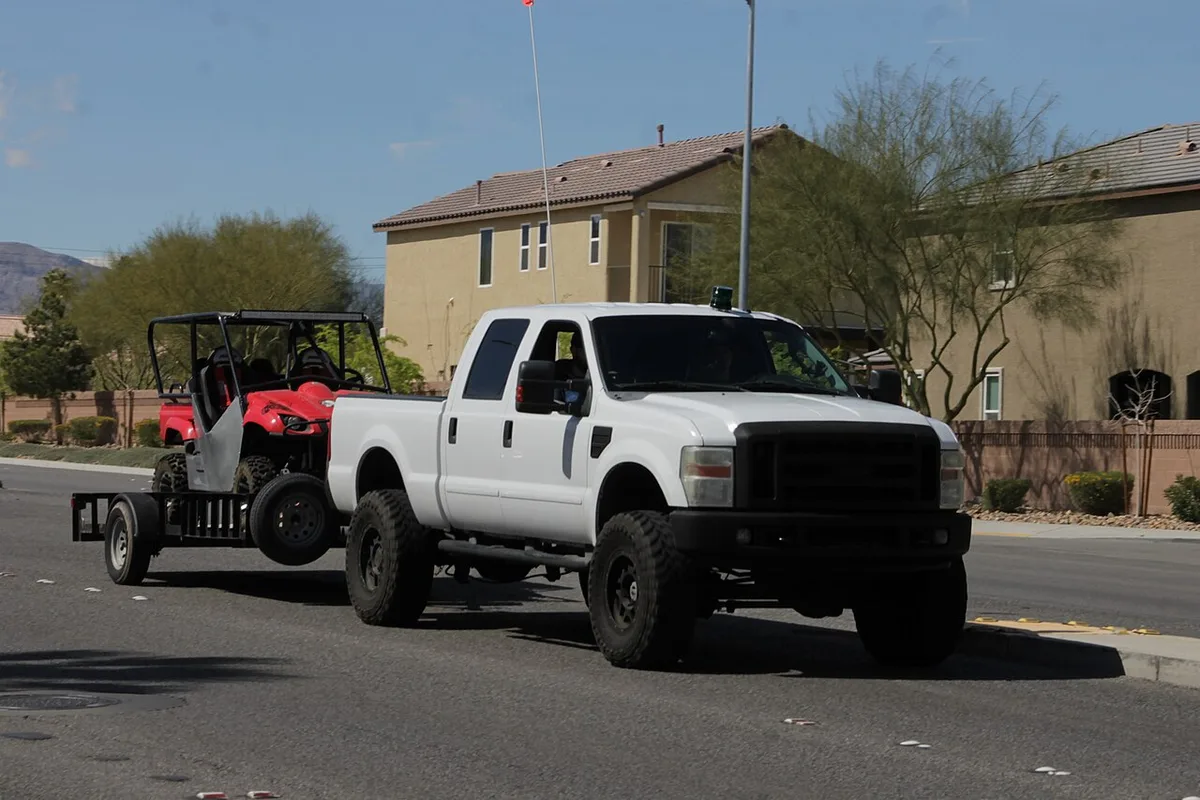
Towing capacity isn’t a fixed spec stamped on your window, it’s calculated based on your truck’s unique combination of parts and ratings. Ford determines it by taking your Gross Combined Weight Rating (GCWR), subtracting your truck’s curb weight and a standard driver/passenger load, then factoring in axle ratio, drivetrain, and hitch type.
This means two F-250s with identical paint can have wildly different capabilities. One might tow 14,000 lbs; another, properly built, can handle over 20,000. The difference lies in the details you don’t see until you dig into the build sheet or door jamb sticker.
The Real Factors That Determine How Much Your F-250 Can Tow
Several key variables directly impact your truck’s actual towing limit. Ignore any one of them and you risk overloading, or buying more truck than you need.
Engine Type: Gas vs. Diesel Makes a Big Difference
Your engine dictates torque, cooling capacity, and sustained power under load. As of 2026, Ford offers three main options:
| Engine | Typical Max Towing (Conventional) | Best For |
|---|---|---|
| 6.2L V8 Gas | 12,000–15,000 lbs | Light trailers, occasional use |
| 7.3L V8 Gas | 14,000–16,000 lbs | Mid-weight RVs, work trailers |
| 6.7L Power Stroke Diesel | 16,000–22,800 lbs | Heavy fifth-wheels, frequent towing |
Diesel engines deliver significantly more low-end torque and better heat management during long pulls, especially uphill. But they cost more upfront and require stricter maintenance. If you’re towing near 15,000 lbs regularly, the diesel is worth the investment.
Cab, Bed, and Drivetrain: How Configuration Changes Everything
More cab seats and longer beds add weight, and reduce towing capacity. A Regular Cab with an 8-foot bed tows more than a Crew Cab with a 6.75-foot bed, all else equal.
4×4 models typically tow slightly less than 4×2 due to extra drivetrain weight, though the trade-off is better traction in rough terrain. Always check your specific configuration against Ford’s towing guide, don’t assume symmetry across trim levels.
Axle Ratio and Hitch Type: The Hidden Deciders
Rear axle ratio is one of the most overlooked specs. A 3.55 ratio suits light loads; a 4.30 ratio maximizes towing by keeping the engine in its power band under strain.
Hitch type also matters:
- Conventional bumper pull: Easiest for beginners, maxes out around 16,000, 18,000 lbs.
- Gooseneck/Fifth-wheel: Uses the bed-mounted hitch, leverages frame strength, allows up to 22,800 lbs on diesel models.
If you’re planning to tow over 16,000 lbs, gooseneck or fifth-wheel is non-negotiable, and requires the right truck bed prep from the factory.
How to Find Your Exact Towing Capacity (Step by Step)
Don’t rely on guesswork or dealer estimates. Follow these steps to get your true number.
Check Your Door Jamb Sticker First
Open your driver’s door and look for the white or yellow certification label. It lists your truck’s GVWR (Gross Vehicle Weight Rating), GAWR (front and rear axle ratings), and often the axle code.
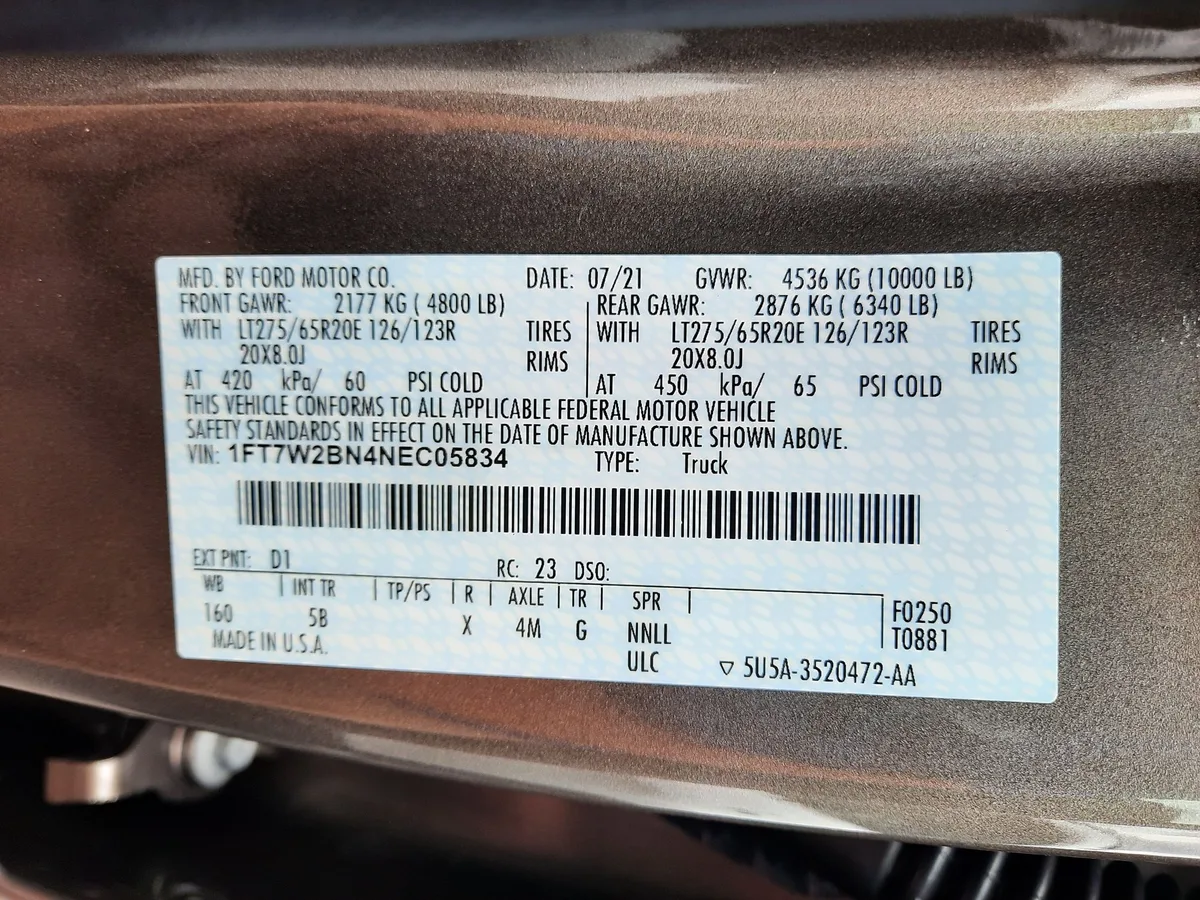
The axle code (like “3L” or “C7”) corresponds to a specific ratio, use Ford’s decoder or a quick online search to translate it. This sticker is your baseline; everything else builds from here.
Use Ford’s Official Towing Guide or Configurator
Ford publishes an annual towing guide that breaks down capacity by model year, engine, cab, bed, drivetrain, and axle ratio. You can download it free from Ford’s owner site or use their online configurator.
Enter your VIN if possible, it auto-fills your exact build. If not, manually select each spec matching your door sticker. The tool will output your max conventional and gooseneck/fifth-wheel ratings.
Calculate GCWR Minus Curb Weight = Your Max Towing
If you want to double-check manually:
- Find your GCWR (on the door sticker or in the manual).
- Subtract your truck’s curb weight (also in the manual or on Ford’s site).
- Subtract 150 lbs for the driver and any passengers/gear in the cab.
Result = your theoretical max towing weight. Note: this assumes optimal conditions and proper hitch setup. Real-world safety margins suggest staying 10, 15% below this number.
Gas vs. Diesel F-250: Which Actually Pulls More in Real Life?
Manufacturer specs confirm the diesel dominates in raw capacity, but real-world use reveals nuances.
Aggregate reviews from owners towing travel trailers report that the 7.3L gas engine handles 12,000, 14,000 lbs comfortably on flat terrain but struggles on mountain grades without downshifting constantly. The 6.7L diesel, meanwhile, maintains speed uphill with minimal strain and offers superior brake assist via exhaust braking.
However, if you tow less than 10,000 lbs a few times a year, the gas engine saves thousands upfront and avoids diesel exhaust fluid (DEF) logistics. For full-time RVers or contractors moving heavy equipment weekly, the diesel’s durability and resale value justify the cost.
Gooseneck/Fifth-Wheel vs. Conventional Towing: When to Use Which
The hitch you choose isn’t just about preference, it’s about physics and safety.
Conventional towing places most of the trailer’s weight on the rear bumper, which can cause sway and reduce steering control as weight increases. It’s fine for smaller trailers but becomes risky above 12,000, 14,000 lbs.
Gooseneck and fifth-wheel hitches mount directly into the truck bed, transferring load to the frame over the rear axle. This improves stability, increases capacity, and allows tighter turning radii.
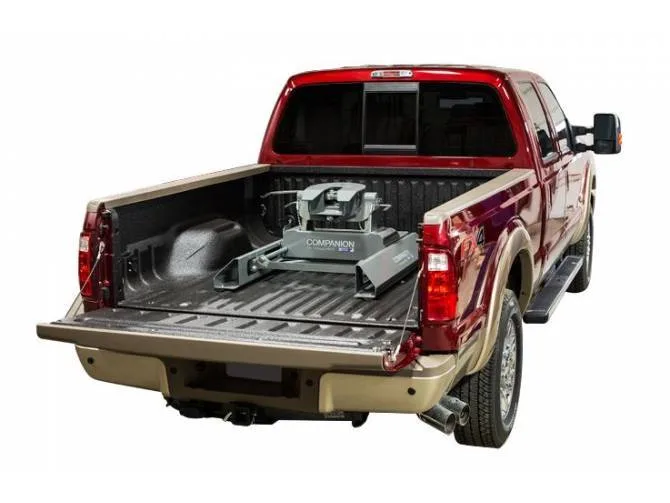
Use conventional for bumper-pull travel trailers under 14,000 lbs. Switch to gooseneck or fifth-wheel for anything heavier, or if you’re frequently towing in windy or mountainous areas. Just remember: your F-250 must have the factory-installed gooseneck prep package or a compatible aftermarket kit.
Common Mistakes That Overload Your Truck (Even If the Numbers Look Safe)
Many owners think they’re within limits because their trailer’s GVWR matches their truck’s towing capacity. That’s a dangerous oversimplification. Your actual safe towing weight must account for everything already in or on the truck, passengers, tools, fuel, and even aftermarket accessories.
Overloading doesn’t always mean exceeding the max number, it means exceeding your specific configuration’s balance point. We’ve seen Crew Cab diesels with full toolboxes and three passengers suddenly lose 1,500 lbs of usable towing capacity.
Ignoring Payload Limits When Adding Passengers or Gear
Payload capacity, usually 3,000, 4,000+ lbs on an F-250, is the total weight your truck can carry, including people, cargo, and the trailer’s tongue weight. If your payload is 3,500 lbs and you’ve got 600 lbs of people, 400 lbs of gear, and a 14,000-lb trailer with 12% tongue weight (1,680 lbs), you’re already at 2,680 lbs. That leaves only 820 lbs for anything else, and you haven’t even added fuel or a bed cap.
Always subtract your current load from your door-sticker payload before calculating how much trailer you can safely pull.
Assuming All F-250s Can Hit the Max 22,800 lbs Rating
That 22,800-lb figure only applies to a diesel Crew Cab 4×2 with the 4.30 axle ratio, gooseneck prep, and minimal options. Most F-250s sold are SuperCabs or have higher trim levels that add weight, and reduce capacity.
If your truck has leather seats, a sunroof, or a premium audio system, you’re carrying extra pounds that directly cut into your towing margin. Don’t compare your spec to the brochure hero shot.
Skipping Weight Distribution or Sway Control Setup
Even with the right hitch, a poorly balanced load causes dangerous sway, especially in crosswinds or when passing semis. A weight-distributing hitch redistributes tongue weight across all four tires, improving steering and braking.
Sway control, either built into the hitch or added as a separate device, uses friction or hydraulic resistance to dampen lateral movement. For trailers over 8,000 lbs, it’s not optional, it’s essential.
Best F-250 Configurations for Heavy Towing (By Use Case)
Matching your truck’s build to your typical load prevents overbuying or underperforming. Here’s what works best for common scenarios.
For RVs and Fifth-Wheels: Diesel + Crew Cab + 4.30 Axle
Full-time RVers need maximum capacity and comfort. A diesel Crew Cab with the 4.30 rear axle delivers the highest towing numbers while offering rear-seat space for gear or passengers.
The Crew Cab’s longer wheelbase also improves stability when towing 18,000+ lbs. Just remember: more cab means more curb weight, so verify your payload can handle both people and the fifth-wheel’s pin weight.
For Work Trailers: Gas + Regular Cab + 3.73 Axle (Budget-Friendly)
Contractors moving equipment trailers under 14,000 lbs don’t need diesel complexity. A Regular Cab 7.3L gas model with a 3.73 axle offers strong performance at a lower upfront cost and simpler maintenance.
This setup maximizes payload and towing while minimizing empty weight, ideal for flatbeds carrying skid steers or construction materials.
For Mountain Driving: Lower Gear Ratios and Extra Cooling
High-altitude grades demand engines that stay in their torque band without overheating. The 4.30 axle ratio keeps RPMs up on climbs, reducing strain.
Some owners add auxiliary transmission coolers or upgraded radiators, especially if towing near max capacity in summer. Ford’s factory towing package often includes these, check your build sheet.
Safety Checks Before You Hit the Road
Towing safely isn’t just about the truck, it’s about the system: truck, hitch, trailer, and driver. Skipping these checks risks loss of control or mechanical failure.
Trailer Brakes, Weight Distribution, and Sway Control
All trailers over 3,000 lbs must have brakes, and your F-250’s integrated brake controller must be properly calibrated. Test it before loading: the trailer brakes should engage smoothly without locking up.
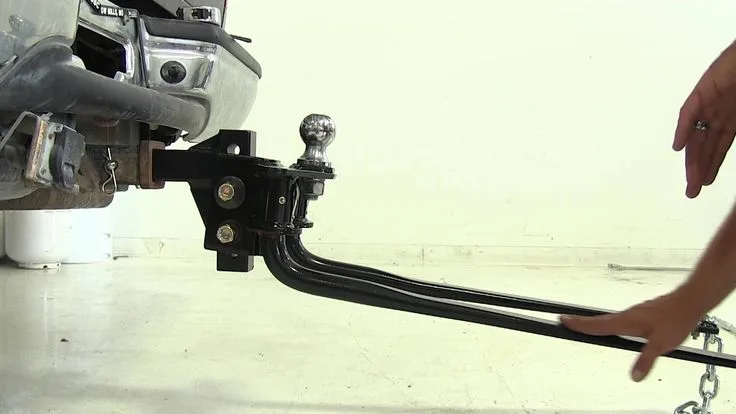
A weight-distributing hitch should level the truck-trailer combination, front and rear fenders should sit at roughly the same height as when unloaded. If the rear sags, you need more spring bars or a higher-rated hitch.
Never Exceed GCWR or GVWR—Here’s Why
GVWR is the maximum your truck can weigh when fully loaded. GCWR is the combined weight of truck, passengers, cargo, and trailer. Exceeding either voids insurance, risks fines, and dramatically increases stopping distance and tire stress.
Even if your trailer is under your towing capacity, you can still be over GVWR if your cab is packed. Always weigh your loaded truck at a CAT scale before a big trip.
What to Do If Your Trailer Is Too Heavy for Your F-250
Sometimes, despite careful planning, you realize your current setup can’t handle the load. Don’t force it, options exist.
First, reduce trailer weight by removing non-essentials or redistributing cargo forward to lower tongue weight. Second, consider a lighter trailer model or upgrading to an F-350, which offers higher axle ratings and frame strength.
If you’re committed to the current trailer, a properly spec’d F-350 with dual rear wheels (DRW) adds stability and capacity for only slightly more cost than an F-250 at max load.
Final Decision Guide: Is Your F-250 Right for Your Towing Needs?
Ask three questions:
- Does my exact configuration, engine, cab, axle, support my typical trailer weight?
- Can my payload handle passengers, gear, and tongue weight together?
- Am I using the right hitch and safety systems for the load?
If yes to all, you’re set. If not, adjust your truck spec, trailer choice, or towing habits. The F-250 is exceptionally capable, but only when matched honestly to the task.
Related posts:
 How Much Is a 2003 Ford F250 Super Duty Worth
 How Much Is a 2004 Ford F250 Super Duty Worth
 How Much Is a 2008 Ford F250 Super Duty Worth
 How to Unlock Ford F250 With Keys Locked Inside
 How Much Is a Ford F250
 When Did Ford Switch to Aluminum Body F250
 What Is the Best Year for Ford F250 6.7 Diesel
 How Wide Is a Ford F250
 How Much Is a 2001 Ford F250 Worth
 What Year Ford F250 to Avoid
 How Much Is a 2016 Ford F250 Worth
 How to Build a Ford F250