How Much Can a Ford F250 Super Duty Tow
You’re probably here because you’ve got a trailer to pull, or you’re eyeing one, and you need to know how much can a Ford F-250 Super Duty tow without turning your weekend project into a roadside disaster. The short answer? It depends. A lot.
Unlike smaller trucks, the F-250’s towing capacity isn’t a single number you can memorize; it shifts based on what’s under the hood, how it’s built, and what you’re hooking up.
Manufacturer specifications indicate that properly configured F-250s can tow up to 22,800 pounds as of 2026, but only with the right engine, axle ratio, and towing package. Most real-world setups fall between 15,000 and 20,000 pounds. Let’s break down exactly what determines your truck’s true limit.
Why Your F-250’s Towing Capacity Isn’t Just One Number
Towing capacity on the F-250 isn’t fixed like a speed limit sign, it’s more like a recipe where every ingredient changes the final result. Two identical-looking trucks can have wildly different limits based on options you might not even notice at first glance. That’s why quoting a single “max tow” figure is misleading unless you specify the exact build.
The key variables include your engine type (gas or diesel), cab style (Regular, SuperCab, Crew), bed length, drivetrain (4×2 vs. 4×4), rear axle ratio, and whether you’ve got the Max Trailer Tow Package. Even the presence of a heavy-duty alternator or upgraded cooling system can shift the number. If you’re shopping used or comparing trims, these details matter more than the model year alone.
The Real Factors That Determine How Much You Can Tow
Engine Choice: Gas vs. Diesel Impact
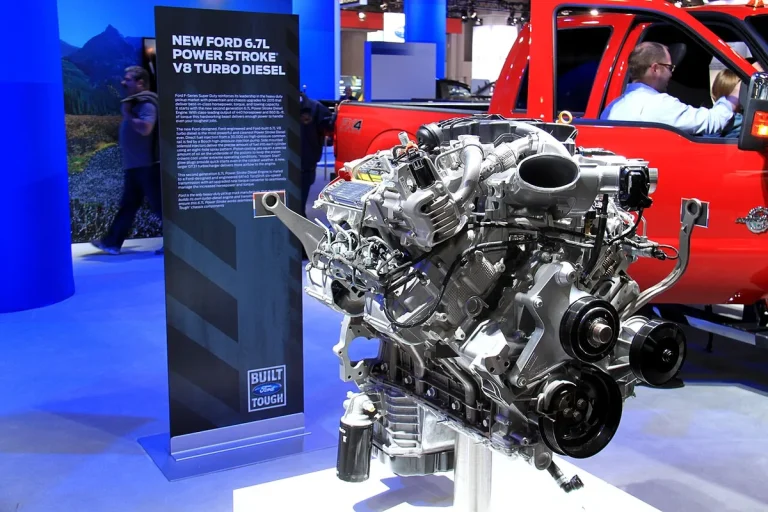
Your engine is the heart of towing performance. The 7.3L V8 gasoline engine delivers solid low-end torque and works well for lighter trailers, but it tops out around 18,500 pounds for conventional towing. The 6.7L Power Stroke diesel, however, unlocks the F-250’s full potential, especially when paired with the right rear axle. Diesels generate more torque at lower RPMs, which means better control on hills and less strain during long hauls.
If you’re regularly towing over 15,000 pounds, the diesel isn’t just nice to have, it’s practically essential.
Cab, Bed, and Drivetrain: Why Configuration Matters
Crew Cab models offer more passenger space but often reduce towing capacity slightly compared to Regular Cab versions because of added weight. Similarly, an 8-foot bed typically allows for higher capacities than a 6.75-foot bed due to better weight distribution and hitch clearance. Four-wheel drive adds capability off-road but subtracts a few hundred pounds from your max tow rating because of the extra drivetrain mass. Always check your specific configuration, don’t assume all Crew Cab 4x4s tow the same.
Axle Ratios and Towing Packages: The Hidden Levers
Axle ratio might sound technical, but it’s simple: lower numbers (like 3.55) favor fuel economy, while higher ones (like 4.30) prioritize towing grunt. For heavy loads, you want the numerically higher ratio. Pair that with Ford’s High-Capacity Trailer Tow Package or Max Trailer Tow Package, and you’ll get upgraded cooling, a heavy-duty hitch receiver, and often a gooseneck/fifth-wheel prep kit. These aren’t just accessories, they’re required to hit the advertised max ratings.
How to Calculate Your Actual Towing Capacity
Figuring out your real towing limit takes four steps, and skipping any of them risks overloading your truck. Start with the Gross Combined Weight Rating (GCWR), which is the total allowable weight of your loaded truck plus loaded trailer. You’ll find this on your driver’s side door jamb sticker or in your owner’s manual.
Next, subtract your truck’s curb weight (the weight when it’s empty but full of fuel and fluids). That gives you a rough trailer weight limit, but don’t stop there. You must also account for everything inside the cab and bed: passengers, tools, coolers, and even full fuel tanks. This is your payload, and it eats directly into your towing capacity.
Finally, match your hitch type to your trailer. Bumper-pull setups handle less than fifth-wheel or gooseneck configurations because of how weight transfers to the rear axle.
| Step | What to Do | Where to Find It |
|---|---|---|
| 1 | Locate GCWR | Door jamb sticker or owner’s manual |
| 2 | Subtract curb weight | Manufacturer spec sheet |
| 3 | Deduct payload (people + gear) | Weigh station or estimate conservatively |
| 4 | Confirm hitch compatibility | Trailer manual and Ford towing guide |
Real-World Towing Limits by Setup
Max Conventional Towing (Bumper Pull)
For most F-250 owners using a standard bumper hitch, expect between 15,000 and 18,500 pounds. Crew Cab 4×4 models with the 7.3L gas engine typically land around 15,500, 16,500 lbs. Step up to the diesel with a 4.30 axle and Max Trailer Tow Package, and you can reach 18,500, 21,000 lbs, but only if your payload allows it. Remember, conventional towing puts more stress on the rear suspension, so proper weight distribution hitches are non-negotiable above 5,000 lbs.
Max Fifth-Wheel or Gooseneck Towing
This is where the F-250 shines. With a diesel engine, high-capacity axle, and factory-installed fifth-wheel/gooseneck prep, you can legally tow up to 22,800 pounds, the highest in its class. Fifth-wheel trailers place the hitch pin directly over the rear axle, reducing sway and improving stability. Gooseneck setups work similarly but require a ball mount in the bed.
Both demand a brake controller and careful attention to pin weight (ideally 15, 25% of total trailer weight).
Payload Capacity: The Often-Overlooked Limit
Even if your truck can theoretically tow 20,000 pounds, your actual limit might be much lower due to payload. An F-250’s payload ranges from 3,200 to 4,200 pounds depending on trim. If you’ve got four adults, a toolbox, and a full tank of diesel, you might only have 1,800 pounds left for tongue or pin weight. Exceed that, and you’re overloaded, even if the trailer itself is under the towing cap.
Always weigh your loaded truck at a certified scale before hitting the road.
Common Mistakes That Lead to Overloading
Confusing GVWR, GCWR, and towing capacity is the fastest way to overload your F-250. GVWR (Gross Vehicle Weight Rating) is your truck’s max weight including passengers and cargo. GCWR (Gross Combined Weight Rating) includes both truck and trailer. Towing capacity sits between them, and exceeding any one of these limits risks brake failure, suspension collapse, or loss of control.
Many owners assume their hitch rating equals their truck’s limit, but that’s backwards. A 12,000-pound hitch doesn’t mean your F-250 can safely tow 12,000 pounds if your GCWR only allows 10,000. Always start with GCWR, subtract your loaded truck weight, and let that, not the hitch, dictate your trailer limit.
Another trap? Ignoring tongue weight. For conventional trailers, aim for 10, 15% of total trailer weight on the tongue. Too little causes sway; too much overloads the rear axle.
Fifth-wheel trailers need 15, 25% pin weight. If your trailer manual doesn’t specify, use a bathroom scale and a 2×4 to measure it before you leave the driveway.
Which F-250 Build Is Right for Your Towing Needs?
Best for Heavy Fifth-Wheel RVs
If you’re pulling a 16,000-pound luxury fifth-wheel, spec a Crew Cab 4×2 with the 6.7L diesel, 4.30 axle, and Max Trailer Tow Package. This combo maximizes payload and minimizes drivetrain weight while hitting near the 22,800-pound cap. Avoid 4×4 unless you need off-pavement traction, it shaves 500, 800 pounds off your rating.
Best for Work Trailers and Equipment
For flatbeds carrying skid steers or construction gear, Regular Cab 4×4 models with the gas engine often make more sense. They’re lighter, cheaper, and still tow 15,000+ pounds. Just remember: uneven loads shift weight dynamically. Use ratchet straps, not just chains, and check them every 50 miles.
When to Step Up to an F-350
If your calculations show you’re consistently within 1,000 pounds of your F-250’s limit, don’t push it. The F-350’s stronger rear axle, heavier springs, and higher GCWR (up to 40,000 pounds) give you breathing room. It’s not just about capacity, it’s about margin for error when roads are wet or winds pick up.
Safety and Legal Must-Knows
Federal law requires electric brakes on any trailer over 3,000 pounds, but many states lower that threshold. California, for example, mandates brakes at 1,500 pounds. Always check your state’s rules, and install a brake controller that matches your trailer’s brake type (electric or surge).
Never exceed GVWR, even if your hitch and GCWR suggest you can. GVWR is a hard mechanical limit set by Ford’s engineers based on tire, axle, and frame strength. Overloading voids your warranty and insurance in an accident. If your scale ticket shows you’re over, redistribute weight or leave something behind.
Before every long trip, run this quick check: tire pressure (including trailer), brake controller sync, trailer light function, and hitch security. A five-minute inspection prevents most roadside failures. Keep a torque wrench in your cab, hitch bolts loosen over time, especially on rough terrain.
Final Decision Guide: What to Do Next
If You Already Own an F-250
Find your door jamb sticker, note your GVWR and payload, then cross-reference your VIN on Ford’s official towing guide. Calculate your real capacity using the four-step method above. If you’re close to the limit, consider a weight distribution hitch or upgrading to a diesel if you have the gas engine.
If You’re Buying or Building One
Match your typical trailer weight to the right configuration. Under 12,000 pounds? A gas-powered SuperCab works fine. Over 16,000?
Diesel, high axle ratio, and Max Trailer Tow Package are non-negotiable. Use Ford’s online configurator and toggle options to see how each change affects your rating.
When to Call a Professional for Weight Verification
If your math feels tight or you’re hauling expensive cargo (like a race car or livestock), visit a certified scale. Weigh your loaded truck and trailer separately, then together. Some dealers offer free weighing, call ahead. Better safe than stranded.
Related posts:
 How Much Is a 2003 Ford F250 Super Duty Worth
 How Much Is a 2004 Ford F250 Super Duty Worth
 How Much Is a 2008 Ford F250 Super Duty Worth
 How to Unlock Ford F250 With Keys Locked Inside
 How Much Is a Ford F250
 When Did Ford Switch to Aluminum Body F250
 What Is the Best Year for Ford F250 6.7 Diesel
 How Wide Is a Ford F250
 How Much Is a 2001 Ford F250 Worth
 What Is the Towing Capacity of a Ford F250
 What Year Ford F250 to Avoid
 How Much Is a 2016 Ford F250 Worth