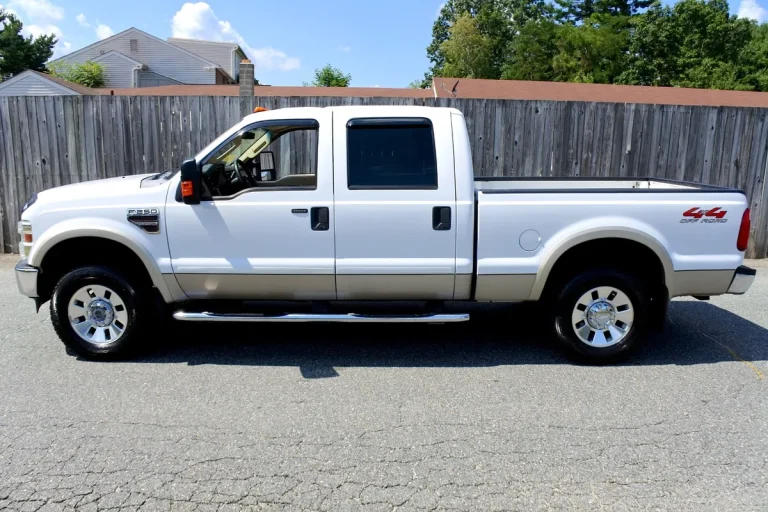
Does a Ford F250 Diesel Have a Catalytic Converter
If you’re wondering whether your Ford F-250 diesel has a catalytic converter, the short answer is: it depends. Unlike gasoline trucks, which almost always carry a traditional three-way catalytic converter, diesel F-250s use different emissions tech that changed dramatically over the years. Some older models have nothing at all, while newer ones pack complex aftertreatment systems that do similar jobs but look and work differently.
In our research, we found that the real story hinges on your truck’s model year and engine type. Per EPA Tier 2 and Tier 4 Final standards introduced between 2003 and 2010, Ford phased in diesel-specific components like diesel oxidation catalysts (DOCs) and selective catalytic reduction (SCR) systems. As of 2026, even the oldest post-2003 diesels must retain these parts to stay street-legal in most states.
Quick Answer: It Depends on Your Year and Engine
Pre-2003 F-250 diesels rarely had any form of catalytic converter. From 2003 onward, federal emissions rules forced Ford to add a diesel oxidation catalyst (DOC) to reduce carbon monoxide and hydrocarbons. If your truck has a 6.0L or 6.4L Power Stroke (2003, 2010), you’ve got a DOC, but not a traditional “cat” like in gas engines. Starting in 2011 with the 6.7L Power Stroke, Ford integrated a full aftertreatment suite: DOC, diesel particulate filter (DPF), and selective catalytic reduction (SCR) with DEF fluid.
So yes, modern F-250 diesels absolutely have catalytic-style components, just not the kind you’d recognize from a Mustang.
Why This Isn’t a Simple Yes or No
Diesel engines burn cleaner air-fuel mixtures than gasoline engines, so they don’t produce the same mix of pollutants that require a three-way catalytic converter. Instead, they emit more nitrogen oxides (NOx) and soot, which need different solutions. That’s why Ford, and every other diesel manufacturer, uses a layered approach. The DOC handles CO and unburned fuel, the DPF traps soot, and the SCR system injects diesel exhaust fluid (DEF) to break down NOx into nitrogen and water.
Each piece matters, and skipping one can trigger warning lights, limp mode, or failed inspections.
Manufacturer specifications confirm that deleting any part of this system violates the Clean Air Act. Even if your truck runs fine without it, you’re risking fines up to $4,819 per violation in some states. Plus, resale value tanks if the aftertreatment is missing or tampered with.
How to Check What Your F-250 Actually Has
Figuring out what’s under your truck doesn’t require a mechanic, just a few minutes and the right info.
Step 1: Find Your Model Year and Engine
Check the 10th character of your VIN: that’s your model year. Then pop the hood and look for the emissions certification label near the radiator or strut tower. It’ll list your engine size (6.0L, 6.4L, or 6.7L) and whether it’s certified to federal or California standards. CARB-compliant trucks often have extra hardware.
Step 2: Inspect the Exhaust System
Crawl underneath (safely!) and follow the exhaust from the turbo back. A DOC looks like a small, flat canister with two pipes, one in, one out, and usually sits close to the turbocharger. If you see a larger, cylindrical component with temperature sensors and wiring, that’s likely the DPF. Trucks from 2011 onward will also have a blue DEF tank (usually near the spare tire) and extra plumbing running to the SCR catalyst, which sits downstream of the DPF.
Step 3: Scan for Trouble Codes
Plug in an OBD-II scanner and check for codes in the P2000 range. These specifically point to aftertreatment issues. If you see P20EE (reductant injection performance) or P2459 (DPF regeneration frequency), your system is active, and likely intact. Missing components often throw “emissions tampering” flags even if nothing’s physically broken.
What You’ll Actually Find Under the Truck
The components vary wildly by era:
| Model Years | Engine | Aftertreatment Components |
|---|---|---|
| Pre-2003 | 7.3L | None (straight pipe or basic muffler) |
| 2003–2007 | 6.0L | Diesel oxidation catalyst (DOC) only |
| 2008–2010 | 6.4L | DOC + diesel particulate filter (DPF) |
| 2011+ | 6.7L | DOC + DPF + selective catalytic reduction (SCR) |
The DOC contains minimal precious metals, so it’s less attractive to thieves. But DPFs and SCR catalysts use platinum, palladium, and copper, making post-2008 trucks prime targets. If you notice cut pipes or missing heat shields, assume the worst and get it inspected.
Why This Matters for You
Beyond legality, your aftertreatment system affects how your truck drives and how much it costs to maintain. A clogged DPF forces frequent regenerations, which burn extra fuel and can leave you stranded if they fail. Deleted systems might seem reliable short-term, but they often cause erratic DEF dosing, reduced power, and premature turbo failure. And if you ever sell the truck, buyers in CARB states (like California, New York, and Colorado) will walk away if the emissions gear isn’t factory-complete.
Common Mistakes Owners Make
Assuming all catalytic converters are the same tops the list. A diesel oxidation catalyst (DOC) isn’t designed to reduce nitrogen oxides like a gasoline three-way cat, it mainly burns off soot and unburned fuel. If you’re diagnosing a check engine light, don’t replace a DOC expecting it to fix NOx issues. That’s what the SCR system handles.
Another frequent error is deleting emissions components to “improve reliability.” While some tuners claim better performance, manufacturer specs confirm that bypassing the DPF or SCR often triggers limp mode within weeks. Worse, it voids your powertrain warranty and makes registration impossible in states with annual inspections.
Lastly, many buyers overlook verifying aftertreatment completeness on used trucks. A missing DOC might not throw a code immediately, but it’ll fail a visual inspection in CARB states. Always check for cut pipes, welded-over sensor bungs, or an absent DEF tank before signing the paperwork.
Legal and Safety Notes
Federal law prohibits removing or disabling emissions equipment on vehicles built after 1996. Per the Clean Air Act, tampering can result in fines up to $4,819 per violation as of 2026, even if the truck passes smog tests elsewhere. California, Colorado, New York, and Massachusetts enforce this aggressively, with roadside checks in some areas.
Safety-wise, never ignore DEF quality warnings. Contaminated or degraded diesel exhaust fluid can crystallize in the SCR injector, causing permanent damage. If your dash shows “DEF Poor Quality” or “Refill DEF Soon,” top up with OEM-approved fluid immediately. Running dry forces the engine into derate mode, limiting you to 5 mph until it’s refilled.
Also, beware of “emissions delete” shops offering cheap fixes. These often involve physical removal plus software tuning, which leaves telltale signs like mismatched sensor readings. Inspectors know what to look for, and getting caught means paying for a full OEM reinstallation out of pocket.
Final Decision Guide
If your F-250 is pre-2003 with the 7.3L Power Stroke, you likely have no catalytic converter at all. That’s normal for its era, but consider adding a DOC if you tow heavy loads frequently, it’ll reduce smoke and keep local inspectors happier.
For 2003, 2010 models (6.0L or 6.4L), you’ve got a DOC, and possibly a DPF if it’s 2008 or newer. Keep both intact. Deleting them might save a few hundred dollars short-term but will cost thousands in repairs and registration headaches later.
Trucks from 2011 onward with the 6.7L engine require the full suite: DOC, DPF, and SCR. Don’t delete any of it. Instead, stick to scheduled maintenance, clean the EGR cooler, replace the DEF filter yearly, and allow passive regens to complete. This keeps the system running smoothly and legally.
When to Get Professional Help
If your check engine light shows aftertreatment-related codes like P20EE or P2459, don’t try to clear them and hope they stay off. These indicate real faults, like a failing NOx sensor or clogged DPF, that need diagnostic tools beyond a basic OBD-II scanner.
Before buying a used F-250 diesel, always pay for a pre-purchase inspection from a Ford-certified diesel specialist. They’ll verify all emissions components are present, functional, and unmodified. A $150 inspection can save you $3,000 in surprise repairs.
Finally, if you suspect theft or tampering, look for freshly cut exhaust pipes, missing heat shields, or an empty DEF tank, contact your local DMV and file a report. Some insurers require documentation to process claims for stolen catalytic components.
Maintenance Tips to Keep It Running Right
Stick to the factory maintenance schedule. For 6.7L trucks, that means replacing the DEF filter every 20,000 miles and cleaning the diesel particulate filter every 100,000 miles. Skipping these leads to forced active regens that burn extra fuel and stress the turbo.
Use only CJ-4 rated diesel oil. Older oils with higher sulfated ash content clog DPFs faster. If you’re unsure, check the bottle, it should say “for use in all modern diesel engines” and list API CK-4 or CJ-4.
And if you drive short distances frequently, take the truck on a 20-minute highway run once a week. This lets the exhaust system reach temperatures high enough to burn off soot passively, reducing the need for intrusive active regens.
Related posts:
 Are Ford F250 Aluminum Body
Are Ford F250 Diesel Reliable
Do Ford F250 Have Aluminum Body
Does a 2001 Ford F250 Have a Cabin Air Filter
Does a 2002 Ford F250 Have a Cabin Air Filter
Does a 2003 Ford F250 Have a Cabin Air Filter
Does a 2004 Ford F250 Have a Cabin Air Filter
Does a 2006 Ford F250 Have a Cabin Air Filter
Does a 2005 Ford F250 Have a Cabin Air Filter
Does a 2011 Ford F250 Have a Cabin Air Filter
Does a 2012 Ford F250 Have a Cabin Air Filter
Does a 2013 Ford F250 Have a Cabin Air Filter
Are Ford F250 Aluminum Body
Are Ford F250 Diesel Reliable
Do Ford F250 Have Aluminum Body
Does a 2001 Ford F250 Have a Cabin Air Filter
Does a 2002 Ford F250 Have a Cabin Air Filter
Does a 2003 Ford F250 Have a Cabin Air Filter
Does a 2004 Ford F250 Have a Cabin Air Filter
Does a 2006 Ford F250 Have a Cabin Air Filter
Does a 2005 Ford F250 Have a Cabin Air Filter
Does a 2011 Ford F250 Have a Cabin Air Filter
Does a 2012 Ford F250 Have a Cabin Air Filter
Does a 2013 Ford F250 Have a Cabin Air Filter